VeloCloud SD-WAN 5.2 - Operator Guide - Operator-level UI Changes in the New VeloCloud Orchestrator
Print
Operator-level UI Changes in the New VeloCloud Orchestrator
The VeloCloud Orchestrator has moved and redesigned some features to fit the wider scope of the product and user interface (UI). The new UI has changed from a single product portal (only for SD-WAN) to a common management system that lets customers access multiple services in one place. The new UI navigation has adapted to allow access to multiple services within one shared header. The primary global header now has an Enterprise Applications (Services) drop-down menu that lists the various supported services. You can select and navigate to each service from this menu. Enterprise Global Settings is now located in the Enterprise Applications (Services) drop-down because it has features that are shared across services. These features include User Management, Authentication, Role Customization (now Roles and Service Permissions), Customer Configuration, and more.
This document explains the changes in the Operator UI for some features. It also gives the reasons for these changes.
Software Images
For 5.3.0 and Earlier Versions:
This feature has moved because the Edge-specific features are now under the Operator level, which can handle more than just SD-WAN features. The Operator and other levels are also adjusted to fit the new VeloCloud Orchestrator portal, which can support multiple services.
For 5.4.0 and Later Versions:
This feature is again moved because the Classic Orchestrator UI could not fit multiple services that need configuration at the Operator level. The new Services tab can accommodate different service settings, including SD-WAN features such as Software Images, Edge Licensing, Firmware, and Application Maps.
For 5.3.0 and earlier versions: Operator > Edge Image Management > SoftwareFigure 2. Software Images
For 5.4.0 and later versions: Operator > Services > Software ImagesFigure 3. Software Images
System Properties
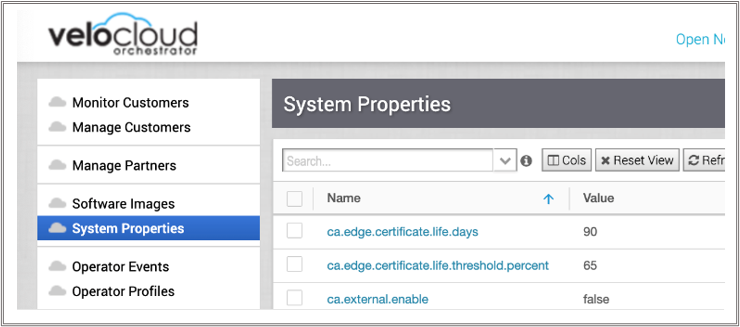
This feature has moved to a new location because the Classic Orchestrator UI did not have clear navigation and organization of pages. The New Orchestrator location has a better hierarchy and categorization of these Operator pages. It groups related features together. System Properties is part of Orchestrator configuration, along with Diagnostics, Replication, Orchestrator Upgrade, and Certificate Authorities.
Table 2. System Properties
Classic Orchestrator Location
New Orchestrator Location
Operator > System Properties
Operator > Orchestrator > System Properties
Figure 4. System Properties
Figure 5. System Properties
Operator Events
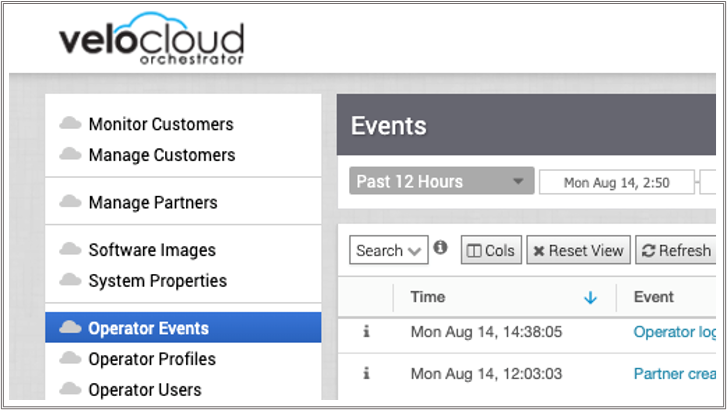
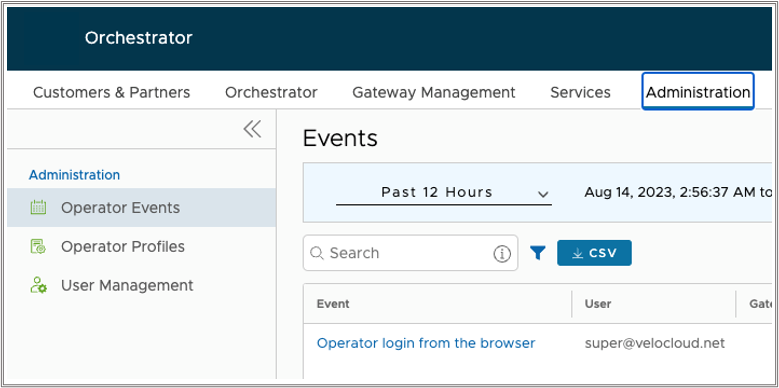
This feature has moved to a new location because the Classic Orchestrator UI did not have clear navigation and organization of pages. The New Orchestrator puts all the Operator administration-related features under the Administration tab.
Table 3. Operator Events
Classic Orchestrator Location
New Orchestrator Location
Operator > Operator Events
Operator > Administration > Operator Events
Figure 6. Operator Events
Figure 7. Events
Operator Profiles
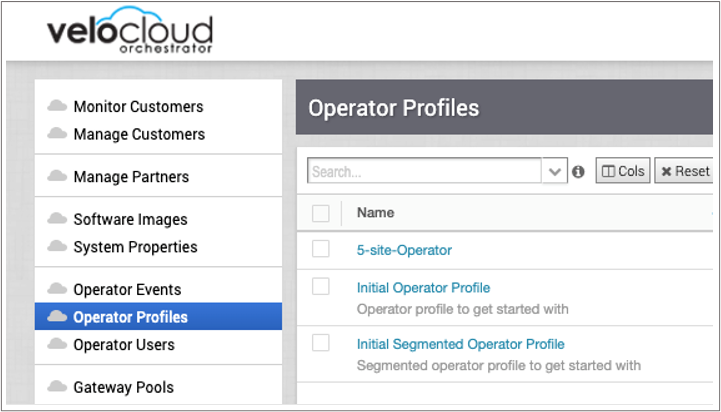
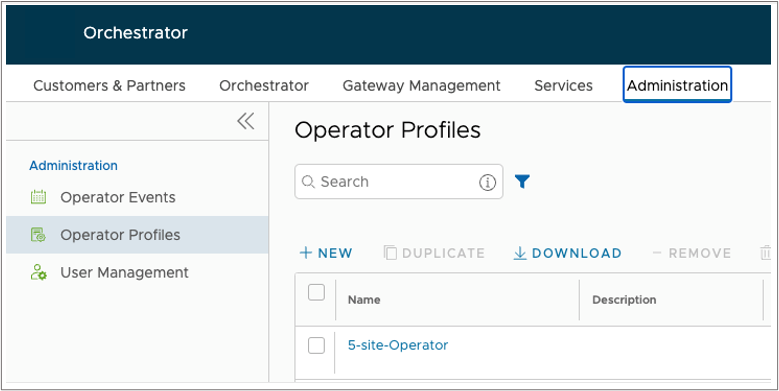
This feature has moved to a new location because the Classic Orchestrator UI did not have clear navigation and organization of pages. The New Orchestrator puts all the Operator administration-related features under the Administration tab.
Table 4. Operator Profiles
Classic Orchestrator Location
New Orchestrator Location
Operator > Operator Profiles
Operator > Administration > Operator Profiles
Figure 8. Operator Profiles
Figure 9. Operator Profiles
Operator Users
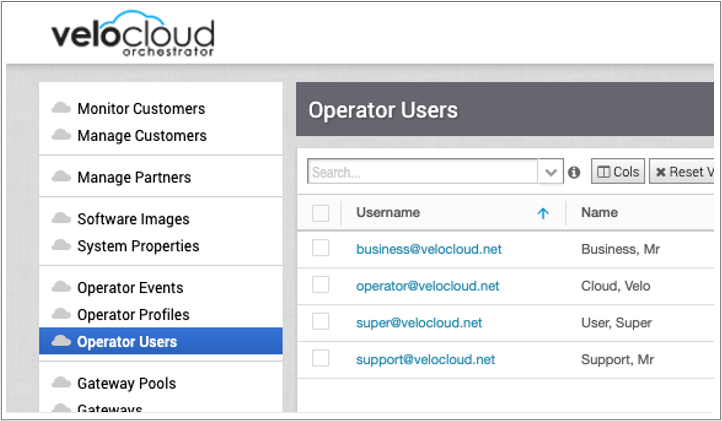
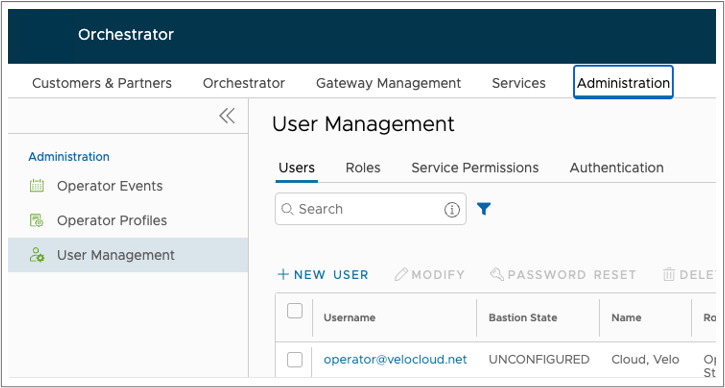
This feature has moved to a new location because the Classic Orchestrator UI did not have clear navigation and organization of pages. The New Orchestrator puts all the Operator administration-related features under the Administration tab.
Table 5. Operator Users
Classic Orchestrator Location
New Orchestrator Location
Operator > Operator Users
Operator > Administration > User Management > Users
Figure 10. Operator Users
Figure 11. Users
Gateway Pools
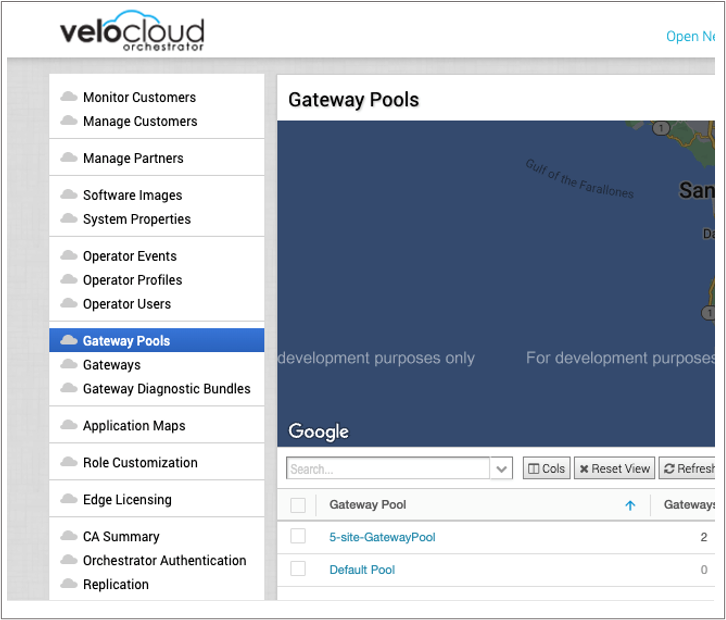
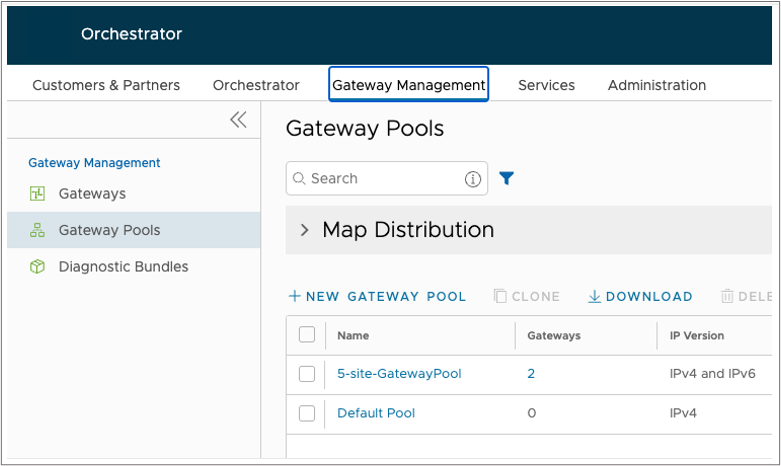
We have moved the Gateway Pools feature to the New Orchestrator UI for enhanced user experience. The New Orchestrator UI has a better design that groups all Gateway related features under the Gateway Management tab.
Table 6. Gateway Pools
Classic Orchestrator Location
New Orchestrator Location
Operator > Gateway Pools
Operator > Gateway Management > Gateway Pools
Figure 12. Gateway Pools
Figure 13. Gateway Pools
Gateways
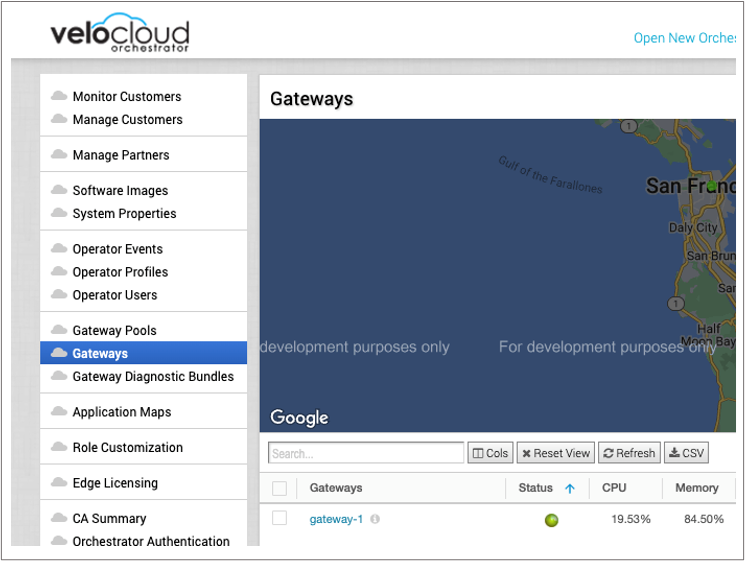
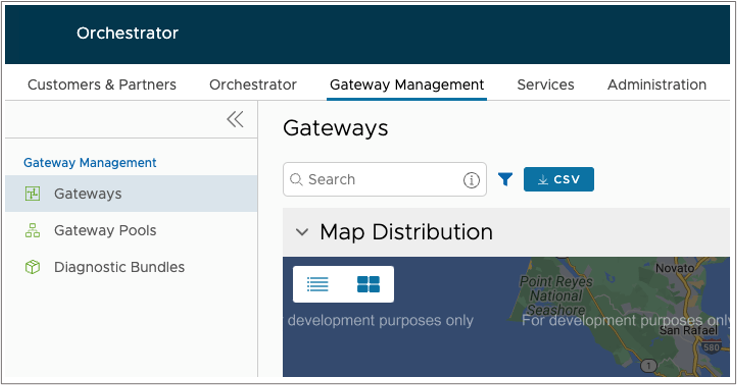
We have moved the Gateways feature to the New Orchestrator UI for enhanced user experience. The New Orchestrator UI has a better design that groups all Gateway related features under the Gateway Management tab.
Table 7. Gateways
Classic Orchestrator Location
New Orchestrator Location
Operator > Gateways
Operator > Gateway Management > Gateways
Figure 14. Gateways
Figure 15. Gateways
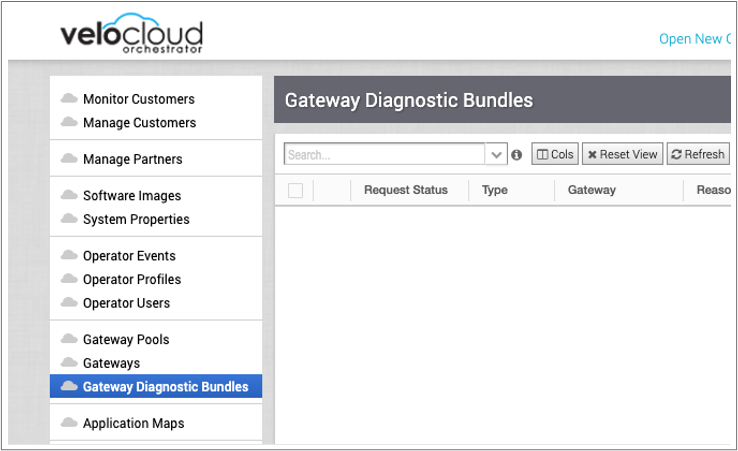
Gateway Diagnostic Bundles
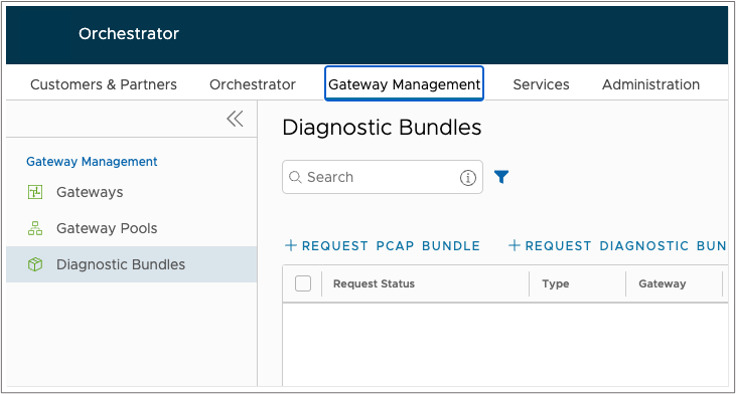
We have moved the Gateway Diagnostic Bundles feature to the New Orchestrator UI for enhanced user experience. The New Orchestrator UI has a better design that groups all Gateway related features under the Gateway Management tab.
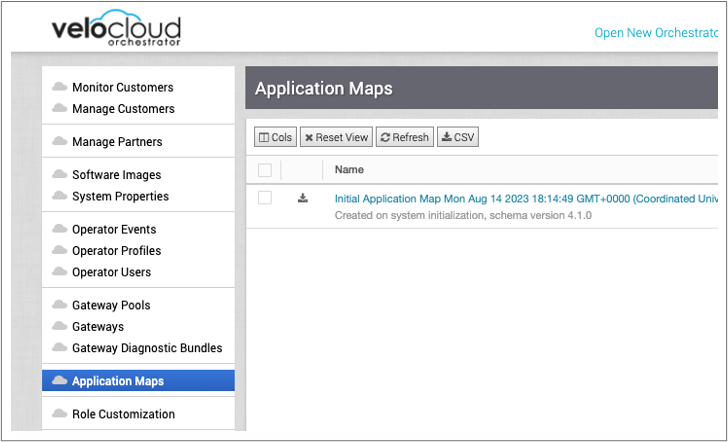
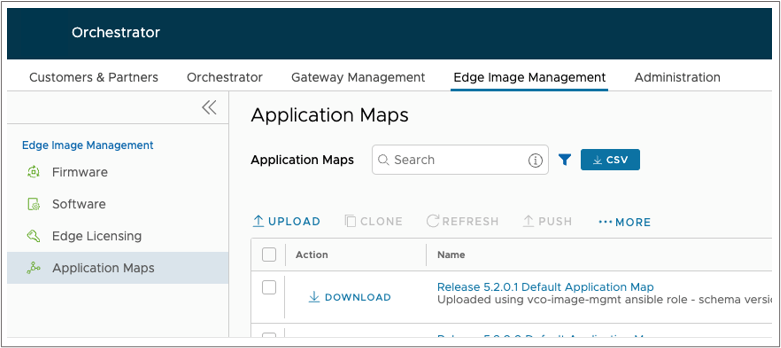
We have relocated the Application Maps feature to the New Orchestrator UI for better user experience. Application Maps is a feature that only applies to the SD-WAN service and the New Orchestrator UI is a portal for many services, so we have moved this feature under the new Edge Image Management (or Services) tab within the SD-WAN service.
Table 9. Application Maps
Classic Orchestrator Location
New Orchestrator Location
Operator > Application Maps
Figure 18. Application Maps
For 5.3.0 and earlier versions: Operator > Edge Image Management > Application Maps
Figure 19. Application Maps
For 5.4.0 and later versions: Operator > Services > Application Maps
Figure 20. Application Maps
Role Customization (Service Permissions)
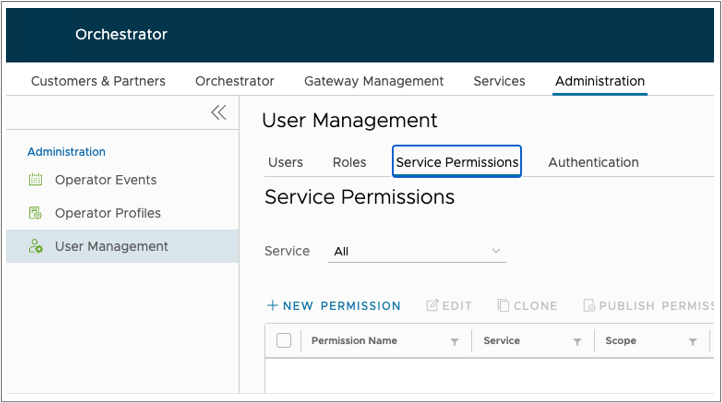
We have changed the name of the Role Customization feature to Service Permissions. This is to make room for the new Role Builder feature that lets you create custom roles by combining different service permissions. Service Permissions is a more accurate name for the feature, as it allows you to adjust the access levels for each service.
Table 10. Role Customization
Classic Orchestrator Location
New Orchestrator Location
Operator > Role Customization
Operator > Administration > User Management > Service Permissions
Figure 21. Role Customization
Figure 22. Service Permissions
Edge Licensing
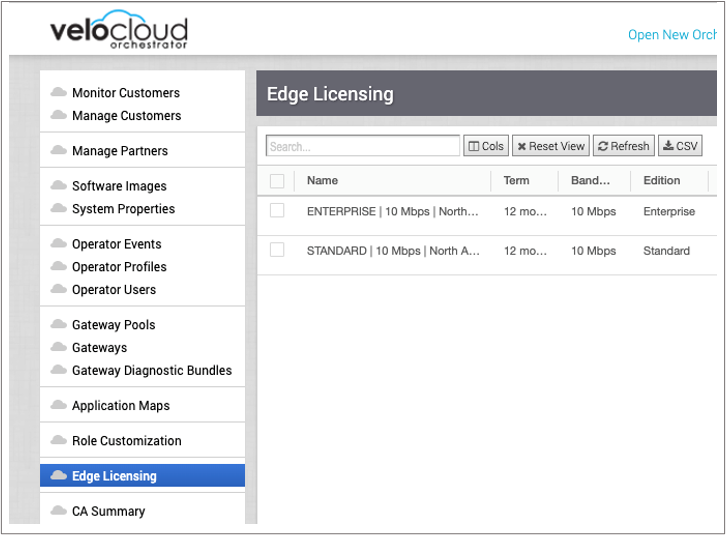
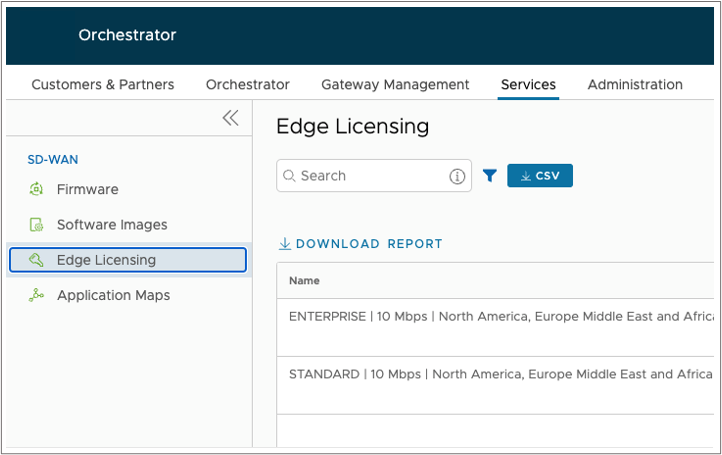
We have relocated the Edge Licensing feature to the New Orchestrator UI for better user experience. Edge Licensing is a feature that only applies to the SD-WAN service and the New Orchestrator UI is a portal for many services, so we have moved this feature under the new Edge Image Management (or Services) tab within the SD-WAN service.
Table 11. Edge Licensing
Classic Orchestrator Location
New Orchestrator Location
Operator > Edge Licensing
Figure 23. Edge Licensing
For 5.3.0 and earlier versions: Operator > Edge Image Management > Edge Licensing
Figure 24. Edge Licensing
For 5.4.0 and later versions: Operator > Services > Edge Licensing
Figure 25. Edge Licensing
CA Summary
CA Summary is renamed to Certificate Authorities to clearly represent the content of the page for easier on-boarding.
Table 12. CA Summary
Classic Orchestrator Location
New Orchestrator Location
Operator > CA Summary
Operator > Orchestrator > Certificate Authorities
Figure 26. CA Summary
Figure 27. Certificate Authorities
Orchestrator Authentication
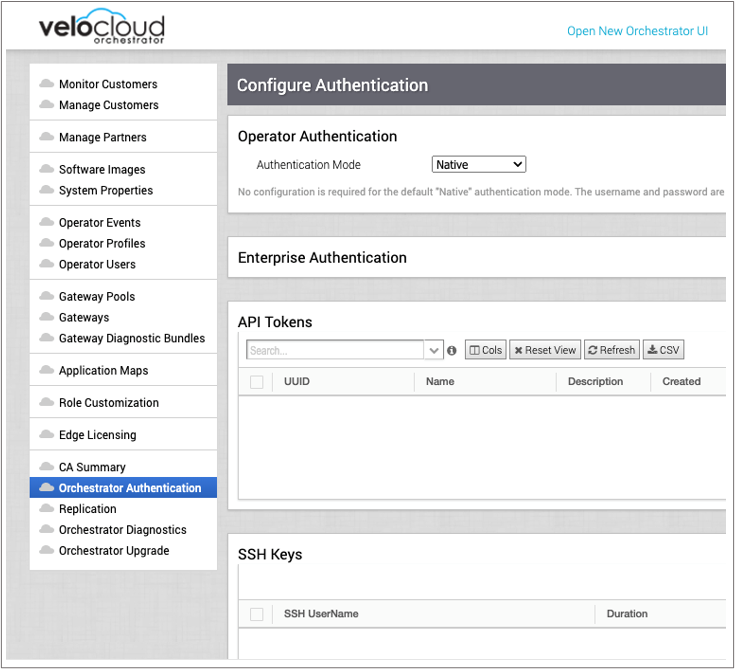
We have reorganized the administrative features for different levels of users. Operators and Partners can find authentication-related features under the Administration > User Management section. Enterprises can find them under Global Settings. This makes it easier to manage user access across the Operator, MSP (Partner), and Enterprise levels.
Table 13. Orchestrator Authentication
Classic Orchestrator Location
New Orchestrator Location
Operator > Orchestrator Authentication
Operator > Administration > User Management > Authentication
Figure 28. Orchestrator Authentication
Figure 29. Authentication
Replication
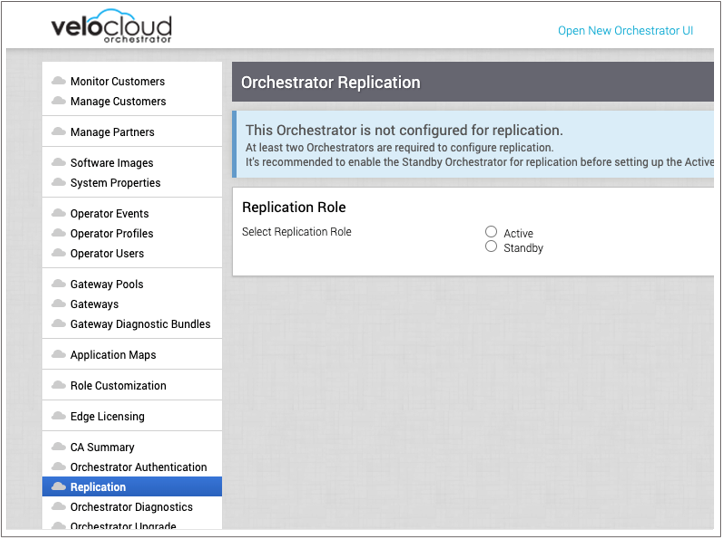
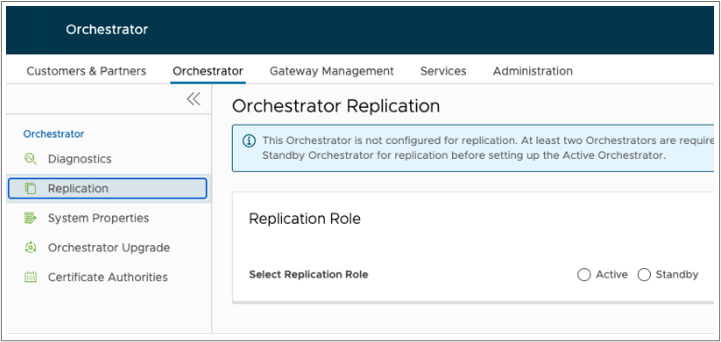
We have moved the Replication feature to improve the organization and hierarchy of the Operator pages. Replication is part of the Orchestrator configuration, along with other features such as Orchestrator Diagnostics, System Properties, Orchestrator Upgrade, and Certificate Authorities.
Table 14. Replication
Classic Orchestrator Location
New Orchestrator Location
Operator > Replication
Operator > Orchestrator > Replication
Figure 30. Replication
Figure 31. Replication
Orchestrator Diagnostics
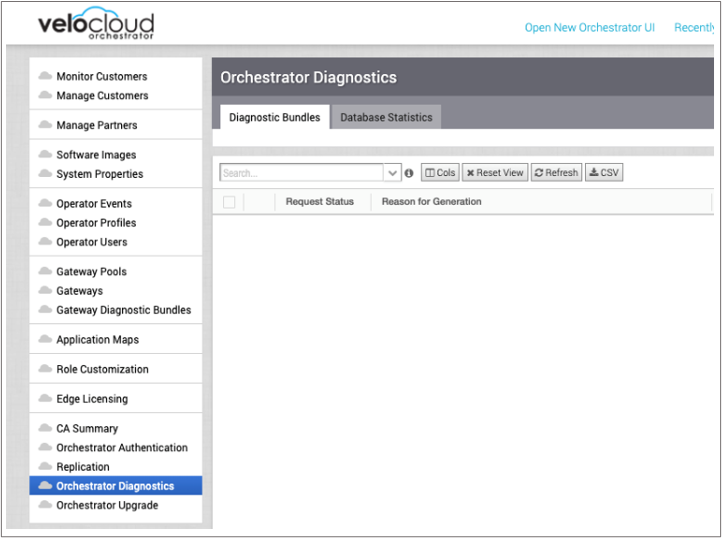
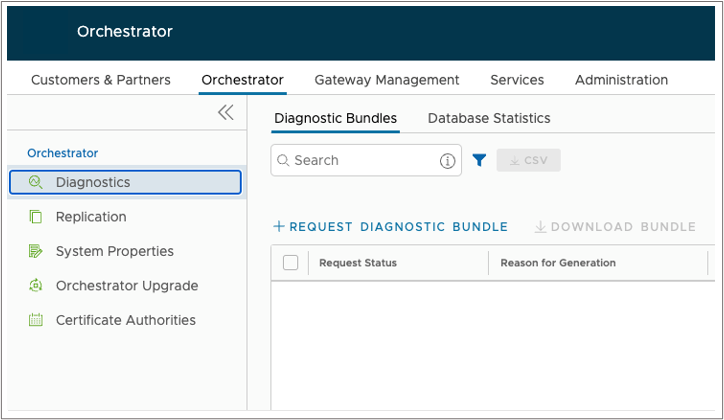
We have moved the Orchestrator Diagnostics feature to improve the organization and hierarchy of the Operator pages. Orchestrator Diagnostics is part of the Orchestrator configuration, along with other features such as Replication, System Properties, Orchestrator Upgrade, and Certificate Authorities.
Table 15. Orchestrator Diagnostics
Classic Orchestrator Location
New Orchestrator Location
Operator > Orchestrator Diagnostics
Operator > Orchestrator > Diagnostics
Figure 32. Orchestrator Diagnostics
Figure 33. Diagnostics
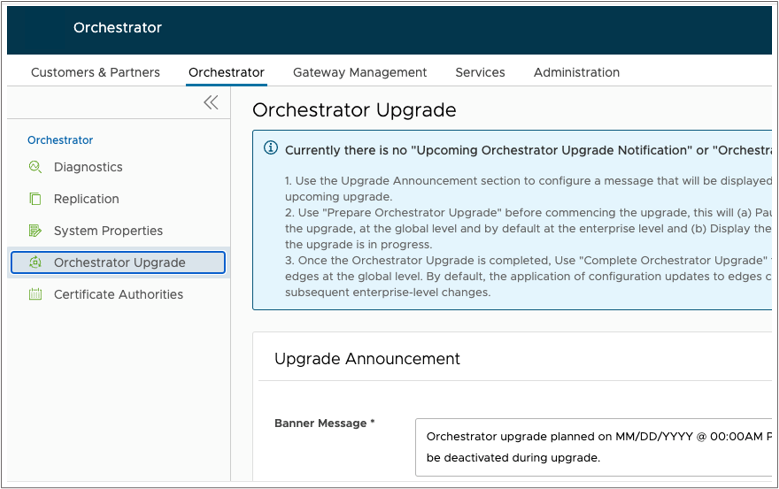
Orchestrator Upgrade
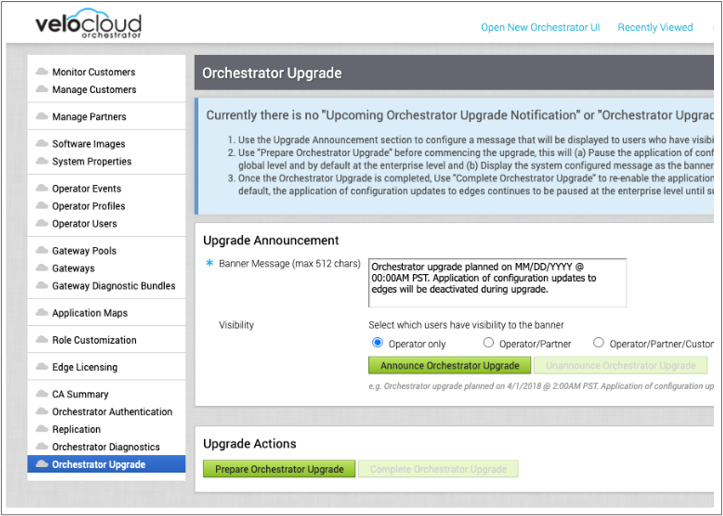
We have moved the Orchestrator Upgrade feature to improve the organization and hierarchy of the Operator pages. Orchestrator Upgrade is part of the Orchestrator configuration, along with other features such as Replication, System Properties, Orchestrator Diagnostics, and Certificate Authorities.