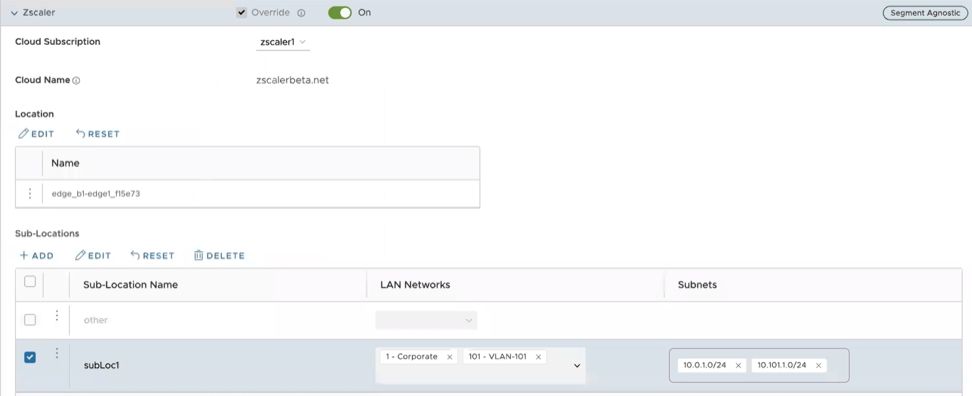
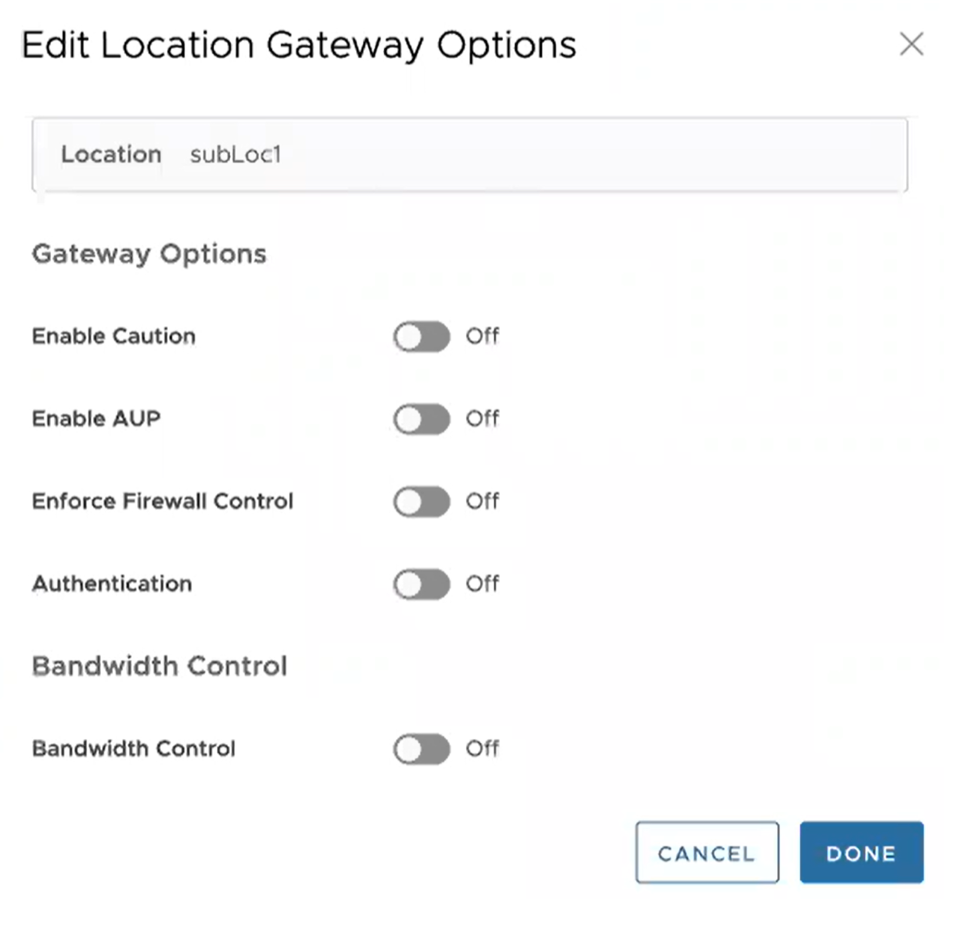
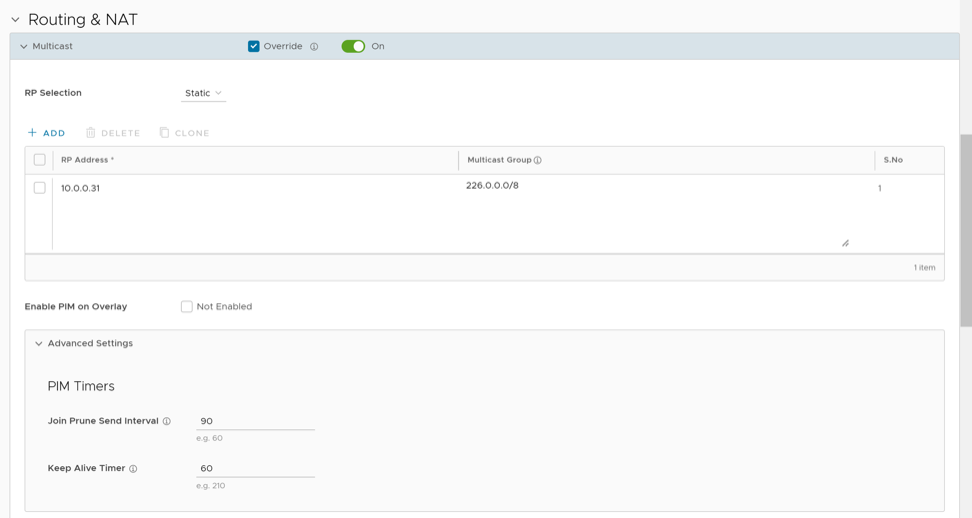
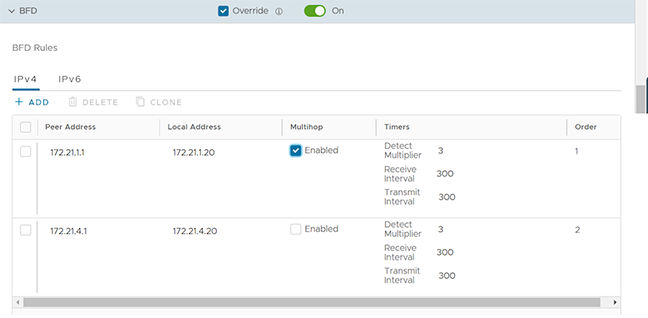
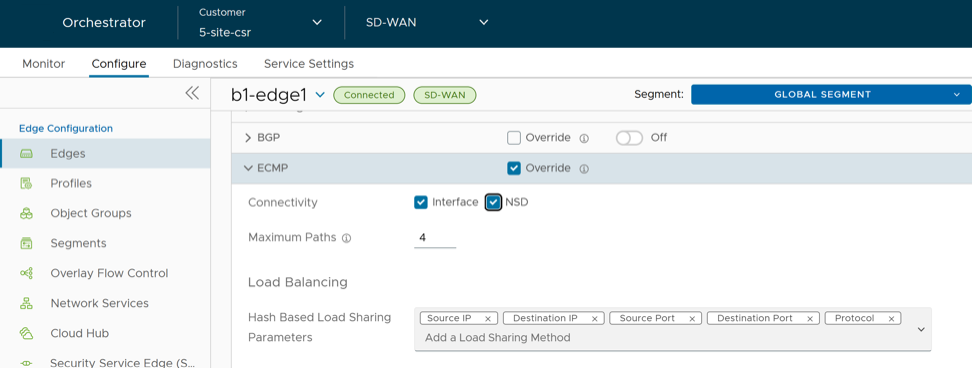
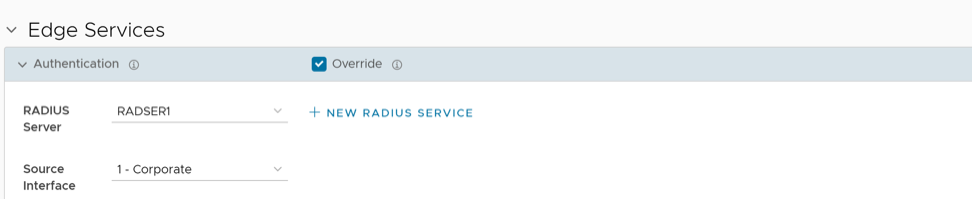
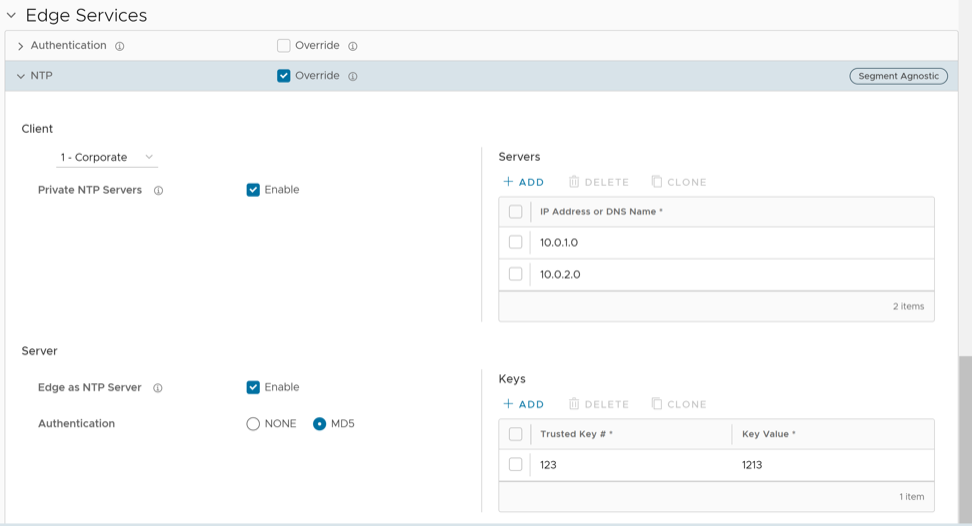
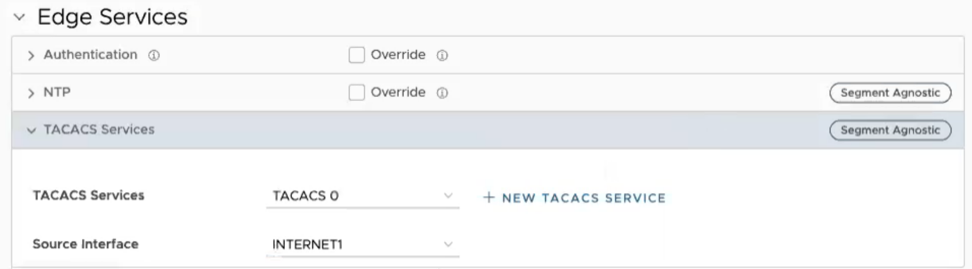
Select the link to an Edge or select the View link in the Device column of the Edge.
The configuration options for the selected Edge are displayed in the Device tab.
Figure 1. Configuring Edges with New Orchestrator
Select View to expand or collapse the view of available settings.
You can also view the configuration settings sorted by category or segmentation. By default, the settings are sorted by category. If you choose to sort by segmentation, the settings are grouped as segment aware and segment agnostic.
For some of the settings, the configuration is inherited from the associated Profile. To edit inherited configuration for the Edge, select the Override checkbox. The following settings are available when you choose to sort by category:
Table 1. Connectivity
Settings
Description
VLAN
Configure the VLANs with both IPv4 and IPv6 addresses for Edges. Select the IPv4 or IPv6 tabs to configure the corresponding IP addresses for the VLANs. For more information, see Configure VLAN for Edges.
Note: When you create a new VLAN or edit a VLAN configuration using the new Orchestrator UI, the VLAN appears as read-only in the classic Orchestrator UI. After creating or editing a VLAN with new Orchestrator UI, you can modify the settings of the corresponding VLAN only in the new Orchestrator UI.
Loopback Interfaces
Configure a logical interface that allows you to assign an IP address, which is used to identify an Edge. For more information, see Loopback Interfaces Configuration.
Management Traffic
Configure the management traffic by selecting a source IP for the Edge to transmit the traffic to Orchestrator. For more information, see Configure Management Traffic for Edges.
ARP Timeouts
By default, the Edge inherits the ARP settings from the associated Profile. Select the Override and Override default ARP Timeouts checkboxes to modify the values. For more information, see Configure Address Resolution Protocol Timeouts for Edges.
Interfaces
Configure the following settings for the Edge Interfaces:
Interface Settings – Configure the settings for a Switch Port (LAN) or a Routed (WAN) Interface of the selected Edge. See Configure Interface Settings for Edges.
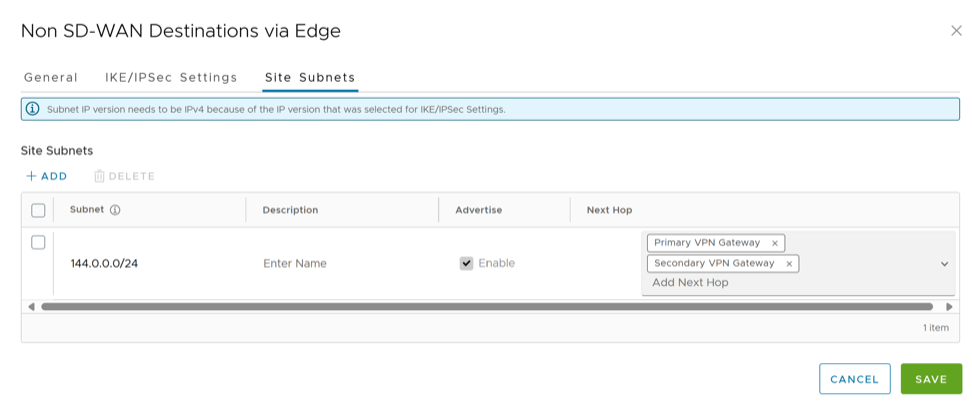
Enable to establish tunnel between a branch and Non SD-WAN destination via Edge. See Configure Tunnel Between Branch and Non SD-WAN Destinations via Edge. Select Add to add Non SD-WAN Destinations. Select New NSD via Edge to create new Non SD-WAN Destination via Edge. See Configure a Non SD-WAN Destinations via Edge.
Cloud Security Service
Enable to establish a secured tunnel from an Edge to cloud security service sites. This enables the secured traffic being redirected to third-party cloud security sites. See Monitoring Cloud Security Service Sites.
By default, the Edge inherits the BFD configuration settings from the associated Profile. If required, you can select the Override checkbox to modify the settings. For more information, see Configure BFD for Profiles.
Configure ICMP probes that check for the network continuity by pinging specified IP address at frequent intervals. See Configure ICMP Probes and Responders.
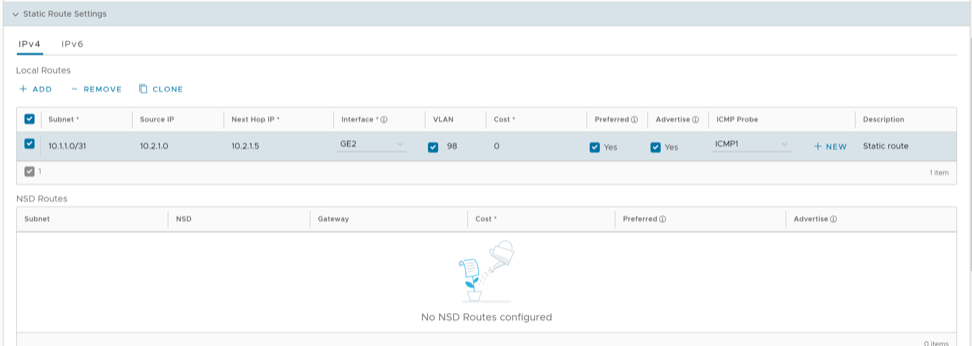
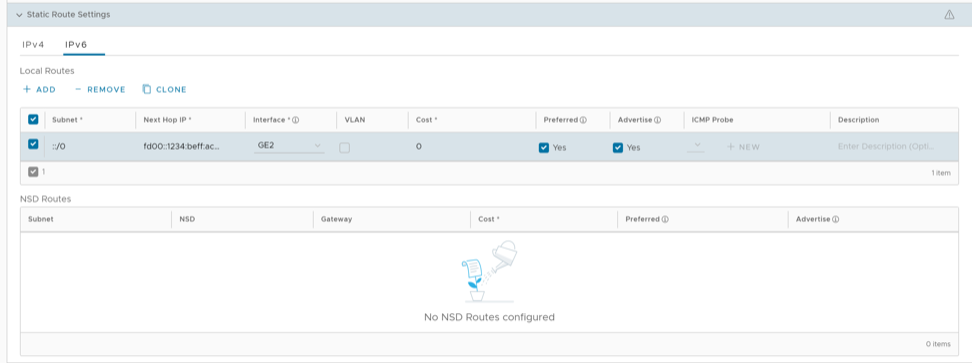
Configure Static Route Settings for special cases in which static routes are needed for existing network attached devices, such as printers. See Configure Static Route Settings.
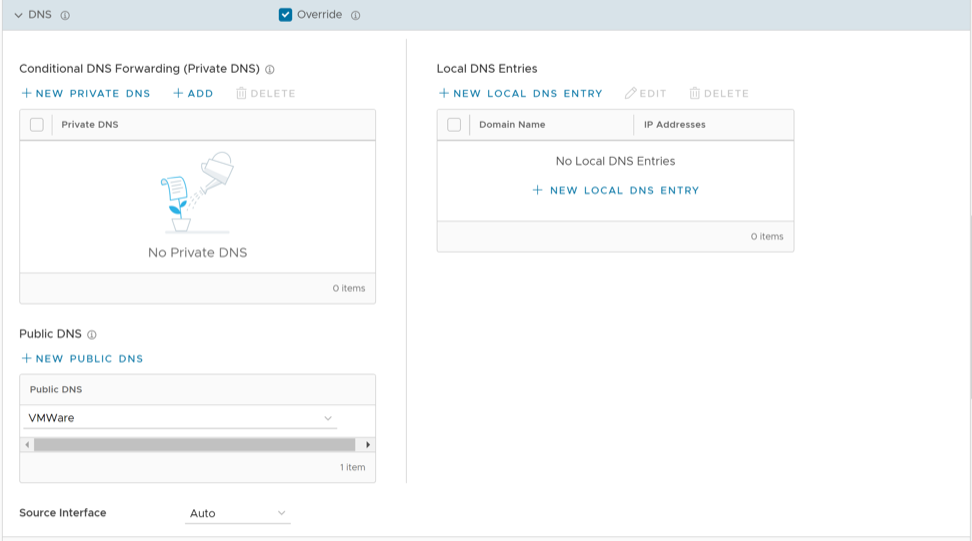
DNS
Use the DNS Settings to configure conditional DNS forwarding through a private DNS service and to specify a public DNS service to be used for querying purpose. See Configure DNS for Profiles.
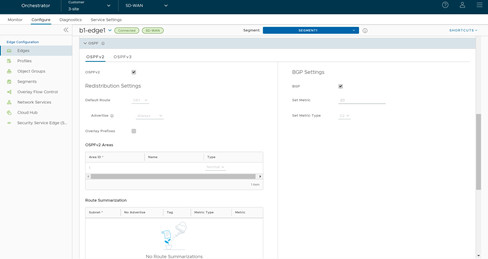
OSPF Areas
The OSPF settings configured in the associated Profile are displayed. You can configure OSPF areas only for a Profile and only for a Global Segment. For Edges, you can configure additional OSPF settings for routed Interfaces. For more information, see Activate OSPF for Edges.
BGP
Configure BGP settings for Underlay Neighbors and Non SD-WAN Neighbors. See Configuring BGP.
Table 4. High Availability
Settings
Description
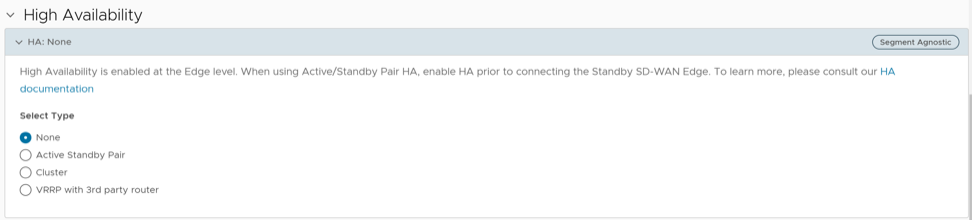
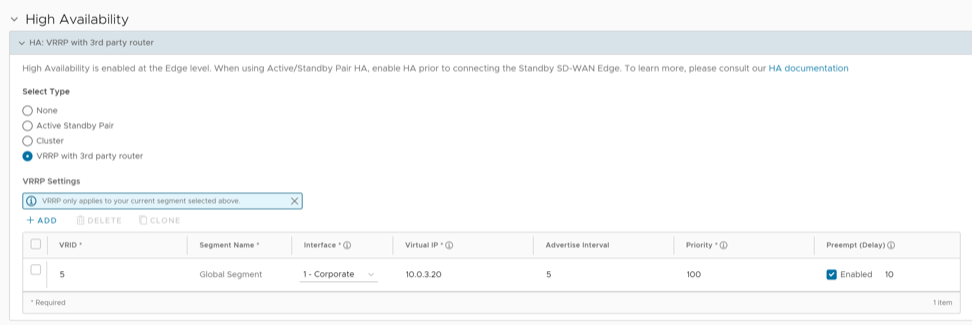
High Availability
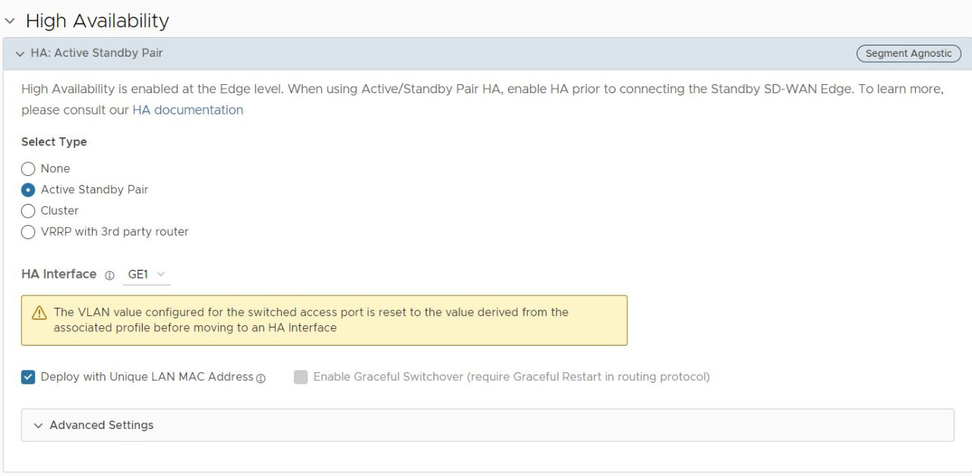
Enable High Availability for the selected Edge. Choose one of the following options:
None – This is the default option where High Availability is not enabled.
Active Standby Pair – Select this option to enable HA on the selected Edge. For more information, see Activate High Availability.
Cluster – If you choose this option, select an existing Edge cluster from the drop-down list to enable High Availability on the Edge cluster. To configure Edge clusters, see Monitoring Edge Clusters.
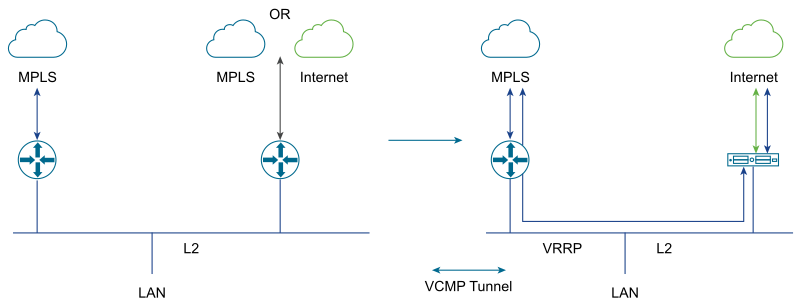
VRRP with 3rd party router – Select this option to configure Virtual Router Redundancy Protocol (VRRP) on the selected Edge to enable next-hop redundancy in the SD-WAN Orchestrator network by peering with third-party CE router. To configure VRRP, see Configure VRRP Settings.
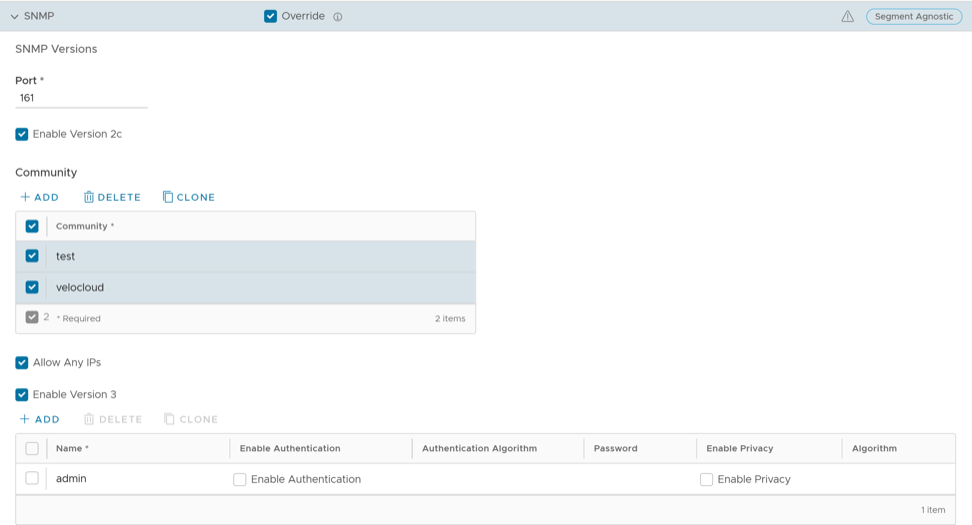
Enable the required SNMP version for monitoring the network. Ensure that you download and install all the required SNMP MIBs before enabling SNMP. See Configure SNMP Settings for Edges.
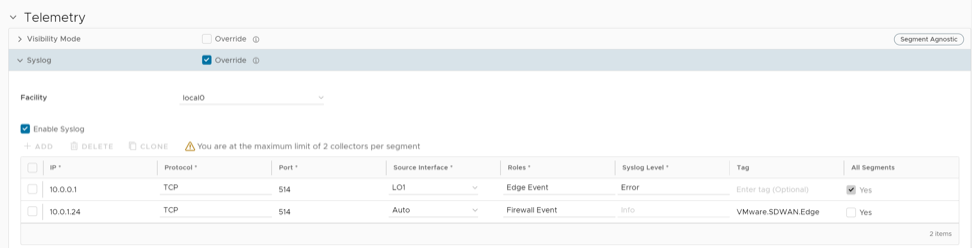
Syslog
Configure Syslog collector to receive Orchestrator bound events and firewall logs from the Edges configured in an Enterprise. See Configure Syslog Settings for Edges.
Table 6. Security VNF
Settings
Description
Security VNF
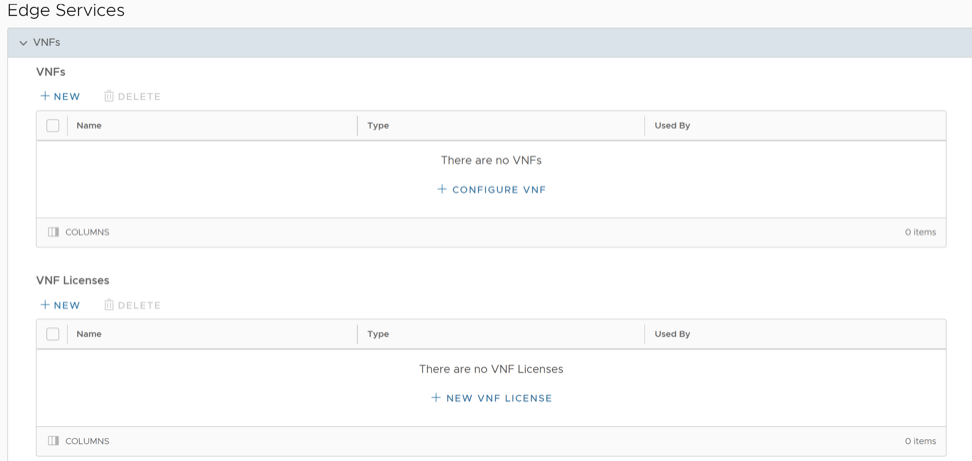
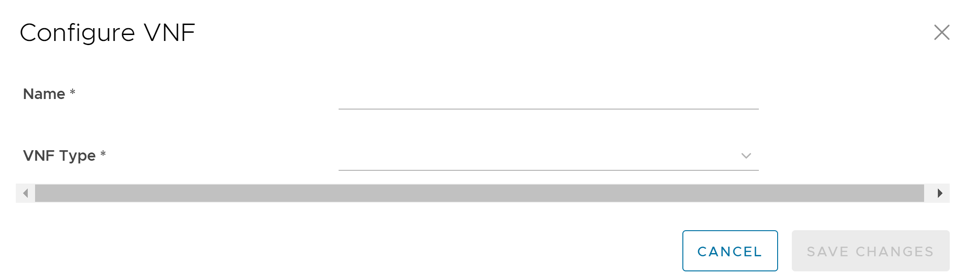
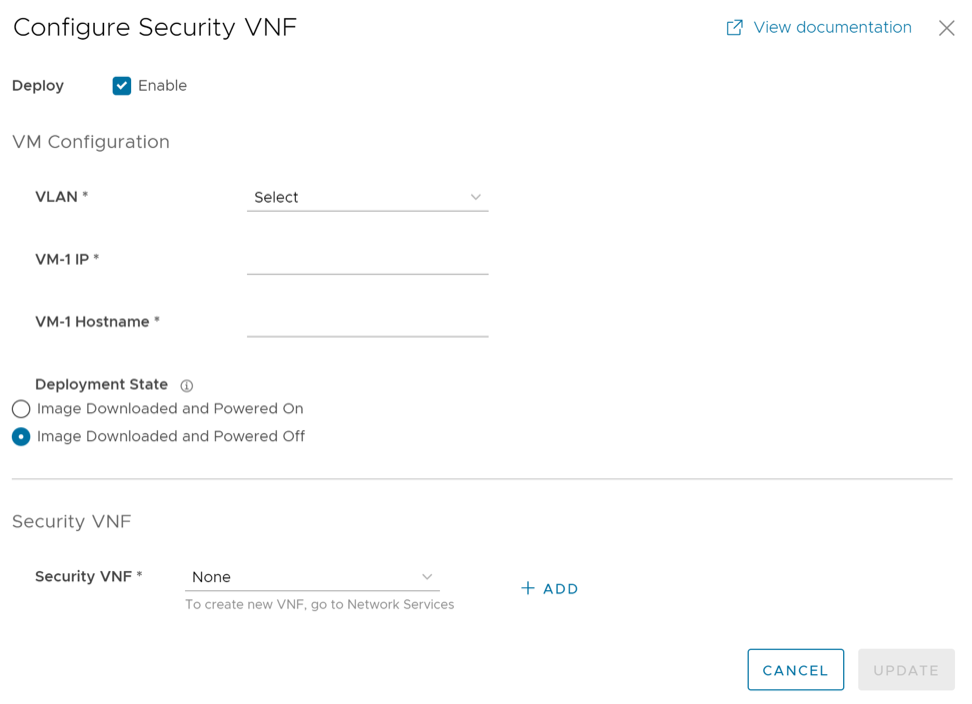
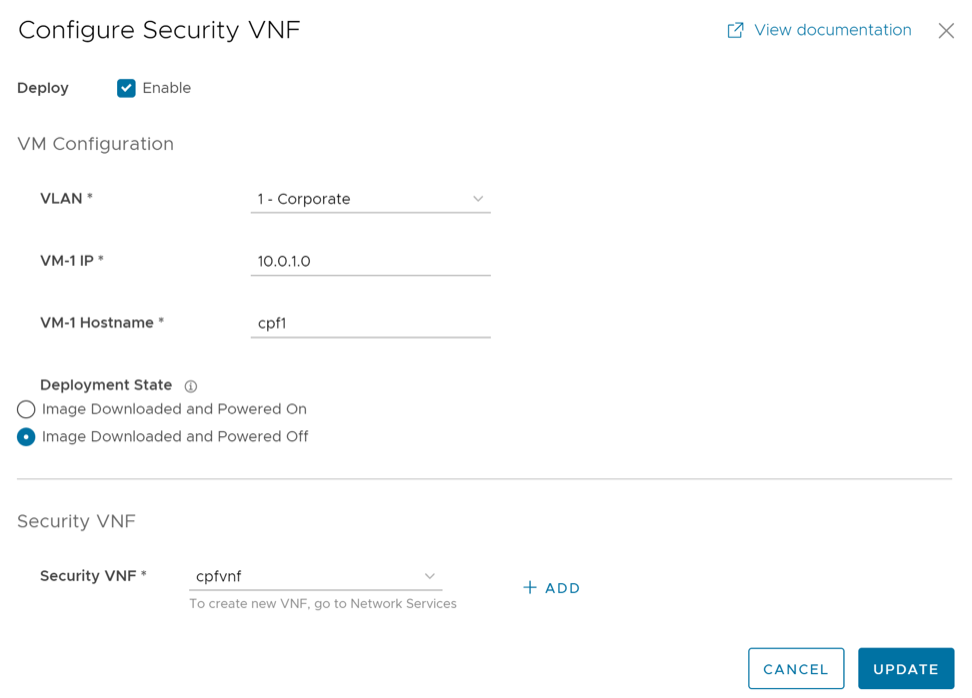
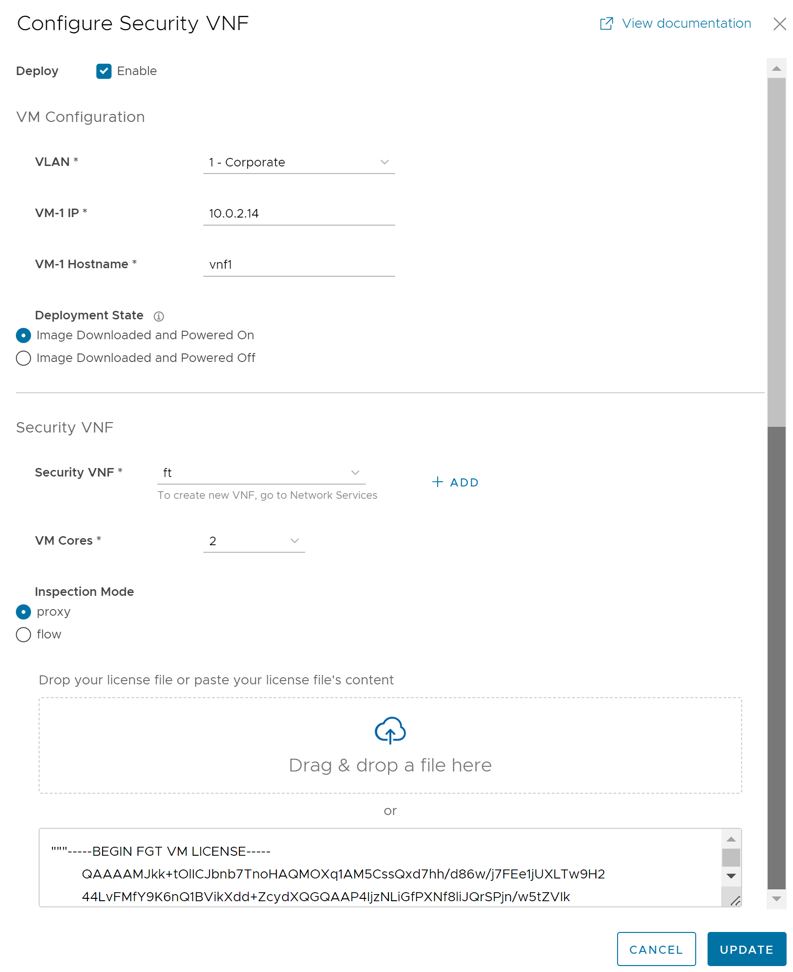
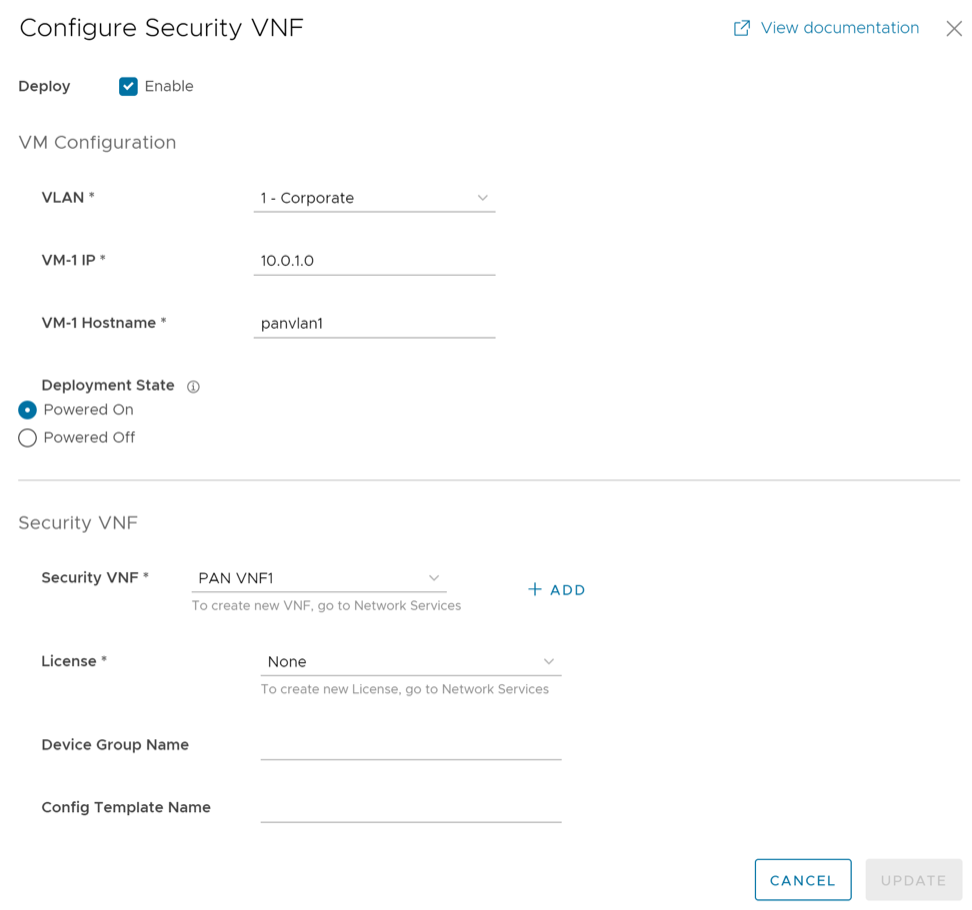
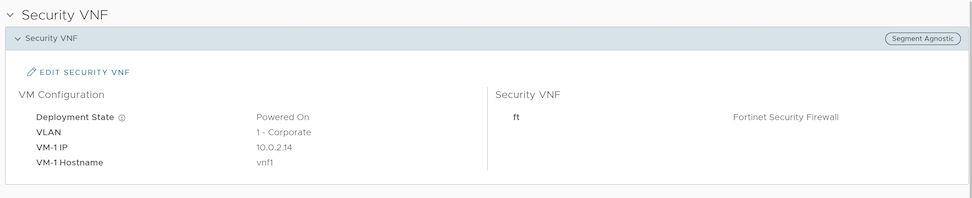
Configure security VNF to run the functions of a network service in a software-only form. For more information, see Security Virtual Network Functions.
View Profile – Navigates to the Profile page, that is associated with the selected Edge.
View Gateways – Displays the Gateways connected to the selected Edge.
Configure VLAN for Edges
At the Edge level, you can add a new VLAN or update the existing VLAN settings inherited from the associated Profile. While configuring a new VLAN at the Edge level, Orchestrator allows you to configure additional Edge-specific VLAN settings such as Fixed IP addresses, LAN interfaces, and Service Set Identifier (SSID) of Wi-Fi interfaces.
Note:
You can configure a maximum of 32 VLANs across 16 Segments on an Edge.
On Profile change, any VLAN inherited from the Edge's profile, is removed if it is not present in the target Profile unless overridden at the Edge level. Any interface associated with such removed VLANs is reverted to the Profile-level configuration in the target Profile, even if the interface is overridden at the Edge level.
To configure VLAN settings for an Edge:
In the SD-WAN service of the Enterprise portal, select Configure > Edges.
Select the link to an Edge or select the View link in the Device column of the Edge.
In the Device tab, under Connectivity, expand the VLAN section.
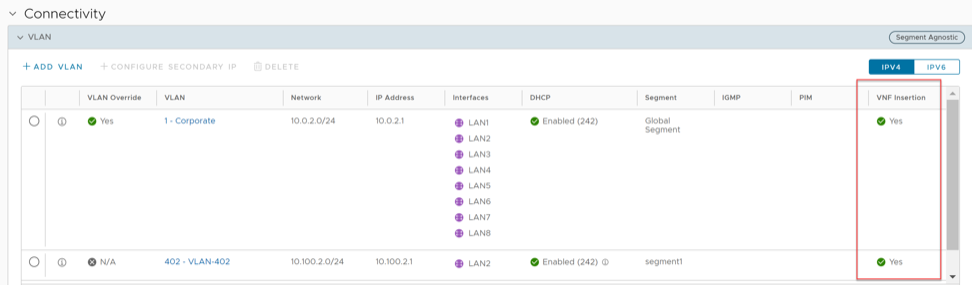
Figure 2. Configure VLAN for Edges
You can add or edit VLANs, or add secondary IP addresses. You can also delete the selected VLAN.
Select IPv4 or IPv6 button to display the respective list of VLANs.
To add a VLAN, select + Add VLAN.
Figure 3. Add VLAN
You can configure the following options:
Table 8. Add VLAN Option Descriptions
Option
Description
Segment
Select a segment from the drop-down menu. This assigns the VLAN to the selected segment.
VLAN Name
Enter a unique name for the VLAN.
VLAN ID
Enter the VLAN ID.
Assign Overlapping Subnets
LAN IP Addressing can be managed from the assigned Profile of the Edge. When this check box is selected, the values for Edge LAN IP Address, Cidr Prefix, and DHCP are inherited from the associated Profile and are read-only. The Network address is automatically set based on the subnet mask and CIDR value.
Note: Overlapping subnets for the VLAN are supported only for SD-WAN to SD-WAN traffic and SD-WAN to Internet traffic.
Edge LAN IP Address
Enter the LAN IP address of the Edge.
Cidr Prefix
Enter the CIDR prefix for the LAN IP address.
Network
Enter the IP address of the Network.
Advertise
Select the check box to advertise the VLAN to other branches in the network.
ICMP Echo Response
Select the check box to enable the VLAN to respond to ICMP echo messages.
VNF Insertion
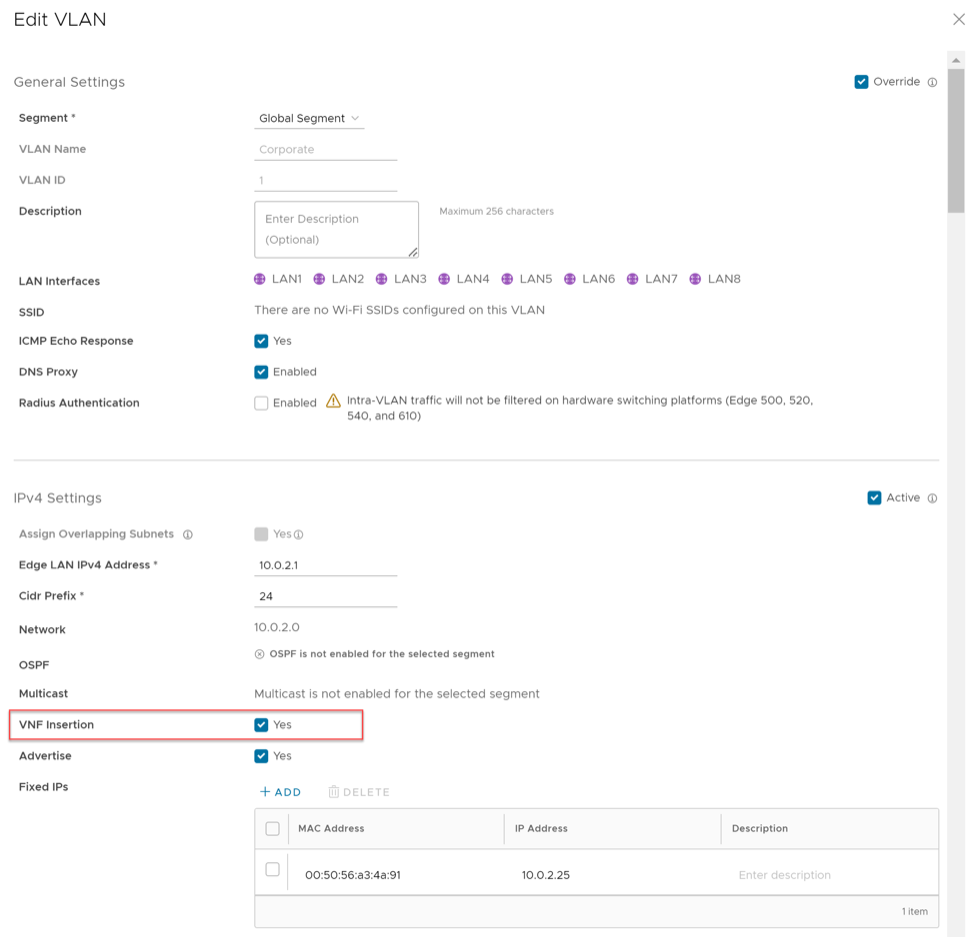
Select the check box to insert a VNF to the VLAN, which redirects traffic from the VLAN to the VNF. To enable this option, ensure that the selected segment is mapped with a service VLAN.
Multicast
This option is enabled only when you have configured multicast settings for the Edge. You can configure the following multicast settings for the VLAN.
IGMP
PIM
Select toggle advanced multicast settings to set the timers:
PIM Hello Timer
IGMP Host Query Interval
IGMP Max Query Response Value
Fixed IPs
Enter the IP addresses tied to specific MAC Addresses for the VLAN.
LAN Interfaces
Configure VLAN LAN Interfaces.
SSID
Configure VLAN Wi-Fi SSIDs.
DHCP Type
Choose one of the following DHCP settings:
Enabled: Enables DHCP with the Edge as the DHCP server. Configure the following details:
DHCP Start: Enter a valid IP address available within the subnet.
Num. Addresses: Enter the number of IP addresses available on a subnet in the DHCP Server.
Lease Time: Select the period of time from the drop-down menu. This is the duration the VLAN is allowed to use an IP address dynamically assigned by the DHCP Server.
Options: Add pre-defined or custom DHCP options from the drop-down menu. The DHCP option is a network service passed to the clients from the DHCP server. For a custom option, enter the code, data type, and value.
Relay: Enables DHCP with the DHCP Relay Agent installed at a remote location. If you choose this option, configure the following:
Source from Secondary IP(s): When you select this check box, the DHCP discover/Request packets from the client are relayed to the DHCP Relay servers sourced from the primary IP address and all the secondary IP addresses configured for the VLAN. The reply from the DHCP Relay servers is sent back to the client after rewriting the source and destination. The DHCP server receives the request from both the primary and secondary IP addresses and the DHCP client can get multiple offers from primary subnet and secondary subnets. When this option is not selected, the DHCP discover/Request packets from the client are relayed to the DHCP Relay servers sourced only from the primary IP address.
Relay Agent IP(s): Specify the IP address of Relay Agent. Select the plus icon to add more IP addresses.
Not Enabled: Deactivates DHCP.
OSPF
This option is available only when you have configured OSPF at the Profile level for the selected Segment. Select the check box and choose an OSPF area from the drop-down menu.
Note: The OSPFv2 configuration supports only IPv4. The OSPFv3 configuration supports only IPv6, which is only available in the 5.2 release.
After configuring the required parameters, select the Add VLAN button.
To edit existing VLAN settings inherited from the Profile:
Select the Edit link corresponding to the VLAN.
Select the Override check boxes to override the VLAN settings inherited from the Profile.
Figure 4. Edit VLAN
Note: You cannot override the Profile VLAN name and ID.
After modifying the required parameters, select Done VLAN. For Configuring VLANs at the Profile level, see Configure VLAN for Profiles.
The VLAN is configured with a primary IP address. You can add secondary IP addresses to the VLAN, to increase the number of host addresses for a network segment. To add secondary IP addresses to the VLAN:
Select Add Secondary IP.
A new row to configure a secondary IP appears.
Figure 5. Configure Secondary IP Address
Configure the Secondary IP VLAN settings:
Table 9. Secondary IP VLAN Option Descriptions
Option
Description
Addressing Type
By default, the addressing type is Static and you cannot modify the type.
IP Address
Enter the secondary IP address for the selected VLAN.
Cidr Prefix
Enter the CIDR prefix for the IP address.
Network
Displays the IP address of the Network, which is auto-generated from the secondary IP address and CIDR prefix.
Advertise
Select the check box to advertise the secondary IP address network of the VLAN to other branches in the network.
ICMP Echo Response
Select the check box to enable the VLAN with the secondary IP address to respond to ICMP echo messages.
Select (+ ADD) to add more IP addresses to the VLAN.
Note: You can add up to 16 Secondary IP addresses to a VLAN.
Select Done when complete.
On the Device settings screen, select Save Changes to save the settings.
Loopback Interfaces Configuration
A loopback interface is a logical interface that allows you to assign an IP address, which is used to identify a VeloCloud Edge.
You can configure loopback interfaces only for Edges that are running on version 4.3 and above. The Configure Loopback Interfaces area is not available for Edges that are running on version 4.2 or lower. For such Edges, you must configure Management IP address. For details, refer to Configure Management IP Address for Profiles.
Loopback Interfaces—Benefits
Following are the benefits of configuring loopback interfaces for an Edge:
As loopback interfaces are logical interfaces that are always up and reachable, you can use these interfaces for diagnostic purposes as long as there is Layer 3 reachability to at least one physical interface.
Loopback interfaces can be used as source interface for BGP. This ensures that when the BGP's interface state flaps, the BGP membership does not flap if there is at least one Layer 3 connection available.
Loopback interface IP address can be used as the source IP address for the various services such as Orchestrator Management Traffic, Authentication, DNS, NetFlow, Syslog, TACACS, BGP, and NTP. As loopback interfaces are always up and reachable, these services can receive the reply packets, if at least one physical interface configured for the Edge has Layer 3 reachability.
Loopback Interfaces—Limitations
Remember the following limitations before you configure loopback interfaces for your Edges:
Only IPv4 addresses can be assigned for loopback interfaces.
Loopback interfaces can be configured only for Edges. They cannot be configured for Profiles.
Loopback interfaces must be configured only after the Edge activation is successful.
For any Edge that is not activated, the version of the customer operator profile is validated based on which either the Management IP Address section or the Loopback Interfaces section is visible. For example, if the version of the customer operator profile is 4.3 or above, the Loopback Interfaces section is visible at the Edge-level. Whereas, if the version of the customer operator profile is 4.2 or lower and the Edge is not activated, the Management IP Address section is visible at the Edge-level and Profile-level.
Loopback interface IDs must be unique across all segments within an Edge and must start from 1, as Zero (0) is not supported.
If you choose to configure loopback interfaces and Orchestrator management traffic through API, the default configuration keys for these two properties are not available. You must modify the updateConfigurationModule API to configure the loopback interface and management traffic source interface selection.
You can access loopback interfaces only through SSH. Loopback interface access through local Web UI is not supported.
Consider the following when you upgrade or downgrade your Edges:
If the Management IP address that is configured either at the Profile-level or at the Edge-level is not the default IP address (192.168.1.1) and when the Edge is upgraded to version 4.3 or above, the loopback interface is automatically created at the Edge-level with the configured Management IP address as the IP address of the loopback interface.
Consider that you have upgraded your Orchestrator to version 4.3 or above, whereas the Edge still runs on version 4.2 or lower. If you update the Management IP address configuration either at the Profile-level or at the Edge-level, and then upgrade your Edge to version 4.3 or above, all changes that you made to the Management IP address configuration will be lost.
When the Edge is downgraded to a version lower than 4.3, the Management IP address that was configured before the upgrade will be retained at the Profile-level and at the Edge-level.
Any changes made to the loopback interface configuration will be lost after the Edge downgrade.
For example, consider that you had the Management IP address as 1.1.1.1. When you upgrade your Edge to version 4.3 or above, the same IP address, 1.1.1.1 will be the IP address of the loopback interface at the Edge-level. Then, you change the loopback interface IP address to 2.2.2.2. When you downgrade your Edge to a version lower than 4.3, you will notice that the Management IP address at the Edge-level will still be 1.1.1.1 and the Management IP address at the Profile-level will be empty.
Configure a Loopback Interface for an Edge
There are few rules and limitations that you must consider before you configure a loopback interface. For more information, see Loopback Interfaces—Limitations.
To configure a loopback interface for an Edge, perform the following steps:
In the SD-WAN service of the Enterprise portal, go to Configure > Edges.
Select the link to an Edge for which you want to configure the loopback interface or select the View link in the Device column of the Edge. The Device tab displays the configuration options for the selected Edge.
Scroll down to the Connectivity category and select Loopback Interfaces.
Figure 6. Configure a Loopback Interface for an Edge
Select + Add and in the Add Loopback pop-up window, configure the required loopback settings as described in the following table.
Figure 7. Add Loopback
Table 10. Loopback Field Descriptions
Field
Description
Interface ID
Enter a unique ID for the loopback interface. The ID must be unique across all segments within an Edge and must start from 1, as Zero (0) is not supported.
Segment
Select a segment from the drop-down list. The loopback interface belongs to the selected segment.
ICMP Echo Response
Select the check box to enable the loopback interface to respond to ICMP echo messages.
Enable IPv4 Settings
Addressing Type
By default, the addressing type is Static and you cannot modify the type.
IP Address
Enter the IPv4 address for the loopback interface.
CIDR Prefix
The CIDR prefix for the loopback interface IPv4 address. The default value is /32. You cannot modify the default value.
Advertise
Select the check box to advertise the loopback interface to other branches in the network.
OSPF
Select the check box and choose an OSPF area from the drop-down list. The loopback interface IP address is advertised in the selected OSPF area.
Note: The OSPFv2 configuration supports only IPv4. The OSPFv3 configuration supports only IPv6, which is only available in the 5.2 release.
Note: This option is enabled only when you have configured OSPF for the segment that you have selected for the loopback interface.
By default, the addressing type is Static and you cannot modify the type.
IP Address
Enter the IPv6 address for the loopback interface.
CIDR Prefix
The CIDR prefix for the loopback interface IP address. The default value is /128. You cannot modify the default value.
Note: You can select the Active check boxes for the IPv4 and IPv6 settings, to enable the corresponding addressing type for the Interface. By default, the option is enabled for IPv4 settings.
Select Add.
Select Save Changes.
The loopback interface is listed in the Loopback Interfaces section. At any point in time, you can choose to edit the loopback interface settings by selecting the Address link, except CIDR Prefix and Interface ID.
If you delete a loopback interface, the Source Interface field for all the services for which you have selected the loopback interface, is reset to Auto.
In addition, following are two more scenarios based on which the Source Interface for the various services is reset to Auto:
If the loopback interface ID is not found in the Edge.
If you use older versions of APIs to configure the Edge, sometimes the Edge may not receive the key for source IP address for the services.
When the Source Interface field for any service is set to Auto, the Edge selects the source interface based on the following criteria:
Any non-WAN interface that is advertised is prioritized.
Among the non-WAN interfaces that are advertised, the source interface selection is based on the following order of priority—Loopback interfaces, VLAN interfaces, or any routed interfaces.
If there are more than one interfaces of the same type configured and advertised, the interface with the lowest interface ID is selected. For example, if you have two loopback interfaces (LO3 and LO4), one VLAN interface (VLAN2), and two routed interfaces (GE1 and GE2) configured and advertised, and if the Source Interface field for any service is set to Auto, the Edge selects LO3 as the source interface.
Once you configure the loopback interface for an Edge, you can select the interface as the source interface for the following services:
Note: When the Edge transmits the traffic, the packet header will have the IP address of the selected source interface, whereas the packets can be sent through any interface based on the destination route.
Configure Management Traffic for Edges
VeloCloud Orchestrator allows you to configure the Management Traffic for the Edge. To configure the Management Traffic at the Edge level, perform the following steps:
In the SD-WAN service of the Enterprise portal, go to Configure > Edges.
Select the link to an Edge for which you want to configure the loopback interface or select the View link in the Device column of the Edge. The Device tab displays the configuration options for the selected Edge.
Scroll down to the Connectivity category and select and expand the Management Traffic area.
Figure 8. Configure Management Traffic for Edges
From the Source Interface drop-down menu, select an Edge interface that is configured for the segment. This interface will be the source IP for the Edge to transmit the traffic to VeloCloud Orchestrator. By default, Auto is selected.
When the Edge transmits the traffic, the packet header will have the IP address of the selected source interface, whereas the packets can be sent through any interface based on the destination route.
Configure Address Resolution Protocol Timeouts for Edges
At the Edge level, select the Override check box to override the Address Resolution Protocol (ARP) Timeout settings inherited from a Profile.
To override the ARP timeouts values at the Edge-level, perform the following steps:
In the SD-WAN service of the Enterprise portal, go to Configure > Edges.
The Edges page displays the existing Edges.
Select the link to an Edge for which you want to configure the Layer 2 settings or select the View link in the Device column of the Edge.
The Device tab displays the configuration options for the selected Edge.
Under the Connectivity category, select ARP Timeouts and select the Override check box.
Figure 9. Configure Address Resolution Protocol Timeouts for Edges
Select the Override default ARP Timeouts check box and then override the various ARP timeouts inherited from the Profile as follows:
Table 12. Override default ARP Timeouts Field Descriptions
Field
Description
ARP Stale Timeout
The allowable value ranges from 1 minute to 23 hours and 58 minutes.
ARP Dead Timeout
The allowable value ranges from 2 minutes to 23 hours and 59 minutes.
ARP Cleanup Timeout
The allowable value ranges from 3 minutes to 24 hours.
To set the default ARP timeout values at the Edge level, unselect the Override default ARP Timeouts checkbox.
Select Save Changes.
Configure Interface Settings for Edges
An Edge has different types of interfaces. By default, the interface configuration settings of an Edge are inherited from the associated Profile. You can modify and configure more settings for each Edge.
The interface settings options vary based on the Edge model. For more information on different Edge models and deployments, see Configure Interface Settings.
Perform the following steps, to configure interface settings for a specific Edge.
Select Configure > Edges, in the SD-WAN Service of the Enterprise portal,
The Edges page displays the existing Edges.
Select the link to an Edge or select the View link in the Device column of the Edge. The configuration options for the selected Edge are displayed in the Device tab.
In the Connectivity category, expand Interfaces.
The different types of interfaces available for the selected Edge are displayed. Select the link to an interface to edit the settings.
The Interface settings screen appears.
Figure 10. Virtual Edge Interface
You can edit the settings for the following types of interfaces, based on the Edge model:
Switch Port
Routed Interface
WLAN Interface
You can also add Subinterface, Secondary IP address, and Wi-Fi SSID based on the Edge model.
Table 13. Virtual Edge Option Descriptions
Option
Description
Description
Enter a description. This field is optional.
Interface Enabled
This option is activated by default. If required, you can deactivate the interface. When deactivated, the interface is not available for any communication.
Capability
For a Switch Port, the option Switched is selected by default. You can choose to convert the port to a routed interface by selecting the option Routed from the drop-down menu.
Segments
By default, the configuration settings are applicable to all the segments.
Radius Authentication
Deactivate the Enable WAN Overlay check box to configure Radius Authentication. Select the Radius Authentication check box and add the MAC addresses of pre-authenticated devices.
ICMP Echo Response
This check box is selected by default. This helps the interface to respond to ICMP echo messages. You can deactivate this option for security purposes.
Underlay Accounting
This check box is selected by default. If a private WAN overlay is defined on the interface, all underlay traffic traversing the interface are counted against the measured rate of the WAN link to prevent over-subscription. Deactivate this option to avoid this behavior.
Underlay Accounting is supported for both, IPv4 and IPv6 addresses.
Enabling underlay configuration for LAN is not recommended.
Enable WAN Overlay
Select the check box to activate WAN overlay for the interface.
DNS Proxy
The DNS Proxy feature provides additional support for Local DNS entries on the Edge, to point certain device traffic to specific domains. You can activate or deactivate this option, irrespective of IPv4 or IPv6 DHCP Server setting. This check box is available only for a Routed Interface and a Routed Subinterface.
VLAN
For an Access port, select an existing VLAN from the drop-down menu. For a Trunk port, you can select multiple VLANs and select an untagged VLAN.
EVDSL Modem Attached
Select this check box to activate an EVDSL Modem which is connected to one of the Ethernet ports on the Edge.
IPv4 Settings
Select the Enable check box and configure the IPv4 settings. For more information, see the IPv4 Settings section below.
IPv6 Settings
Select the Enable check box and configure the IPv6 settings. For more information, see the IPv6 Settings section below.
L2 Settings
Autonegotiate
This option is selected by default. When selected, Auto negotiation allows the port to communicate with the device on the other end of the link to determine the optimal duplex mode and speed for the connection.
Speed
This option is available only when Autonegotiate is not selected. Select the speed that the port has to communicate with other links. By default, 100 Mbps is selected.
Duplex
This option is available only when Autonegotiate is not selected. Select the mode of the connection as Full duplex or Half duplex. By default, Full duplex is selected.
MTU
The default MTU size for frames received and sent on all routed interfaces is 1500 bytes. You can change the MTU size for an interface.
LOS Detection
This option is available only for a routed interface of an Edge. Select the check box to activate Loss of Signal (LoS) detection by using ARP monitoring. For more information, see HA LoS Detection on Routed Interfaces
Note: You can select the check box only when you have activated High Availability on the Edge.
.
Configure the following settings for a Routed interface of an Edge.
Table 14. Routed Interface Option Descriptions
Option
Description
Description
Enter a description. This field is optional.
Interface Enabled
This option is activated by default. If required, you can deactivate the interface. When deactivated, the interface is not available for any communication.
Capability
For a Switch Port, the option Switched is selected by default. You can choose to convert the port to a routed interface by selecting the option Routed from the drop-down menu.
Segments
By default, the configuration settings are applicable to all the segments.
Radius Authentication
Deactivate the Enable WAN Overlay check box to configure Radius Authentication. Select the Radius Authentication check box and add the MAC addresses of pre-authenticated devices.
ICMP Echo Response
This check box is selected by default. This helps the interface to respond to ICMP echo messages. You can deactivate this option for security purposes.
Underlay Accounting
This check box is selected by default. If a private WAN overlay is defined on the interface, all underlay traffic traversing the interface are counted against the measured rate of the WAN link to prevent over-subscription. Deactivate this option to avoid this behavior.
Underlay Accounting is supported for both, IPv4 and IPv6 addresses.
Enabling underlay configuration for LAN is not recommended.
Enable WAN Overlay
Select the check box to activate WAN overlay for the interface.
DNS Proxy
The DNS Proxy feature provides additional support for Local DNS entries on the Edge, to point certain device traffic to specific domains. You can activate or deactivate this option, irrespective of IPv4 or IPv6 DHCP Server setting. This check box is available only for a Routed Interface and a Routed Subinterface.
VLAN
For an Access port, select an existing VLAN from the drop-down menu. For a Trunk port, you can select multiple VLANs and select an untagged VLAN.
EVDSL Modem Attached
Select this check box to activate an EVDSL Modem which is connected to one of the Ethernet ports on the Edge.
IPv4 Settings
Select the Enable check box and configure the IPv4 settings. For more information, see the IPv4 Settings section below.
IPv6 Settings
Select the Enable check box and configure the IPv6 settings. For more information, see the IPv6 Settings section below.
L2 Settings
Autonegotiate
Speed
This option is available only when Autonegotiate is not selected. Select the speed that the port has to communicate with other links. By default, 100 Mbps is selected.
Duplex
This option is available only when Autonegotiate is not selected. Select the mode of the connection as Full duplex or Half duplex. By default, Full duplex is selected.
MTU
The default MTU size for frames received and sent on all routed interfaces is 1500 bytes. You can change the MTU size for an interface.
LOS Detection
This option is available only for a routed interface of an Edge. Select the check box to activate Loss of Signal (LoS) detection by using ARP monitoring. For more information, see HA LoS Detection on Routed Interfaces. You can select the check box only when you have activated High Availability on the Edge.
IPv4 Settings
Select the Enabled check box to configure the following IPv4 Settings:
Table 15. IPv4 Settings option Descriptions
Option
Description
Addressing Type
Select an addressing type:
DHCP: Assigns an IPv4 address dynamically.
PPPoE: You must configure the authentication details for each Edge. PPPoE requires authentication to get a dynamically assigned IP address.
Static: You must enter the IP address, CIDR Prefix, and Gateway for the selected routed interface.
Note: 31-bit prefixes are supported for IPv4 as per RFC 3021.
OSPF
This option is available only when you have configured OSPF at the Profile level for the selected Segment. Select the check box and choose an OSPF area from the drop-down menu. Select Advanced settings to configure the advanced interface settings for the selected OSPF area.
Note: When configuring advanced OSPF area settings for a routed interface, the BFD configuration is supported only for global segments.
The OSPFv2 configuration supports only IPv4. The OSPFv3 configuration supports only IPv6.
Note: OSFPv3 is only available in the 5.2 release.
This option is available only when you have configured multicast settings for the selected Segment. You can configure the following multicast settings for the selected interface.
IGMP- Select the check box to activate Internet Group Management Protocol (IGMP). Only IGMP v2 is supported.
PIM – Select the check box to activate Protocol Independent Multicast. Only PIM Sparse Mode (PIM-SM) is supported.
Select toggle advanced multicast settings to configure the following timers:
PIM Hello Timer – The time interval at which a PIM interface sends out Hello messages to discover PIM neighbors. The range is from 1 to 180 seconds and the default value is 30 seconds.
IGMP Host Query Interval – The time interval at which the IGMP querier sends out host-query messages to discover the multicast groups with members, on the attached network. The range is from 1 to 1800 seconds and the default value is 125 seconds.
IGMP Max Query Response Value – The maximum time that the host has to respond to an IGMP query. The range is from 10 to 250 deciseconds and the default value is 100 deciseconds.
Note: Currently, Multicast Listener Discovery (MLD) is deactivated. Hence, Edge does not send the multicast listener report when IPv6 address is assigned to interface. If there is a snooping switch in the network then not sending MLD report may result in Edge not receiving multicast packets which are used in Duplicate Address Detection (DAD). This results in DAD success even with duplicate address.
VNF Insertion
You must deactivate WAN Overlay and select the Trusted Source check box to activate VNF Insertion. When you insert the VNF into Layer 3 interfaces or subinterfaces, the system redirects traffic from the Layer 3 interfaces or subinterfaces to the VNF.
Advertise
Select the check box to advertise the interface to other branches in the network.
NAT Direct Traffic
Select the check box to apply NAT for IPv4 to network traffic sent from the interface.
CAUTION: It is possible that an older version of the SASE Orchestrator inadvertently configured NAT Direct on a main interface with either a VLAN or subinterface configured. If that interface is sending direct traffic one or hops away, the customer would not observe any issues because the NAT Direct setting was not being applied. However, when an Edge is upgraded to 5.2.0 or later, the Edge build includes a fix for the issue (Ticket #92142) with NAT Direct Traffic not being properly applied, and there is a resulting change in routing behavior since this specific use case was not implemented in prior releases. In other words, because a 5.2.0 or later Edge now implements NAT Direct in the expected manner for all use cases, traffic that previously worked (because NAT Direct was not being applied per the defect) may now fail because the customer never realized that NAT Direct was checked for an interface with a VLAN or subinterface configured. As a result, a customer upgrading their Edge to Release 5.2.0 or later should first check their Profiles and Edge interface settings to ensure NAT Direct is configured only where they explicitly require it and to deactivate this setting where it is not, especially if that interface has a VLAN or subinterface configured.
Trusted Source
Select the check box to set the interface as a trusted source.
Reverse Path Forwarding
You can choose an option for Reverse Path Forwarding (RPF) only when you have selected the Trusted Source check box. This option allows traffic on the interface only if return traffic can be forwarded on the same interface. This helps to prevent traffic from unknown sources like malicious traffic on an Enterprise network. If the incoming source is unknown, then the packet is dropped at ingress without creating flows. Select one of the following options from the drop-down menu:
Not Enabled – Allows incoming traffic even if there is no matching route in the route table.
Specific – This option is selected by default, even when the Trusted Source option is deactivated. The incoming traffic should match a specific return route on the incoming interface. If a specific match is not found, then the incoming packet is dropped. This is a commonly used mode on interfaces configured with public overlays and NAT.
Loose – The incoming traffic should match any route (Connected/Static/Routed) in the routing table. This allows asymmetrical routing and is commonly used on interfaces that are configured without next hop.
For IPv4 address, configure the IPv4 DHCP Server as follows:
Note: This option appears only when you select the Addressing Type as Static.
Activated- Activates DHCP with the Edge as the DHCP server. If you choose this option, configure the following details:
DHCP Start- Enter a valid IP address available within the subnet.
Num. Addresses- Enter the number of IP addresses available on a subnet in the DHCP Server.
Lease Time- Select the period of time from the drop-down menu. This is the duration the VLAN is allowed to use an IP address dynamically assigned by the DHCP server.
Options- Select Add to add pre-defined or custom DHCP options from the drop-down menu. The DHCP option is a network service passed to the clients from the DHCP server. Choose a custom option and enter the code, data type, and value.
Relay- Allows exchange of DHCPv4 messages between client and server. If you choose this option, configure the following:
Relay Agent IP(s)- Specify the IP address of Relay Agent. Select Add to add more IP addresses.
Deactivated- Deactivates the DHCP server.
IPv6 Settings
Select the Enabled check box to configure the following IPv6 Settings:
Table 16. IPv6 Setting Option Descriptions
Option
Description
Addressing Type
Select an addressing type:
DHCP Stateless:
DHCP Stateful:
Static: You must enter the IP address, CIDR Prefix, and Gateway for the selected routed interface.
OSPF
This option is available only when you have configured OSPF at the Profile level for the selected Segment. Select the check box and choose an OSPF area from the drop-down menu. Select Advanced Settings to configure advanced interface settings for the selected OSPF area.
Note: When configuring advanced OSPF area settings for a routed interface, the BFD configuration is supported only for global segments.
The OSPFv2 configuration supports only IPv4. The OSPFv3 configuration supports only IPv6, which is only available in the 5.2 release.
Note: OSFPv3 is only available in the 5.2 release.
Select the check box to advertise the interface to other branches in the network.
NAT Direct Traffic
Select the check box to apply NAT for IPv6 to network traffic sent from the interface.
CAUTION:It is possible that an older version of the SASE Orchestrator inadvertently configured NAT Direct on a main interface with either a VLAN or subinterface configured. If that interface is sending direct traffic one or hops away, the customer would not observe any issues because the NAT Direct setting was not being applied. However, when an Edge is upgraded to 5.2.0 or later, the Edge build includes a fix for the issue (Ticket #92142) with NAT Direct Traffic not being properly applied, and there is a resulting change in routing behavior since this specific use case was not implemented in prior releases. In other words, because a 5.2.0 or later Edge now implements NAT Direct in the expected manner for all use cases, traffic that previously worked (because NAT Direct was not being applied per the defect) may now fail because the customer never realized that NAT Direct was checked for an interface with a VLAN or subinterface configured. As a result, a customer upgrading their Edge to Release 5.2.0 or later should first check their Profiles and Edge interface settings to ensure NAT Direct is configured only where they explicitly require it and to deactivate this setting where it is not, especially if that interface has a VLAN or subinterface configured.
Trusted Source
Select the check box to set the Interface as a trusted source.
Reverse Path Forwarding
You can choose an option for Reverse Path Forwarding (RPF) only when you have selected the Trusted Source check box. This option allows traffic on the interface only if return traffic can be forwarded on the same interface. This helps to prevent traffic from unknown sources like malicious traffic on an Enterprise network. If the incoming source is unknown, then the packet is dropped at ingress without creating flows. Select one of the following options from the drop-down menu:
Not Enabled – Allows incoming traffic even if there is no matching route in the route table.
Specific – This option is selected by default, even when the Trusted Source option is deactivated. The incoming traffic should match a specific return route on the incoming interface. If a specific match is not found, then the incoming packet is dropped. This is a commonly used mode on interfaces configured with public overlays and NAT.
Loose – The incoming traffic should match any route (Connected/Static/Routed) in the routing table. This allows asymmetrical routing and is commonly used on interfaces that are configured without next hop.
For IPv6 address, configure the IPv6 DHCP Server as follows:
Note: This option appears only when you select the Addressing Type as Static.
Activated- Activates DHCPv6 with the Edge as the DHCPv6 server. If you choose this option, configure the following details:
DHCP Start- Enter a valid IPv6 address available within the subnet.
Num- Addresses: Enter the number of IP addresses available on a subnet in the DHCPv6 Server.
Lease Time- Select the period of time from the drop-down list. This is the duration the VLAN is allowed to use an IPv6 address dynamically assigned by the DHCPv6 Server.
DHCPv6 Prefix Delegation- Select Add to assign prefixes chosen from a global pool to DHCP clients. Enter the prefix pool name along with the prefix start and end details.
Options- Select Add to add pre-defined or custom DHCP options from the drop-down menu. The DHCP option is a network service passed to the clients from the DHCP server. Choose a custom option and enter the code, data type, and value.
Relay- Allows exchange of DHCPv6 messages between client and server. If you choose this option, configure the following:
Relay Agent IP(s)- Specify the IP address of Relay Agent. Select Add to add more IP addresses. Starting from the 5.2.0 release,VeloCloud Edge supports the DHCPv6 Relay feature. This allows the DHCPv6 clients to communicate with a remote DHCPv6 server. It is mostly similar to the DHCPv4 Relay feature, except that DHCPv6 uses separate message types to allow the Relay agents to insert their own options or to identify the outgoing interface for the reply packet. To activate this feature on an Edge, you must activate IPv6 on the LAN interface of that Edge.
Note:
You must provide the Server IP address as the Relay Agent IP address on the customer-facing interface.
If this interface belongs to a non-global segment, the Server must be reached through the same non-global segment.
Deactivated- Deactivates the DHCP server.
Router Advertisement Host Settings- The Router Advertisement (RA) parameters are available only when you activate IPv6 Settings, and then choose the Addressing Type as DHCP Stateless or DHCP Stateful.
Figure 11. Router Advertisement Settings
The following RA parameters are selected by default. If required, you can turn them off.
Accepts the MTU value received through Route Advertisement. If you turn off this option, the MTU configuration of the interface is considered.
Default Routes
Installs default routes when Route Advertisement is received on the interface. If you turn off this option, then there are no default routes available for the interface.
Specific Routes
Installs specific routes when Route Advertisement receives route information on the interface. If you turn off this option, the interface does not install the route information.
ND6 Timers
Accepts ND6 timers received through Route Advertisement. If you turn off this option, default ND6 timers are considered. The default value for NDP retransmit timer is 1 second and NDP reachable timeout is 30 seconds.
Note:When RA host parameters are deactivated and activated again, then Edge waits for the next RA to be received before installing routes, MTU, and ND/NS parameters.
Wi-Fi Access Control based on MAC Address
Wi-Fi Access Control can be used as an additional layer of security for wireless networks. When activated, only known and approved MAC addresses are permitted to associate with the base station.
Figure 12. Wi-Fi Access Control
In the SD-WAN Service of the Enterprise portal, select Configure Edges and choose an existing WLAN interface to configure the following parameters.
Table 18. Edge Option Descriptions
Option
Description
Interface Enabled
Select the check box to activate the interface.
VLAN
Choose the VLAN ID from the drop-down menu.
SSID
Enter the SSID.
Security
Select either WPA2/Enterprise or WPA2/Personal as the Security option.
Static MAC Allow List
Select the check box to permit only the listed MACs to associate with the access point. When Static MAC Allow List is configured, only the Mac addresses specified in the list are permitted to associate with the access point.
Radius ACL Check
Select the check box to associate the MAC address with a RADIUS server. If an access-accept is received, the MAC is allowed to associate with the access point. RADIUS ACL checks are limited to WPA2/Enterprise security mode.
Add
Select to enter a new MAC address.
Delete
Select to remove an existing MAC address.
MAC filtering for AP Probes
Enabling MAC Filtering for AP probes prevents probes from unapproved MAC Addresses from actively discovering AP parameters. When the SSID is not broadcast, this can assist in preventing unknown stations from connecting to the network. Some devices are known to use random MAC addresses for probing regardless of AP settings and probe filtering may cause these devices to fail to discover or connect to the network even if their device MAC has been approved.
Note: Both, MAC filtering for AP Probes and RADIUS ACL Check cannot happen at the same time.
Configure LACP on Edge
Link Aggregation Control Protocol (LACP)is a protocol used to combine multiple physical network links into a single logical link for increased bandwidth and redundancy.
LACP automates the creation and management of link aggregation groups (LAGs), enabling devices to dynamically negotiate and configure link aggregation, detect link failures, and manage failover.
LACP implements load balancing algorithms to distribute traffic across the aggregated links. Packets of the same flow are directed to the same link based on a hashing algorithm, such as those using source/destination MAC, IP, or port information. This allows for the full bandwidth of all member links to be utilized.
When a link in the LACP group fails, traffic is automatically redistributed across the remaining active links. This ensures fault tolerance and maintains network connectivity.
Link Aggregation Group (LAG) is the actual implementation of link aggregation, where multiple physical links are combined into a single logical link. This increases bandwidth, provides redundancy, and enables load balancing by distributing traffic across the aggregated links.
Note: Small and medium Edge models (5x0 or 6x0 Edge without Marvell switch, Edge 710, 710-5G, 720 and 740) support a maximum of two LAG ports, while large Edge models (Edge 3400, 3800, 3810, 4100, 5100) support up to a maximum of four LAG ports. Each LAG can have up to 8 members of same interface type and speed.
To configure a LAG, perform the following steps:
Select Configure Edges, in the SD-WAN Service of the Enterprise portal.
Select Interfaces, scroll down and select LAG Interface.
Table 19. LAG Interface Settings
Figure 13. Example 1
Figure 14. Example 2
Figure 15. Example 3
Select LAG1 and enter the following details. Sub-interfaces are supported on a LAG.
Table 20. LAG1 Option Descriptions
Option
Description
Select Interfaces
From the drop-down menu, select a required interface.
Note: Only routed interfaces are supported.
Note: Only ports of the same speed and type can co-exist in the same LAG.
Description
Enter a general description.
Timeout
In the Timeout option, select either the Slow or Fast option.
Fast Timeout: 3 seconds (3 x 1 second)
Slow Timeout: 90 seconds (3 x 30 seconds)
Mode
Select the Active mode option.
Note: Only Active mode is currently available.
Priority
LACP system priority range is 1 to 65535 Default: 65535
LAG INTERFACE SETTINGS
Interface Enabled
Select the Interface Enable checkbox.
Capability
It displays the status of the interface and for the LAG interface it is always routed.
Segments
By default, the configuration settings are applicable to all the segments.
Radius Authentication
Deactivate the Enable WAN Overlay check box to configure Radius Authentication. Select the Radius Authentication check box and add the MAC addresses of pre-authenticated devices.
ICMP Echo Response
This check box is selected by default. This helps the interface to respond to ICMP echo messages. You can deactivate this option for security purposes.
Underlay Accounting
This check box is selected by default. If a private WAN overlay is defined on the interface, all underlay traffic traversing the interface are counted against the measured rate of the WAN link to prevent over-subscription. Deactivate this option to avoid this behavior.
Note: Underlay Accounting is supported for both, IPv4 and IPv6 addresses.
Enable WAN Link
Select the check box to activate WAN overlay for the interface.
Edge To Edge Encryption
Edge-to-edge encryption secures data both during transit and at rest.
DNS Proxy
The DNS Proxy feature provides additional support for Local DNS entries on the Edge, to point certain device traffic to specific domains. You can activate or deactivate this option, irrespective of IPv4 or IPv6 DHCP Server setting.
Note: This check box is available only for a Routed Interface and a Routed Subinterface.
VLAN
VLAN-tagging on the LAG interface is supported, Trunk ports are not supported.
EVDSL Modem Attached
Select this check box to activate an EVDSL Modem which is connected to one of the Ethernet ports on the Edge.
IPv4 Settings
Select the Enable check box and configure the IPv4 settings. For more information, see IPv4 Settings section below.
Note: It does not support PPPoE settings.
Addressing Type
Select an addressing type:
DHCP: Assigns an IPv4 address dynamically.
PPPoE: You must configure the authentication details for each Edge. PPPoE requires authentication to get a dynamically assigned IP address.
Static: You must enter the IP address, CIDR Prefix, and Gateway for the selected routed interface.
31-bit prefixes are supported for IPv4 as per RFC 3021.
WAN Link
WAN link connects two or more local area networks (LANs) to form a wide area network (WAN).
OSPF
This option is available only when you have configured OSPF at the Profile level for the selected Segment. Select the check box and choose an OSPF area from the drop-down menu. Select Advanced settings to configure the advanced interface settings for the selected OSPF area.
Note:
When configuring advanced OSPF area settings for a routed interface, the BFD configuration is supported only for Global segments
The OSPFv2 configuration supports only IPv4. The OSPFv3 configuration supports only IPv6.
OSFPv3 is only available in the 5.2 release.
Multicast
This option is available only when you have configured multicast settings for the selected Segment. You can configure the following multicast settings for the selected interface.
IGMP- Select the check box to activate Internet Group Management Protocol (IGMP). Only IGMP v2 is supported.
PIM – Select the check box to activate Protocol Independent Multicast. Only PIM Sparse Mode (PIM-SM) is supported.
Select toggle advanced multicast settings to configure the following timers:
PIM Hello Timer – The time interval at which a PIM interface sends out Hello messages to discover PIM neighbors. The range is from 1 to 180 seconds and the default value is 30 seconds.
IGMP Host Query Interval – The time interval at which the IGMP querier sends out host-query messages to discover the multicast groups with members, on the attached network. The range is from 1 to 1800 seconds and the default value is 125 seconds.
IGMP Max Query Response Value – The maximum time that the host has to respond to an IGMP query. The range is from 10 to 250 deciseconds and the default value is 100 deciseconds.
Note: Currently, Multicast Listener Discovery (MLD) is deactivated. Hence, Edge does not send the multicast listener report when IPv6 address is assigned to interface. If there is a snooping switch in the network then not sending MLD report may result in Edge not receiving multicast packets which are used in Duplicate Address Detection (DAD). This results in DAD success even with duplicate address
Advertise
Select the check box to advertise the interface to other branches in the network.
NAT Direct Traffic
Select the check box to apply NAT for IPv4 to network traffic sent from the interface.
Trusted Source
Select the check box to set the interface as a trusted source.
Reverse Path Forwarding
You can choose an option for Reverse Path Forwarding (RPF) only when you have selected the Trusted Source check box. This option allows traffic on the interface only if return traffic can be forwarded on the same interface. This helps to prevent traffic from unknown sources like malicious traffic on an Enterprise network. If the incoming source is unknown, then the packet is dropped at ingress without creating flows. Select one of the following options from the drop-down menu:
Not Enabled – Allows incoming traffic even if there is no matching route in the route table.
Specific – This option is selected by default, even when the Trusted Source option is deactivated. The incoming traffic should match a specific return route on the incoming interface. If a specific match is not found, then the incoming packet is dropped. This is a commonly used mode on interfaces configured with public overlays and NAT.
Loose – The incoming traffic should match any route (Connected/Static/Routed) in the routing table. This allows asymmetrical routing and is commonly used on interfaces that are configured without next hop.
IPv6 Settings
Addressing Type
Select an addressing type:
DHCP Stateless:
DHCP Stateful:
Static: You must enter the IP address, CIDR Prefix, and Gateway for the selected routed interface.
DHCPv6 Client Prefix Delegation
Select Add to assign prefixes chosen from a global pool to DHCP clients. Enter the prefix pool name along with the prefix start and end details.
WAN Link
WAN link connects two or more local area networks (LANs) to form a wide area network (WAN).
OSPF
This option is available only when you have configured OSPF at the Profile level for the selected Segment. Select the check box and choose an OSPF area from the drop-down menu. Select Advanced settings to configure the advanced interface settings for the selected OSPF area
Note: When configuring advanced OSPF area settings for a routed interface, the BFD configuration is supported only for global segments
.
Advertise
Select the check box to advertise the interface to other branches in the network.
NAT Direct Traffic
Select the check box to apply NAT for IPv6 to network traffic sent from the interface.
Trusted Source
Select the check box to set the interface as a trusted source.
Reverse Path Forwarding
You can choose an option for Reverse Path Forwarding (RPF) only when you have selected the Trusted Source check box. This option allows traffic on the interface only if return traffic can be forwarded on the same interface. This helps to prevent traffic from unknown sources like malicious traffic on an Enterprise network. If the incoming source is unknown, then the packet is dropped at ingress without creating flows. Select one of the following options from the drop-down menu:
Not Enabled – Allows incoming traffic even if there is no matching route in the route table.
Specific – This option is selected by default, even when the Trusted Source option is deactivated. The incoming traffic should match a specific return route on the incoming interface. If a specific match is not found, then the incoming packet is dropped. This is a commonly used mode on interfaces configured with public overlays and NAT.
Loose – The incoming traffic should match any route (Connected/Static/Routed) in the routing table. This allows asymmetrical routing and is commonly used on interfaces that are configured without next hop.
Router Advertisement Host Settings
Routers send Router Advertisement (RA) messages to hosts to inform them about the default gateway IPv6 address and other router-related parameters.
L2 Settings
Autonegotiate
Auto-negotiate is not supported for Fiber SFPs. Changing auto-negotiation is not supported for Copper SFPs.
MTU
Accepts the MTU value received through Route Advertisement. If you turn off this option, the MTU configuration of the interface is considered.
HA Loss of Signal Detection
The HA Loss of Signal (LoS) detection enables an Edge to detect reachability failures in HA deployments on routed Interfaces.
Figure 16. LACP Statistics
Figure 17. LACP Information
Note:
LAG member cannot be a member of another LAG.
Once an interface is configured as part of LAG, that interface will not be available for any config change. Member interface would inherit the LAG properties.
An empty LAG cannot be configured with other configurations like biz policy, firewall etc. A routed interface should have not been used anywhere else like biz policy, firewall in order to configure that interface as LAG member. If so Orchestrator would throw a error with details and then user has to make necessary action then orchestrator would allow the interface to be added to LAG If an interface is associated to other configurations at profile level, orchestrator will not validate such configs and it will allow the interface to be configured in LAG. This may lead to unexpected behaviour. Hence users are requested to cleanup all such configs at profile level before adding an interface to LAG
If an interface is associated to other configurations at profile level, orchestrator will not validate such configurations and it will allow the interface to be configured in LAG. This may lead to unexpected behaviour. Hence users are requested to cleanup all such configurations at profile level before adding an interface to LAG.
LAG and Standard HA
Figure 18. LAG and Standard HA
The above topology diagram illustrates a LAG created on the LAN side of the network. Customers can apply the same logic to the WAN side.
Make the connections as per the diagram.
On the Edge side LAG1 will be created with interface P1 and P2 from the Orchestrator.
On the peer side (the L2 Switch in this example), two distinct LAGs must be created. The active Edges P1 and P2, connected to the peer's P1 and P2, should be grouped into the same LAG on the peer device. Similarly, the standby edges P1 and P2, connected to the peer's P3 and P4, should be grouped into the same LAG on the peer device.
When High Availability is configured, LAGs on both the active and standby devices will remain up and run at all times. This ensures immediate traffic forwarding in the event of an HA failover.
LAG will be considered as single logical interface. As long as LAG is up, the interface will be accounted as an active LAN or WAN interface, and it would not trigger HA failover when any of the LAG member ports goes down.
When all the LAG members in active Edge goes down, then HA failover may take place, and standby Edge will take over.
LAG interface cannot be used as HA interface for back-to-back connection of Active and standby Edges.
LAG members cannot be spread across active and standby. That is P1 and P2 must be on same Edge to form LAG.
Note: LAG port naming is only locally significant, and we do not know the limitations or capabilities of the L2 Switch, we should not assume they can or desire to name the LAGs as LAG1 and LAG2.
LAG and Enhanced HA
Figure 19. LAG and Enhanced HA
The above topology diagram illustrates enhanced HA, where a LAG is created on the WAN side of the network.
LAG1 is active with members P1 and P2 and LAG2 is in standby with members P3 and P4. Peer LAGs on the L2 Switch must be created accordingly with the P1/P2 connections in one LAG and the P3/P4 connections in a separate LAG.
It is recommended to use high speed interface as HA interface in case LAG is configured in standby in eHA.
The LAG members cannot be spread across active and standby. That is P1 and P2 must be on same Edge to form a LAG.
The LAG interface cannot be used as HA interface for back-to-back connection of Active and standby Edges.
Limitations
When LAG is used for underlay traffic forwarding either on LAN or WAN side, fair load sharing can be expected. When LAG is used for overlay traffic, hashing will happen based on outer header of the traffic, which will be fixed between two SDWAN end points. When there are multiple SDWAN edge points, then fair load sharing can be expected on WAN side.
As hashing happens based on outer header, BW measurements on WAN side will be carried out using any one of the LAG members. If ISP Bandwidth is higher than single interface speed, then it is expected to configure the BW manually on WAN interface of LAG through an Orchestrator.
It is recommended not to disable auto negotiation on LAG interface. Turning off autoneg settings on LAG may not work as expected.
Configure DHCP Server on Routed Interfaces
You can configure DHCP server on a Routed Interface in an Edge.
Perform the following steps to configure the DHCP Server settings:
In the Enterprise portal, select Configure Edges.
Select the Device Icon next to an Edge, or select the link to the Edge, and then select the Device tab.
Scroll down to the Device Settings section and select the DOWN arrow to view the Interface Settings for the Edge.
The Interface Settings section displays the existing interfaces available in the Edge.
Select the Edit option for the Routed interface that you want to configure DHCP settings.
Figure 20. Virtual Edge
In the IPv4 Settings section, select the Addressing Type as Static and enter the IP addresses for the Edge Interface and the Gateway.
Note: 31-bit prefixes are supported for IPv4 as per RFC 3021.
In the DHCP Server section, choose one of the following DHCP settings:
Enabled – Allows the DHCP with the Edge as the DHCP server. Configure the following details:
DHCP Start – Enter a valid IP address available within the subnet.
Lease Time – Select the period of time from the drop-down menu. This is the duration the VLAN is allowed to use an IP address dynamically assigned by the DHCP Server.
Options – Add pre-defined or custom DHCP options from the drop-down menu. The DHCP option is a network service passed to the clients from the DHCP server. For a custom option, enter the code, data type, and value. The table below lists the DHCP options for IPv4 and IPv6:
Table 21. DHCP Options for IPv4
Option
Code
Description
Time offset
2
Specifies the offset of the client's subnet in seconds, from Coordinated Universal Time (UTC).
DNS Server
6
Lists Domain Name System (RFC 1035) servers available to the client. Servers are listed in order of preference.
Note:
This value must be entered as a single entry. In case where both primary and secondary servers are needed, enter the values separated by a comma (Example: 8.8.8.8,8.8.4.4). If two separate values are entered without a comma, the client is configured with only one value.
Domain Name
15
Specifies the domain name that the client must use when resolving host names using the Domain Name System.
NTP servers
42
Lists the NTP servers in order of preference, used for time synchronization of the client.
TFTP server
66
Configures the address or name of the TFTP server available to the client.
Boot file name
67
Specifies a boot image to be used by the client.
Domain search
119
Specifies the DNS domain search list that is used to perform DNS requests, based on short name using the suffixes provided in this list.
custom
-
Clients may need specific custom options.
Table 22. DHCP Options for IPv6
DHCP Option Name
Code
Description
SIP server names
21
Lists the domain names of the SIP outbound proxy servers that the client can use.
SIP server addresses
22
Lists the IPv6 addresses of the SIP outbound proxy servers that the client can use.
DNS Recursive Name Servers
23
Lists IPv6 addresses of DNS recursive name servers to which DNS queries may be sent by the client resolver in order of preference.
Domain list
24
Provides a domain search list for the client, to be used when resolving hostnames through DNS.
NIS servers list
27
Provides an ordered list of NIS servers with IPv6 addresses available to the client.
NIS Domain name
29
Provides the NIS domain name to be used by the client.
SNTP server
31
Provides an ordered list of SNTP servers with IPv6 addresses available to the client.
Information refresh time
32
Specifies the upper bound of the number of seconds from the current time that a client should wait before refreshing information received from the DHCPv6 server, particularly for stateless DHCPv6 scenarios.
Client FGDN
39
Indicates whether the client or the DHCP server should update DNS with the AAAA record corresponding to the assigned IPv6 address and the FQDN provided in this option. The DHCP server always updates the PTR record.
custom
-
Clients may need specific custom options.
Relay – Allows DHCP with the DHCP Relay Agent installed at a remote location. If you choose this option, configure the following:
Relay Agent IP(s) – Specify the IP address of Relay Agent. Select the Plus(+) Icon to add more IP addresses.
RADIUS can be enabled on any interface that is configured as a routed interface. The Edge supports both username/password (EAP-MD5) and certificate (EAP-TLS) based 802.1x Authentication methods.
RADIUS may be enabled on any routed interface. This includes the interfaces for any Edge model, except for the LAN 1-8 ports on Edge models 500/520/540.
RADIUS enabled interfaces do not use DPDK.
Enabling RADIUS on a Routed Interface
These steps can be followed at either the Profile or Edge level. If configured at the Profile level, every Edge associated with that Profile becomes configured for RADIUS authentication on the specified switched interface.
In the SD-WAN service of the Enterprise portal, select Configure > Edges.
Select on Edge or select View in the Device column of the Edge. The configuration options for the selected Edge display on the Device tab.
Under Connectivity, select and expand Interfaces.
Interfaces displays the different types of Interfaces available for the selected Edge.
Select the link to the routed interface you want to configure with RADIUS authentication.
Figure 21. Enabling RADIUS Authentication
Clear the Enable WAN Link check box to configure RADIUS authentication.
Select RADIUS Authentication.
Select +Add and configure the allowed list of pre-authenticated devices that should not forward to the RADIUS server for re-authentication. You can add devices by using individual MAC addresses such as 8c:ae:4c:fd:67:d5 or by using the OUI (Organizationally Unique Identifier) such as 8c:ae:4c:00:00:00.
Select Done.
Select Save Changes to apply the configuration.
Note:The interface uses the server already assigned to the Edge. In an Edge, two interfaces cannot use two different RADIUS servers.
Configure RADIUS Authentication for a Switched Interface
This section discusses configuring user authentication with a RADIUS server using the 802.1x protocol on an Edge switched interface through the use of a VLAN associated with that switched interface.
Beginning with SD-WAN Release 5.1.0, configure RADIUS authentication to use an Edge switched interface.
The SD-WAN Edge supports both username and password (EAP-MD5) and certificate (EAP-TLS) based 802.1x Authentication methods.
RADIUS may be configured on any switched interface.
Configuring RADIUS Authentication on a Switched Interface
Adding RADIUS authentication on a switched interface is a two part process where a VLAN associates with the targeted switched interface first, and then the VLAN configured to use RADIUS authentication. These steps can be followed at either the Profile or Edge level. If configured at the Profile level, every Edge associated with that Profile configures for RADIUS authentication on the specified switched interface.
In the SD-WAN service of the Enterprise portal, select Configure > Edges.
Select an Edge or select View in the Device column of the Edge. The configuration options for the selected Edge are displayed in the Device tab.
Under Connectivity, select and expand Interfaces.
Interfaces displays the different types of Interfaces available for the selected Edge.
Select the link to the switched interface, for example GE2, you want to configure for RADIUS authentication.
Figure 22. Configuring RADIUS Authentication
The Interface settings dialog appears. Add the VLAN to use for RADIUS authentication to the switched interfaces list of VLANs and select Save.
Figure 23. Configuring the Interface
In the Device page, under Connectivity, select the VLAN section and select on the VLAN you want to use for RADIUS authentication.
On Edit VLAN, select RADIUS Authentication.
Figure 24. Editing the VLAN
Configure the allowed list of pre-authenticated devices that should not forward to RADIUS for re-authentication. You can add devices by using individual MAC addresses, for example, 8c:ae:4c:fd:67:d5 or by using an OUI (Organizationally Unique Identifier, for example,.8c:ae:4c:00:00:00
Select Done.
Finally, select on Save Changes in the bottom right corner to apply your configurations.
Note: The switched interface uses the server already assigned to the Edge. In an Edge, two interfaces cannot use two different RADIUS servers.
MAC Address Bypass (MAB) for RADIUS-based Authentication
On routed interfaces customers can check MAC addresses against a RADIUS server to bypass 802.1x for LAN devices that do not support 802.1x authentication. MAB simplifies IT operations, saves time, and enhances scalability by no longer requiring customers to manually configure every MAC address that may need authentication.
A RADIUS server must be configured and added to the Edge. See the topic Configure Authentication Services.
The RADIUS server must have a list of MAC addresses to be bypassed to take advantage of the MAB feature.
RADIUS authentication must be configured on an Edge's routed interface or switched interface via a VLAN either at the Profile or Edge level.
Beginning with Release 5.2.0, RADIUS-based MAB is also supported for VLANs for use on switched ports. The feature has the following limitation when used with a VLAN for a switched port:
L2 traffic does not trigger RADIUS MAB.
L2 traffic does not forward on Linux-based switches until routed traffic appears. Hardware switches already do not filter pure L2 traffic, and this limitation remains unchanged.
If no routed traffic is observed and RADIUS MAB times out (default is 30 minutes), L2 traffic will again be blocked.
Additional hooks to check 802.1x status for self-destined packets may cause performance degradation when 802.1x is enabled.
Traffic destined to self and managed entirely by Linux will no longer be filtered prior to 802.1x authentication (DHCP, DNS, ssh, and so forth).
Activating MAB for Routed Interface
In the SD-WAN service of the Enterprise portal, select Configure > Edges.
Select an Edge or select View in the Device column of the Edge. The configuration options for the selected Edge displayed on the Device tab.
In the Connectivity category, select and expand Interfaces.
Interfaces section displays the different types of Interfaces available for the selected Edge.
Figure 25. Displaying Available Interfaces
Select the Interface to edit the Routed interface configured for RADIUS authentication.
Figure 26. Configuring the Interface
On the Interfaces Edit screen, confirm that RADIUS Authentication configuration and then select Enable RADIUS based MAB (MAC Address Authentication Bypass).
Select Save and return to the Device page.
Select Save Changes.
Activating MAB for Switched Port using a VLAN
In the SD-WAN service of the Enterprise portal, select Configure > Edges.
Select an Edge or select View in the Device column of the Edge. The configuration options for the selected Edge displayed on the Device tab.
In the Connectivity category, select and expand VLAN.
The VLAN section displays the VLAN configured for the selected Edge.
Figure 27. Displaying the VLANs
Select the VLAN to edit it and configure for RADIUS authentication.
Figure 28. Editing the VLAN
On the Interfaces Edit screen confirm the RADIUS Authentication configuration and then select Enable RADIUS based MAB (MAC Address Authentication Bypass).
Select DONE and return to the Device page.
On the Connectivity category, select and expand Interfaces.
Interfaces displays the different types of Interfaces available for the selected Edge.
Select the Interface to edit the Switched interface and assign the VLAN configured for RADIUS.
Figure 29. Displaying the Interface
Once you have added the VLAN, select SAVE and return to the Device page.
Select Save Changes to apply your configuration.
Configure Edge LAN Overrides
An Edge has different types of Interfaces. By default, the Interface configuration settings of an Edge are inherited from the associated Profile. At the Edge level, you can override the LAN settings inherited from the Profile.
To override the LAN settings for an Edge:
In the SD-WAN Service of the Enterprise portal, click Configure > Edges. The Edges page displays the existing Edges.
Click an Edge or click View in the Device column of the Edge. The configuration options for the selected Edge display in the Device tab.
In Connectivity category, expand Interfaces to display the interfaces available for the selected Edge.
Click the link to a LAN Interface to edit the settings. The LAN Interface settings screen appears.
Figure 30. Configuring LAN Interface Settings
To override the LAN settings inherited from the Profile, select Override and modify the LAN settings for the Edge and click Save. For more information about the LAN interface configuration parameters, see Configure Interface Settings for Profiles.
Configure Edge WLAN Overrides
An Edge has different types of Interfaces. By default, the Interface configuration settings of an Edge are inherited from the associated Profile. At the Edge level, you can override the WLAN settings inherited from the Profile.
To override the WLAN settings for an Edge:
In the SD-WAN Service of the Enterprise portal, click Configure > Edges.
The Edges page displays the existing Edges.
Click the link to an Edge or click the View link in the Device column of the Edge.
The configuration options for the selected Edge are displayed in the Device tab.
In the Connectivity category, expand Interfaces.
The different types of Interfaces available for the selected Edge are displayed. Click the link to a WLAN Interface to edit the settings. The WLAN Interface settings screen appears:
Figure 31. Configure Edge WLAN Overrides
To override the WLAN settings inherited from the Profile, select the Override check box and modify the WLAN settings for the Edge.
Configure Edge WAN Overlay Settings with New Orchestrator UI
The WAN Overlay settings allows you to add or modify a User-Defined WAN Overlay.
Note: If you have a CSS GRE tunnel created for an Edge and if you change the WAN Overlay settings of the WAN link associated with the CSS tunnel interface from Auto-Detect Overlay to User-Defined Overlay, the WAN link and the associated CSS tunnels are also removed from the CSS configuration at the Edge level.
A user-defined overlay needs to be attached to an interface that has been configured ahead of time for WAN overlay. You can configure any one of the following Overlays:
Public Overlay: This is useful when you want to set a custom VLAN or source IP address and Gateway address for the VCMP tunnels, to reach VeloCloud Gateways over the Internet, as determined by the Orchestrator.
Private Overlay: This is required on a private network where you want to have the Edge build overlay VCMP tunnels directly between private IP addresses assigned to each Edge on the private network.
Note: In a Partner Gateway setup with Handoff Interface configured, when an Edge with private Interface has both IPv4 and IPv6 user-defined overlays, the Edge tries to establish IP tunnels towards the public IP address of the Gateway based on the tunnel preference.
You can also modify or delete an existing auto-detected WAN Overlay that has been detected on a routed interface. An auto-detected overlay is available only when the Edge has successfully made a VCMP tunnel over a routed interface configured with WAN Overlay to Gateways designated by the Orchestrator.
Note: The WAN overlays listed under WAN Settings persist even after an interface is down or not in use and can be deleted when they are no longer required.
To configure WAN Overlay settings for a specific Edge, perform the following steps:
In the SD-WAN service of the Enterprise portal, select Configure > Edges.
The Edges page displays the existing Edges.
Select the link to an Edge or select the View link in the Device column of the Edge.
The configuration options for the selected Edge are displayed in the Device tab.
In the Connectivity category, select Interfaces.
The WAN Link Configuration section displays the existing Overlays.
Figure 32. Configure Edge WAN Overlay Settings
Select the name of the Overlay to modify the settings. To create a new Public or Private WAN overlay, select Add User Defined WAN Link. The Virtual Edge: new link window appears.
Figure 33. Virtual Edge WAN Link
In the User Defined WAN Overlay section, choose the Link Type from the following available options:
Public Overlay: Public Overlay is used over the Internet where SD-WAN cloud Gateways, that are on the Internet, are reachable. The user-defined overlay must be attached to an Interface. The public overlay instructs the Edge to assign primary and secondary Gateways over the interface it is attached to, to help determine the outside global NAT address. This outside global address is reported to the Orchestrator so that all the other Edges use this address, if configured to build VCMP tunnels to the currently selected Edge.
Note: By default, all routed interfaces attempt to Auto Detect pre-assigned cloud Gateways over the Internet. If the attempt is successful, an Auto Detect Public overlay is created. A User Defined Public overlay is only needed if your Internet service requires a VLAN tag or you want to use a different public IP address from the one that the Edge has learned through DHCP on the public facing interface.
The following image shows an example of Public Overlay settings:
Figure 34. Public Overlay Settings
Table 23. Public Overlay Option Descriptions
Option
Description
Public IP Address
Displays the discovered public IP address for a public Overlay. This field is populated once the outside global NAT address is discovered using the Gateway method.
Private Overlay: Private Overlay is used on private networks such as an MPLS network or point-to-point link. A private overlay is attached to an interface like any user defined overlay and assumes that the IP address on the interface it is attached to, is routable for all other Edges on the same private network. This means that there is no NAT on the WAN side of the interface. When you attach a private overlay to an interface, the Edge advises the Orchestrator that the IP address on the interface should be used for any remote Edges configured to build tunnels to it.
The following image shows an example of Private Overlay settings:
Figure 35. Private Overlay Settings
Table 24. Private Overlay Option Description
Option
Description
SD-WAN Service Reachable
When creating a private overlay and attaching it to a private WAN like MPLS network, you may also be able to reach the internet over the same WAN, usually through a firewall in the data center. In this case, it is recommended to enable SD-WAN Service Reachable as it provides the following:
A secondary path to the internet for access to internet hosted Gateways. This is used if all the direct links to the internet from this Edge fail.
A secondary path to the Orchestrator, when all the direct links to the internet from this Edge fail. The management IP address the Edge uses to communicate must be routable within MPLS, otherwise NAT Direct would need to be checked on the private interface for the Orchestrator traffic to come back properly.
Note:
The Edge always prefers the VCMP tunnel created over a local internet link (short path), compared to the VCMP tunnel created over the private network using a remote firewall to the internet (long path).
Per-packet or round-robin load balancing will not be performed between the short and long paths.
In a site with no direct public internet access, the SD-WAN Service Reachable option allows the private WAN to be used for private site-to-site VCMP tunnels and as a path to communicate with an internet hosted VeloCloud SD-WAN service.
Public SD-WAN Addresses
When you select the SD-WAN Service Reachable check box, a list of public IPv4 and IPv6 addresses of Gateways and Orchestrator is displayed, which may need to be advertised across the private network, if a default route has not been already advertised across the same private network from the firewall.
Note: Some IP addresses in the list, such as Gateways, may change over time.
The following table describes the settings that are common to Public and Private Overlay:
Table 25. Public and Private Overlay Option Descriptions
Option
Description
Address Type
Choose the WAN overlay link to use either IPv4 or IPv6 address. You can also select IPv4 and IPv6, which enables to configure both IPv4 and IPv6 user-defined overlay towards the same ISP as a single link. This option helps preventing over subscription of a link towards an ISP.
Note: When you choose IPv6 address, the Duplicate Address Detection (DAD) is not supported for IP steered overlay. The overlay network is steered when you configure the source IP address in the Optional Configuration.
Name
Enter a descriptive WAN overlay name for the public or private link.
Note: WAN overlay name should only consist of ASCII characters. Non-ASCII characters are not supported.
You can reference this name while choosing a WAN link in a Business Policy.
Operator Alerts
Sends alerts related to the Overlay network to the Operator. Ensure that you have enabled the Link alerts in the Configure > Alerts & Notifications page to receive the alerts.
Alerts
Sends alerts related to the Overlay network to the Customer. Ensure that you have enabled the Link alerts in the Configure Alerts & Notifications page to receive the alerts.
Select Interfaces
The Routed Interfaces enabled with IPv4 WAN Overlay or IPv6 WAN Overlay and set to User Defined Overlay are displayed as check boxes. The Interfaces displayed are based on the selected Address Type.
Note:
If the WAN Overlay link uses a static IPv4 address then you can select one or more routed interfaces and the current user-defined overlay is attached to the selected interface. If a static IPv6 address is configured then you cannot select one or more routed interfaces.
For the 610-LTE and Edge 710 5G, you can add User Defined WAN overlay on CELL1 or CELL2. The Orchestrator displays both CELL1 and CELL2, irrespective of SIM presence. Therefore, you must be aware of which SIM slot is enabled (Active) and choose that SIM.
The following table describes optional configuration settings:
This is the raw socket source IP address used for VCMP tunnel packets that originate from the interface to which the current overlay is attached. Source IP address does not have to be pre-configured anywhere but must be routable to and from the selected interface. You can enter IPv4 or IPv6 address in the respective fields to establish WAN overlay with the peer.
Next-Hop IP Address
Enter the next hop IP address to which the packets, which come from the raw socket source IP address specified in the Source IP Address field, are to be routed. You can enter IPv4 or IPv6 address in the respective fields.
Custom VLAN
Select this check box to enable custom VLAN and enter the VLAN ID. The range is 2 to 4094.This option applies the VLAN tag to the packets originated from the Source IP Address of a VCMP tunnel from the interface to which the current overlay is attached.
Enable Per Link DSCP
Select this check box to add a DSCP tag to a specific overlay link. The DSCP tag will be applied at the outer header of the VCMP packet going over this overlay link. This will provide the ability to leverage the private network underlay DSCP tag mechanism to treat each overlay uniquely via QoS setting defined at the upstream router.
802.1P Setting
Select this check box to set 802.1p PCP bits on frames leaving the interface to which the current overlay is attached. This setting is only available for a specific VLAN. PCP priority values are a 3-digit binary number. The range is from 000 to 111 and default is 000.This check box is available only when the system property
session.options.enable8021PConfiguration must be set to True. By default, this value is False. If this option is not available for you, contact the Arista support of your operations team to enable the setting.
Select View advanced settings to configure the following:
Table 27. Advanced Settings common to Public and Private Overlay
Option
Description
Bandwidth Measurement
Choose a method to measure the bandwidth from the following options:
Measure Bandwidth (Slow Start): When measuring the default bandwidth reports incorrect results, it may be due to ISP throttling. To overcome this behavior, choose this option for a sustained slow burst of UDP traffic followed by a larger burst.
Measure Bandwidth (Burst Mode): Choose this option to perform short bursts of UDP traffic to an Gateway for public links or to the peer for private links, to assess the bandwidth of the link.
Do Not Measure (define manually): Choose this option to configure the bandwidth manually. This is recommended for the Hub sites because:
Hub sites can usually only measure against remote branches which have slower links than the hub.
If a hub Edge fails and is using a dynamic bandwidth measurement mode, it may add delay in the hub Edge coming back online while it re-measures the available bandwidth.
Enter the upstream bandwidth in Mbps. This option is available only when you choose Do Not Measure (define manually).
Downstream Bandwidth
Enter the downstream bandwidth in Mbps. This option is available only when you choose Do Not Measure (define manually).
Dynamic Bandwidth Adjustment
Dynamic Bandwidth Adjustment attempts to dynamically adjust the available link bandwidth based on packet loss and intended for use with Wireless broadband services where bandwidth can suddenly decrease.
Note:
This configuration is not recommended for Edges with software release 3.3.x or earlier. You can configure this option for Edges with release 3.4 or later.
This configuration is not supported with public link CoS.
Link Mode
Select the mode of the WAN link from the drop-down. The following options are available:
Active: This option is selected by default. The interface is used as a primary mode to send traffic.
Backup: This option puts the interface that this WAN Overlay is attached to into Backup Mode. This means that the management tunnels are torn down for this interface, and the attached WAN link receives no data traffic. The Backup link would only be used if all paths from a number of Active links go down, which also drops the number of Active links below the number of Minimum Active Links configured. When this condition is met, management tunnels would be rebuilt for the interface and the Backup Link would become Active and pass traffic. Only one interface on an Edge can be put into backup mode. When enabled, the interface will be displayed in Monitor > Edges page as Cloud Status: Standby.
Note: Use this option to reduce user data and SD-WAN performance measurement bandwidth consumption on a 4G or LTE service. However, failover times will be slower when compared to a link that is configured as either Hot Standby or as Active and uses a business policy to regulate bandwidth consumption. Do not use this feature if the Edge is configured as a Hub or is part of a Cluster.
Hot Standby: When you configure the WAN link for Hot Standby mode, the management tunnels are built, which enables a rapid switchover in case of a failure. The Hot Standby link receives no data traffic except for heartbeats, which are sent every 5 seconds. When all paths from a number of Active links go down, which also drops the number of Active links below the number of Minimum Active Links configured, the Hot Standby link would come up. The traffic is sent through the Hot Standby path. When the path to the Primary Gateway comes up on Active links such that the number of Active links exceeds the number of Minimum Active Links configured, the Hot Standby link returns to Standby mode and the traffic flow switches over to the Active link(s).
Once you activate the Backup or Hot Standby link option on an Interface, you cannot configure additional Interfaces of that Edge as either a Backup or Hot Standby Link, as an Edge can have only one WAN link as a Backup or Hot Standby at a time.
Minimum Active Links
This option is available only when you choose Backup or Hot Standby as Link Mode. Select the number of active links that can be present in the network at a time, from the drop-down list. When the number of current active links that are UP goes below the selected number, then the Backup or the Hot Standby link comes up. The range is 1 to 3, with the default being 1.
MTU
The Edge performs path MTU discovery and the discovered MTU value is updated in this field. Most wired networks support 1500 Bytes while 4G networks supporting VoLTE typically only allow up to 1358 Bytes. It is not recommended to set the MTU below 1300 Bytes as it may introduce framing overhead. There is no need to set MTU unless path MTU discovery has failed. You can find if the MTU is large from the Remote Diagnostics > List Paths page, as the VCMP tunnels (paths) for the interface never become stable and repeatedly reach an UNUSABLE state with greater than 25% packet loss. As the MTU slowly increases during bandwidth testing on each path, if the configured MTU is greater than the network MTU, all packets greater than the network MTU are dropped, causing severe packet loss on the path. For more information, see the topic Tunnel Overhead and MTU.
Overhead Bytes
Enter a value for the Overhead bandwidth in bytes. This is an option to indicate the additional L2 framing overhead that exists in the WAN path. When you configure the Overhead Bytes, the bytes are additionally accounted for by the QoS scheduler for each packet, in addition to the actual packet length. This ensures that the link bandwidth is not oversubscribed due to any upstream L2-framing overhead.
Path MTU Discovery
Select this check box to enable the discovery of Path MTU. After determining the Overhead bandwidth to be applied, the Edge performs Path MTU Discovery to find the maximum permissible MTU to calculate the effective MTU for customer packets. For more information, see the topic Tunnel Overhead and MTU.
Configure Class of Service
Edges can prioritize traffic and provide a 3x3 QoS class matrix over both Internet and Private networks alike. However, some public or private (MPLS) networks include their own quality of service (QoS) classes, each with specific characteristics such as rate guarantees, rate limits, packet loss probability etc. This option allows the Edge to understand the public or private network QoS bandwidth available and policing for the public or private Overlay on a specific interface.
Note: Outer DSCP tags must be set in business policy per application/rule and in this feature, each Class of Service line is matching on those DSCP tags set in the business policy.
After you select this check box, configure the following:
Class of Service: Enter a descriptive name for the class of service. You can reference this name while choosing a WAN link in a Business Policy. See the topic Configure Link Steering Modes.
DSCP Tags: Class of service will match on the DSCP tags defined here. DSCP tags are assigned to each application using business policy.
Bandwidth: Percentage of interface transmit/upload bandwidth available for this class as determined by the public or private network QoS class bandwidth guaranteed.
Policing: This option monitors the bandwidth used by the traffic flow in the class of service and when the traffic exceeds the bandwidth, it rate-limits the traffic.
Default Class: If the traffic does not fall under any of the defined classes, the traffic is associated with the default CoS.
Note: The Dynamic Bandwidth Adjustment configuration is not supported with public link CoS.
This check box is available when you select the Configure Class of Service check box. When you enable this option, 8 VCMP sub-paths corresponding to the 8 IP precedence bits are created. Use this option when you want to combine the Classes of Service into less number of classes in the network of your Service Provider. By default, this option is deactivated and the VCMP sub-paths are created for the exact number of classes of service that are configured. The grouping is not applied.
Table 28. Advanced Settings for Public Overlay
Option
Description
UDP Hole Punching
If a Branch to Branch SD-WAN overlay is required and branch Edges are deployed behind NAT devices, that is NAT device is WAN side of the Edge, the direct VCMP tunnel on UDP/2426 will not likely come up if the NAT devices have not been configured to allow incoming VCMP tunnels on UDP port 2426 from other Edges. Use Branch to Branch VPN to enable branch to branch tunnels. See the topics, Configure a Tunnel Between a Branch and a Branch VPN and Configure Cloud VPN and Tunnel Parameters at Edge level. Use Remote Diagnostics List Paths to check that one Edge has built a tunnel to another Edge. UDP hole punching attempts to work around NAT devices blocking incoming connections. However, this technique is not applicable in all scenarios or with all types of NATs, as NAT operating characteristics are not standardized. Enabling UDP hole punching on an Edge overlay interface, instructs all remote Edges to use the discovered NAT public IP and NAT dynamic source port discovered through Gateway as destination IP and destination port for creating a VCMP tunnel to this Edge overlay interface.
Note: Before enabling UDP hole punching, configure the branch NAT device to allow UDP/2426 inbound with port forwarding to the Edge private IP address or put the NAT device, which is usually a router or modem, into bridge mode. Use UDP hole punching only as a last resort as it will not work with firewalls, symmetric NAT devices, 4G/LTE networks due to CGNAT, and most modern NAT devices.
UDP hole punching may introduce additional connectivity issues as remote sites try to use the new UDP dynamic port for VCMP tunnels.
Type
When configuring a business policy for an Edge, you can choose the Link Steering to prefer a Transport Group as: Public Wired, Public Wireless or Private Wired. See the topic Configure Link steering Modes. Choose Wired or Wireless, to put the overlay into a public wired or wireless transport group.
Table 29. Advanced Settings for Private Overlay
Option
Description
Private Network Name
If you have more than one private network and want to differentiate between them to ensure that the Edges try to tunnel only to Edges on the same private network then define a Private Network Name and attach the Overlay to it. This prevents tunneling to Edges on a different private network they cannot reach. In addition, configure the Edges in other locations on this private network to use the same private network name. For example: Edge1 GE1 is attached to private network A. Use private network A for the private overlay attached to GE1. Edge1 GE2 is attached to private network B. Use private network B for the private overlay attached to GE2.Repeat the same attachment and naming for Edge2.When you enable branch to branch or when Edge2 is a hub site:
Edge1 GE1 attempts to connect to Edge2 GE1 and not GE2.
Edge1 GE2 attempts to connect to Edge2 GE2 and not GE1.
Configure Static SLA
Forces the overlay to assume that the SLA parameters being set are the actual SLA values for the path. No dynamic measurement of packet loss, latency or jitter will be done on this overlay. The QoE report use these values for its Green/Yellow/Red coloring against thresholds.
Note: Static SLA configuration is not supported from release 3.4. It is recommended not to use this option, as dynamic measurement of packet loss, latency and jitter will provide a better outcome.
Select Add Link to save the configuration.
Support for DSCP Value Tag Per User Defined Overlay
With the 5.0.0 release, network administrators now have the ability to add a DSCP tag to a specific overlay link. The DSCP tag is applied at the outer header of the VCMP packet going over the overlay link, and it leverages the private network underlay DSCP tag to treat each overlay uniquely via the QoS setting defined on the WAN underlay network.
Enable Per link DSCP Check box
Select this check box to add a DSCP tag to a specific overlay link. The DSCP tag is applied at the outer header of the VCMP packet going over this overlay link. This provides the ability to leverage the private network underlay DSCP tag mechanism to treat each overlay uniquely via QoS setting defined at the upstream router.
Use Case: DSCP Value Per User Defined Overlay
In this use case, the requirement is to apply the WAN overlay DSCP tag value configured on the WAN link to all traffic egressing from this link, for the tunnel originating Edge. The configured DSCP value should apply to the VCMP outer header so that the MPLS network can read the DSCP value and apply differentiated services to the VCMP encapsulated packet. The inner DSCP tag value, coming from the LAN side of the Edge network, should be kept unmodified. Requirements on the tunnel destination side: The Hub or peer Edge that is receiving the tunnel creation request must respond with the same DSCP overlay tag value sent by the tunnel originator on the VCMP outer header. The hub or peer Edge terminating the overlay tunnel should not modify the inner DSCP tag destined for the LAN.
In the image below, the Enterprise is using DSCP values on their underlay network to provide differentiated services based on source WAN overlay link/tunnel.
Figure 36. DSCP Value Per User Defined Overlay
Bandwidth Measurement Modes
This section discusses how bandwidth measurement is performed on a WAN link using the VeloCloud SD-WAN service.
Once a WAN link is detected by the Edge, it first establishes DMPO (Dynamic Multi-Path Optimization) tunnels with one or more VeloCloud Gateways and performs a bandwidth test with the Primary Gateway. The bandwidth test is performed by sending a stream of bidirectional UDP traffic and measuring the received rate at each end. In addition, if the Edge is deployed as a Spoke in a Hub/Spoke topology, the Edge also establishes tunnels with the Hub Edge and performs a bandwidth test if configured to do so.
Three modes of Bandwidth measurement are available in VeloCloud SD-WAN:
Slow Start Mode: In Slow Start mode, the Edge sends a smaller burst of UDP traffic followed by a larger burst of UDP traffic to the Gateway. Based on the number of packets received by the Gateway, the Gateway calculates the WAN link's speed. In this mode, the Edge sends this traffic for a fixed duration of 5 seconds. In the first 3 seconds, the Edge sends the UDP traffic at a rate of 5000 packets per second, and for the remaining 2 seconds it sends the traffic at 20000 packets per second. The packet size of this UDP traffic matches the MTU size for that WAN link.
Slow Start mode is configured by default for wired links. The Edge sends a steady stream of packets for a short period of time (in case the ISP is throttling the beginning of a session) and then ramps up to a 200 Mbps stream and measures how much is received. The happens because there are some ISPs who need packet rates to be ramped up slowly before they allow the full packet rate as part of the link SLA.
Note: Because of the way Slow Start mode works, the maximum measurable rate is 200 Mbps in either direction. In Edge software Release 3.3.0+, if the Edge measures 175 Mbps or greater (in upload bandwidth) with Slow Start, the Edge automatically switches to Burst Mode.
Burst Mode: In Burst mode, the Edge sends the UDP packets as single burst (a fixed, high number of packets in one burst) to the Gateway. Based on the number of packets received by the Gateway, the Gateway calculates the speed. It starts the round with 416 packets. If the Gateway response mentions that the packets were received in a very short interval, it restarts with 2000 packets. The packet size of this UDP traffic is the link MTU size.
Burst mode is configured by default for wireless links. The Edge sends a burst of 6.25 MB to the Gateway and measures how much was received and how long it took. Based on the Gateway's response, the Edge adjusts the size to make the burst take 0.5 seconds and then sends a second burst. The Edge adjusts again and sends a third burst. Based on how much of the third burst is received and how long it takes, the bandwidth is then set for that link.
Note: Burst Mode is effective at measuring a WAN link up to 900 Mbps in either direction. A WAN link with either an upload or download capacity greater than 900 Mbps should be manually configured using User Defined mode.
User Defined Mode (Define Manually): In this mode, the user can configure the WAN link bandwidth manually in the Orchestrator UI. User Defined mode is recommended for the following uses:
For WAN links with greater than 900 Mbps capacity (either upload or download).
For WAN links on Edges being used as Hubs.
Note: This applies to Hubs or any Edge with a high number of tunnels.
On private links like MPLS, it is recommended to configure the link with a user defined value because a private link has to perform a bandwidth measurement test with every other private link in the customer's network.
For example, in a network with multiple private links where the private peer link bandwidth values are 5 Mbps, 1 Mbps, and 500 Kbps respectively. The private link performs a bandwidth test to each of those private peer links, and may also end up measuring at the lowest peer link value. In a large network with a large number of private links, this is undesirable as each bandwidth measurement takes up link resources.
If the bandwidth measurement is failing for that WAN link and no value is being registered for that link.
Some other user preference such as deliberately limiting how much of the link capacity is used by the Edge.
Configuration
You can configure the bandwidth measurement modes through Orchestrator by navigating to Configure > Edge > Device tab > WAN Settings > Edit > Advanced > Bandwidth Measurement.
Important Notes and Limitations
USB modems are not compatible with the slow start mode of measurement. The recommended bandwidth measurement mode for USB modem is “Burst Mode” (which is configured by default) and for wired WAN links “Slow Start” is recommended (which is configured by default).
The Dynamic Bandwidth adjustment is recommended on links where available bandwidth can vary over time (especially wireless links). This setting tracks WAN congestion and packet loss and adjusts the bandwidth down and up as needed. To avoid inducing congestion, bandwidth is never adjusted to be higher than the originally measured value.
Bandwidth is only measured to the local Gateway path unless the Edge is also a Spoke Edge in a Hub/Spoke topology. In that case, bandwidth is also measured between the Spoke Edge and the Hub Edge.
In a Hub/Spoke topology where the Hub Edge and a connected Spoke Edge have different bandwidth measurement modes configured (for example, the Hub Edge WAN link is configured with a user defined mode but the Spoke Edge's WAN link is configured with either Slow Start or Burst mode), a link measurement is performed. However, SD-WAN prefers the user defined value if the measured value is greater than the user defined value. This explains why a customer can observe bandwidth measurement events on a Hub Edge even though the Hub Edge's WAN links are configured to not measure bandwidth with a user defined mode.
When the path to the local Gateway is being measured, the rest of the paths display WAITING_FOR_LINK_BW. Once the measurement to the local Gateway path is done, the rest of the paths update their values and exchange it with their peer. This is also true when the Hub Edge is being measured by a Spoke Edge in a Hub/Spoke topology.
The wireless links always default to Burst Mode of measurement.
For wired links the cache is updated only on a successful measurement and this value is valid for 7 days. Bandwidth is only measured if a tunnel flaps or comes up and there is no cache or if there is a value in the cache but the last measurement was 7 days back. Wireless links have a similar behavior, but in their case the cache only needs to be older than 24 hours, and there needs to be a tunnel flap in order to trigger another bandwidth remeasurement.
If the Automatic bandwidth measurement fails for some reason, a user can trigger a bandwidth measurement manually from the Orchestrator by navigating to Test & Troubleshoot > Remote Diagnostics > WAN Link Bandwidth Test.
If the Automatic bandwidth measurement measures less than 90% of the originally measured (cached) value, it does not update the bandwidth. For example, this happens if you have a 1Gig link and downgrade it to a 500Mbps link, the bandwidth measurement continues giving the old value of 1Gig. To work around this, the support team must be engaged to delete the cached bandwidth measurement, then a new "WAN Link Bandwidth Test" can be run from Remote Diagnostics.
Hub Edges and Gateways process one bandwidth test at a time, to ensure accurate results. This is relevant to customers who either manually trigger multiple bandwidth measurements in a short time or make a bulk change via an API that can trigger multiple bandwidth measurements where all the tests use the same Hub Edge or Gateway.
SD-WAN Service Reachability via MPLS
An Edge with only Private MPLS links can reach the Orchestrator and Gateways located in public cloud, by using the SD-WAN Service Reachable option.
In a site with no direct public internet access, the SD-WAN Service Reachable option allows the private WAN to be used for private site-to-site VCMP tunnels and as a path to communicate with an internet hosted Arista service.
For hybrid environments that have MPLS-only links or require failover to MPLS links, you can enable the SD-WAN Service Reachable option. You should be careful when you turn on SD-WAN Reachable. This feature means that the Edge can connect to both the Orchestrator and Gateways over that link. But if you use it on a private WAN link that does not have this connection, it can cause two problems:
If the Edge is a Hub, and Spoke Edges are using that Hub Edge as the internet breakout, their tunnels to the Gateway may not come up because the Hub Edge may forward those flows back out the private link.
An Edge with this incorrect setting may appear offline in the Orchestrator. This is because it may try to use the private link to contact the Orchestrator.
MPLS-only Sites
Arista supports private WAN deployments with a hosted service for customers with hybrid environments who deploy in sites with only a private WAN link.
In a site with no public overlays, the private WAN can be used as the primary means of communication with the Arista service, including the following:
Enabled SD-WAN service reachability through private link
Enabled NTP override using private NTP servers
The following image shows a Regional Hub with Internet connection and Edge with only MPLS connection.
Figure 37. Regional Hub MPLS Connection
The traffic from the Edge with MPLS-only links is routed to the Orchestrator and Gateway through a Regional Hub, which is able to break out to the public cloud. SD-WAN Service Reachable option allows the Edge to remain online and manageable from the Orchestrator, and allows public internet connectivity through the Gateway irrespective of whether or not there is public link connectivity.
Dynamic Failover via MPLS
If all the public Internet links fail, you can failover critical Internet traffic to a private WAN link. The following image illustrates Resiliency of Orchestrator and Non SD-WAN Destination, Zscaler.
Figure 38. Private WAN Link Failover
Orchestrator Resiliency – The Orchestrator connects to the Internet. If the Internet fails, the Orchestrator will connect through MPLS. The Orchestrator connection is established using the IP Address which is advertised over MPLS. The connectivity leverages the public Internet link in the Regional Hub.
Zscaler Resiliency – The Zscaler connectivity is established through Internet. If the public link fails, then Zscaler connects through MPLS.
Configure SD-WAN Service Reachable
Configure SD-WAN Service Reachable using the following steps:
In the SD-WAN Service of the Enterprise portal, select Configure > Edges. The Edges page displays the existing Edges.
Select the link to an Edge or select the View link in the Device column of the Edge. The configuration options for the selected Edge are displayed in the Device tab.
In the Connectivity category, expand Interfaces.
The different types of Interfaces available for the selected Edge are displayed. Select the link to an Interface connected to the MPLS link.
In the Interface window, select the Override check box and from the WAN Link drop-down menu, select User Defined and select Save.
Figure 39. Virtual Edge WAN Link
The SD-WAN Service Reachable is available only for a User Defined network.
In the WAN Link Configuration section, select the Interface activated with User Defined WAN Link. The User Defined WAN Link window appears.
Figure 40. SD-WAN Service Reachable
In the User Defined WAN Link window, select the SD-WAN Service Reachable check box to deploy sites which only have a private WAN link and/or activate the capability to failover critical Internet traffic to a private WAN link. When you select the SD-WAN Service Reachable checkbox, a list of public IP addresses of Gateways and Orchestrator is displayed, which may need to be advertised across the private network, if a default route has not been already advertised across the same private network from the firewall. When you select the SD-WAN Service Reachable Backup check box, the Private SD-WAN reachable link is used as the backup link for Internet and as an active link for Enterprise destinations, if Public WAN overlays are present. When this option is deactivated, the Private link is used as an active link.
Configure other options as required, and then select Update Link to save the settings.
You can manage traffic by defining Class of Service (CoS) in a public or private WAN link. You can group similar types of traffic as a class. The CoS treats each class with its level of service priority.
For each Edge consisting of public or private WAN links, you can define the CoS.
In the SD-WAN service of the Enterprise portal, select Configure > Edges.
Select the link to an Edge or select the View link in the Device column of the Edge. The configuration options for the selected Edge are displayed in the Device tab.
In the Connectivity category, select and expand Interfaces.
The Interfaces section displays the different types of Interfaces available for the selected Edge.
In the WAN Link Configuration section, select Add User Defined WAN Link.
Figure 41. Add User Defined WAN Link
In the User Defined WAN Link window, enter the name for the new WAN link and choose the Link Type as required, that is Public or Private.
To configure CoS for the new link, scroll down and select View advanced settings.
Figure 42. View Advanced Settings
Select the Configure Class of Service check box and configure the following settings:
Strict IP Precedence: Select this check box to enforce strict IP precedence. When you enable this option, 8 VCMP sub-paths corresponding to the 8 IP precedence bits are created. Use this option when you want to combine the Classes of Service into less number of classes in the network of your Service Provider. By default, this option is deactivated and the VCMP sub-paths are created for the exact number of classes of service that are configured. The grouping is not applied.
Class of Service: You an add multiple class of services. Select +Add and enter a descriptive name for the class of service. The name can be a combination of alphanumeric and special characters.
DSCP Tags: You can assign multiple DSCP tags to the class of service by selecting DSCP tags from the available list. You should map DSCP tags of same IP precedence to the same class of service. A CoS queue can be an aggregate of many classes but DSCP values of same class cannot be part of multiple class queues. For example, the following set of DSCP tags cannot be spread across multiple queues:
CS1 and AF11 to AF14
CS2 and AF21 to AF24
CS3 and AF31 to AF34
CS4 and AF41 to AF44
Bandwidth: Enter a value in percentage for the traffic designated to the CoS. This value allocates a weight to the class. The incoming traffic is processed based on the associated weight. If you have multiple class of services, the total value of the bandwidth should add up to 100.
Policing: Select the checkbox to enable the class-based policing. This option monitors the bandwidth used by the traffic flow in the class of service and when the traffic exceeds the bandwidth, it polices the traffic.
Default Class: Select to set the corresponding class of service as default. If the incoming traffic does not fall under any of the defined classes, the traffic is associated with the default CoS.
Select Add Link to save the settings.
Select Save Changes in the Device page.
You can also define the CoS for an existing link by selecting the existing WAN links and performing the Step 9.
Hot Standby links an enhanced backup link, for the WAN links of an Edge, with pre-established VCMP tunnels. When the active links are down, Hot Standby link enables immediate switchover by using the pre-established VCMP tunnels.
To configure a Hot Standby link on an Edge, ensure that the Edge is upgraded to software image version 4.0.0 or later.
In the SD-WAN Service of the Enterprise portal, select Configure > Edges. The Edges page displays the existing Edges.
Select the link to an Edge or select the View link in the Device column of the Edge. The configuration options for the selected Edge are displayed in the Device tab.
In the Connectivity category, expand Interfaces. The Interfaces section displays the different types of Interfaces available for the selected Edge.
In the WAN Link Configuration section, you can configure Hot Standby link mode for existing auto-detected or user-defined WAN links or you can create a new WAN link by selecting the Add User Define WAN Link and configure Hot Standby link mode.
To configure Hot Standby link mode for an existing link, select the existing WAN link and modify the settings.
Figure 44. Modify WAN Link Settings
In the User Defined WAN Link window, scroll down and select View advanced settings.
From the Link Mode drop-down menu, select Hot Standby.
From the Minimum Active Links from the drop-down menu, select the number of active links that can be present in the network at a time. When the number of current active links that are UP goes below the selected number, then the Hot Standby link comes up. The range is 1 to 3, with the default value being 1.
Configure other options as required and select Update Link to save the settings.
Once you configure the Hot Standby link, the tunnels are setup, which enables a quick switchover in case of a failure. The Hot Standby link receives no data traffic except the heartbeats, which are sent every 5 seconds.
When the path from Edge to Primary Gateway on Active links goes down and when the number of Active links that are UP is below the number of Minimum Active Links configured, the Hot Standby link will come up. The traffic is sent through the Hot Standby path.
When the path to Primary Gateway comes up on Active links and the number of Active links exceeds the number of Minimum Active Links configured, the Hot Standby link goes to the STANDBY mode. The traffic flow switches over to the Active links.
DHCPv6 Prefix Delegation feature allows packet exchange between a DHCP Client and a DHCP Server. The Edge requests the server to provide prefixes over the WAN interfaces to delegate to clients on the LAN side. The server provides a prefix to the Edge in response. The Edge then configures an IP address on the LAN interface using this delegated prefix. The Edge starts sending out router advertisements with this prefix.
You can override the Prefix Delegation settings configured on a Profile (see Configure DHCPv6 Prefixes for Profiles.) To configure DHCPv6 Prefix Delegation on an Edge, ensure that the Edge has upgraded to a version that supports this feature, then perform the following steps:
In the SD-WAN service of the Enterprise portal, select Configure > Edges. The Edges page displays the existing Edges.
Select the link to an Edge or select the View link in the Device column of the Edge. The configuration options for the selected Edge display on the Device tab.
DHCPv6 Prefix Delegation can be configured on WAN, LAN, and VLAN interfaces. See the following sections for more details:
Configuring DHCPv6 Prefix Delegation on an Edge WAN Interface
Note: For a WAN interface, the Enable WAN Link option must be selected.
On the Edge Device settings page, go to the Connectivity category, and then expand Interfaces.
The Interfaces section displays the different types of Interfaces available for the selected Edge. Click the link to a Routed WAN interface.
On the Routed Interface settings screen, navigate to IPv6 Settings.
Figure 46. Configuring IPv6 Settings
Activate the DHCPv6 Client Prefix Delegation feature by selecting the Enabled check box.
You can either select a pre-defined tag from the drop-down menu or create a new tag by selecting the New Tag option. You can also define tags on the Network Services screen. For more information, see Configuring Prefix Delegation Tags.
Click Save.
Configuring DHCPv6 Prefix Delegation on an Edge LAN Interface
Note: For a LAN interface, do not select the Enable WAN Link option.
On the Edge Device settings page, go to the Connectivity category, and then expand Interfaces.
The Interfaces section displays the different types of Interfaces available for the selected Edge. Click the link to a Routed LAN interface.
On the Routed Interface settings screen, navigate to IPv6 Settings.
Figure 47. Configuring IPv6 Settings
To configure Prefix Delegation for a LAN interface, you must select the Addressing Type as DHCPv6 Prefix Delegation from the drop-down menu.
The following additional options appear on the screen:
Table 30. Addressing Type option Descriptions
Option
Description
Prefix Length
This field auto-populates. The value displays as 64. This indicates a configuration of a 64 bits netmask for the interface address.
Interface Address
Enter a valid interface address. The new address is formed by combining the prefix provided by the server and the interface address that is configured. If 'n' bits prefix is received from the server, then the first 'n' bits of the interface address overwrites to form a new address.
Tag
Select the tag from the drop-down menu to associate the configured interface address with the corresponding WAN interface.
Note: The same tag can be used by multiple LAN interfaces.
Warning: Ensure that the same combination of Interface Address and Tag is not used on any two LAN/VLAN interfaces on the same Edge. This could lead to duplicate addresses getting assigned on those interfaces.
Orchestrator allows Enterprise users to configure the Wireless Link Management at the Edge level to reduce data usage on wireless links. By default, Profile configurations are applied to all the Edges associated with the Profile. If required, you can override the configurations for a specific Edge. For more information, see Configure Wireless Link Management for Profiles.
Note: Enabling this feature may result in sub-second latency failover and less optimal Dynamic Multi-Path Optimization (DMPO).
As a prerequisite to configure the Wireless Link Management feature, you must set the type of WAN link to "Wireless" at the Edge level by navigating to Configure > Edges > Device > WAN Link Configuration > Auto-Detect WAN Link > Advance settings > Type > Wireless.
To configure Wireless Link Management settings for an Edge, perform the following steps:
In the SD-WAN service of the Enterprise portal, go to Configure > Edges.
The Edges page displays the existing Edges.
Select the link to an Edge for which you want to configure the Wireless Link Management, or select the View link in the Device column of the Edge.
The Device tab displays the configuration options for the selected Edge.
In the Connectivity category, select Wireless Link Management.
Figure 49. Configure Wireless Link Management for Edges
For the selected Edge, to edit the inherited settings from the associated Profile, go to Wireless Link Management and select the Override check box.
Turn on or off the Link control traffic frequency toggle button to activate or deactivate the feature on wireless links.
Activating the Link control traffic frequency feature using the Override check box at the Edge level reduces data usage across all wireless links of selected Edge. There will be not be any impact on Wired interfaces.
When the Link control traffic frequency option is set to On, the following warning message appears:
Activating this option will reduce data consumption on wireless WAN links by reducing monitoring intervals and other control traffic. This causes degradation of sub-second detection of link errors and failures, which may affect the application performance.
Select Save Changes.
Global IPv6 Settings for Edges
For IPv6 addresses, Orchestrator enables you to activate some of the configuration settings globally.
To activate global settings for IPv6 at the Edge level:
In the SD-WAN service of the Enterprise portal, go to Configure > Edges.
The Edges page displays the existing Edges.
Select the link to an Edge, or select the View link in the Device column of the Edge.
The Device tab displays the configuration options for the selected Edge.
In the Connectivity category, select Global IPv6 and select the Override check box.
Figure 50. Global IPv6 Settings for Edges
Use the toggle button to override the following settings inherited from the Profile.
Table 31. Override Option Descriptions
Option
Description
All IPv6 Traffic
Allows all IPv6 traffic in the network
Routing Header Type 0 Packets
Allows Routing Header type 0 packets. Deactivate this option to prevent potential DoS attack that exploits IPv6 Routing Header type 0 packets.
Enforce Extension Header Validation
Allows to check the validity of IPv6 extension headers.
Enforce Extension Header Order Check
Allows to check the order of IPv6 Extension Headers.
Drop & Log Packets for RFC Reserved Fields
Allows to reject and log network packets if the source or destination address of the network packet is defined as an IP address reserved for future definition.
ICMPv6 Destination Unreachable messages
Generates messages for packets that are not reachable to IPv6 ICMP destination.
ICMPv6 Time Exceeded Message
Generates messages when a packet sent by IPv6 ICMP has been discarded as it was out of time.
ICMPv6 Parameter Problem Message
Generates messages when the device finds problem with a parameter in ICMP IPv6 header.
Configure Wi-Fi Radio Overrides
At the Edge level, you can override the Wi-Fi Radio settings specified in the Profile, by selecting the Override check box. Based on the Edge model and the country configured for the Edge, Wi-Fi Radio settings allow you to select a radio band and channel supported for the Edge.
Before configuring the Wi-Fi radio band and channel for the Edge, it is important to set the correct country of operation for the Wi-Fi radio, to conform to local requirements for Wi-Fi transmission. The address is populated automatically after the Edge is activated; however, you can override the address manually, if needed. If you want to change the location of the Edge, go to the Contact & Location section of the Edge Overview configuration page and select Edit Location to set the Edge location, and then select Save Changes.
Note: The country should be specified using the 2-character ISO 3166-1-alpha-2 notation (for example, US, DE, IN, and so on).
To override the Wi-Fi Radio settings at the Edge level, perform the following steps:
In the SD-WAN service of the Enterprise portal, go to Configure > Edges.
Select an Edge for which you want to override Wi-Fi Radio settings, and then select the View link in the Device column of the Edge.
The Device Setting page for the selected Edge appears.
In the Configure Segment drop-down menu, by default, Global Segment is selected. If needed, you can select a different Profile segment from the drop-down menu.
Under the Connectivity category, go to the Wi-Fi Radio area and select the Override check box.
Figure 51. Configure Wi-Fi Radio Overrides
Select a radio band from the Band of radio frequencies supported for the Edge.
From the Channel drop-down menu, select a radio channel supported for the Edge.
Note: The Band and Channel selectors display only the supported radio bands and channels for the configured location of the Edge. If a country is not set for the Edge or the country is unsupported, then the Band is set to 2.4 GHz and Channel is set to Automatic.
Edge 710 supports dual-radio models. In this case, the settings from the common Profile Radio are automatically inherited, so that only one radio is activated. But if these settings are overridden, you have an option to activate both radios to simultaneously transmit on 2.4 and 5 GHz.
Figure 52. Configure Wi-Fi Radio Overrides for Edge 710
Note:
Edge 710 has a Wi-Fi 6 card (802.11ax) that has 2 radios; one that can transmit only in the 2.4 GHz band, and one that can transmit only in 5 GHz band. Each band is independently capable of being set up as 802.11n, ac or ax. Typically, you must activate ac and ax on the 5GHz band.
Dual-radio models independently use both, 2.4 GHz and 5 GHz bands. However, if the 5 GHz band is selected in an unsupported country, it is deactivated, and the 2.4 GHz band is activated by default.
Single-radio models default to either 2.4 GHz or 5GHz. In case where both bands are selected, the radio transmits in the 5 GHz band, if it is in a supported country, else it is forced to use the 2.4 GHz band, irrespective of the Profile settings.
For Edge 710 5G with unsupported country, the Channel is always set to Automatic. But for Edge 710 5G with a supported country, you can select a Channel value from the drop-down menu.
Select Save Changes. The Wi-Fi Radio settings are overridden for the selected Edge.
Configure Automatic SIM Switchover
You must insert SIM cards in both the SIM slots on the Edge.
This feature can be activated only on a standalone Edge where High Availability is deactivated. An error is displayed on the Orchestrator if you try to activate both, High Availability and Automatic Switchover features.
Navigate to Configure > Edges > Device tab > Interface Settings, and make sure that the IP Type, L2 Settings, and WAN Overlay settings are same for both Cell1 and Cell2. Other parameters like SIM PIN, Network, and APN need not be same.
Both Cell1 and Cell2 interfaces must be activated before activating the Automatic Switchover feature. For more information, see Configure Interface Settings for Edges.
This feature allows you to automate the process of LTE SIM switching in case of primary LTE connection failure. You can configure the Edge to automatically detect the primary LTE link failure and thereby initiate the process of establishing the secondary LTE link. When the Automatic Switchover feature is activated, and for some reason, the secondary LTE link is also down, the Edge tries to establish the connection with the primary link again. This process continues until the Edge detects an active LTE link. Also, if automatic switchover is in progress, manual switchover cannot be performed on the Edge.
To configure this feature, perform the following steps:
In the SD-WAN Service of the Enterprise portal, select Configure > Edges.
The Edges page displays the existing Edges.
Select the link to an Edge or select the View link in the Device column of the Edge.
The configuration options for the selected Edge are displayed in the Device tab.
In the Connectivity category, expand Automatic Switchover.
Figure 53. Automatic Switchover
You can configure the following settings, and then select Save Changes:
Select the Enabled check box to activate this feature.
Switchover Time
Select the time after which the Edge must switchover to the secondary LTE link. The Edge detects the connection failure and waits till the specified Switchover Time to initiate the switchover process. This helps in avoiding any unnecessary switchovers happening due to link flaps. Once initiated, the switchover happens in 4 to 5 minutes. The available values are 30, 60, and 90 seconds. By default, 60 is selected.
To monitor the Edge Switchover status, go to Monitor > Edges, and then select the link to your Edge. The Overview tab is displayed by default.
Figure 54. Monitor Edge Switchover Status
The Auto Dual-Mode SIM column displays the status of the Edge with respect to the Automatic Switchover feature configured on that Edge, and is applicable to Edge 610-LTE and Edge 710 5G. See the table below for the color code details:
Table 33. Color Code Details
Color
Status
Green
Indicates that the Secondary SIM is inserted and the Automatic Switchover feature is activated.
Amber / Orange
Indicates that the Secondary SIM is inserted and the Automatic Switchover feature is deactivated.
Purple
Indicates that the Secondary SIM is not inserted and the Automatic Switchover feature is activated.
Red
Indicates that the Secondary SIM is not inserted and the Automatic Switchover feature is deactivated.
The Signal column displays the signal strength of the Edge. This is indicated by the number of bars, which vary depending on the signal strength. See the table below for details:
The Switchover status can also be viewed on the Monitor > Events page. The following two events are displayed on the screen when the Automatic Switchover feature is activated.
Table 35. Switchover Status Events
Event
Description
EDGE_AUTO_SIM_SWITCH
This event is triggered in the following scenarios when the Automatic Switchover feature is activated or deactivated:
The Automatic Switchover feature fails to get activated after the Orchestrator sends the configuration to the Edge.
During the switchover process, when there is at least one active WAN link on the Edge.
EDGE_CELL_SWITCHOVER
This event is triggered after the cell switchover process, irrespective of whether the process was successful or not.
Configure Common Criteria Firewall Settings for Edges
At the Edge level, you can choose to override the Common Criteria (CC) Firewall settings inherited from the Profile or review the settings in the Edge Device tab.
To configure the CC Firewall settings at the Edge level, perform the following steps:
In the SD-WAN service of the Enterprise portal, go to Configure > Edges.
The Edges page displays the existing Edges.
Select the link to an Edge, or select the View link in the Device column of the Edge. You can also select an Edge and select Modify to configure the Edge.
The Device tab displays the configuration options for the selected Edge.
Figure 55. Configure Common Criteria Firewall Settings for Edges
In the Connectivity category, select Common Criteria Firewall.
Select the Override check box to override the CC Firewall settings inherited from the associated Profile.
After updating the required settings for the selected Edge, select Save Changes.
Configure Cloud VPN and Tunnel Parameters for Edges
The Edge Cloud VPN settings are inherited from the Profile associated with the Edge and can be reviewed in the Edge Device tab. At the Edge level, you can override these settings inherited from a Profile and configure tunnel parameters.
In the SD-WAN service of the Enterprise portal, go to Configure > Edges. The Edges page displays the existing Edges.
Select the link to an Edge, or select the View link in the Device column of the Edge. The Device settings page for the selected Edge appears.
Go to the VPN Services area, and expand Non SD-WAN Destination via Edge.
Select the Override check box to override the Non SD-WAN Destination settings inherited from the Profile as needed.
Note: Any configuration changes to Branch to Non SD-WAN Destination via Gateway settings can be made only in the associated Profile level.
Figure 56. Overriding the Non SD-WAN Destination Settings
Under the Action column, select + to add tunnels. The Add Tunnel pop-up window appears.
Figure 57. Adding Tunnel Parameter to Edge
Enter the following details for configuring a tunnel to the Non SD-WAN Destination:
Table 36. Non SD-WAN Destination Tunnel Option Descriptions
Option
Description
Authentication Method
Select either PSK or Certificate as the authentication method.
Note: The Certificate Authentication mode is available only when the system property session.options.enableNsdPkiIPv6Config is set to True.
Public WAN Link
Select a WAN link from the drop-down list.
Local Identification Type
Select any one of the Local authentication types from the drop-down menu:
FQDN- The Fully Qualified Domain Name or hostname. For example, arista.com.
User FQDN- The User Fully Qualified Domain Name in the form of email address. For example, This email address is being protected from spambots. You need JavaScript enabled to view it..
IPv4- The IP address used to communicate with the local gateway.
IPv6- The IP address used to communicate with the local gateway.
Note:
These values are available only when you select the Authentication Mode as PSK.
The IPv6 Local Identification Type displays the value DER_ASN1_DN when the Authentication Mode is Certificate. Also, the IPv6 is available only when the system property session.options.enableNsdPkiIPv6Config is set to True.
Local Identification
Local authentication ID defines the format and identification of the local gateway. For the selected Local Identification Type, enter a valid value. The accepted values are IP address, User FQDN (email address), and FQDN (hostname or domain name). The default value is local IPv4 or IPv6 address.
Note: Configuring Local Identification in strongSwan is optional. If not configured, strongSwan uses the value from the certificate.
PSK
Enter the Pre-Shared Key (PSK), which is the security key for authentication across the tunnel in the text box.
Remote Identification Type
This field is displayed only when the Authentication Method is selected as Certificate. Currently, only DER_ASN1_DN type is supported.
Remote Identification
This field is displayed only when the Authentication Method is selected as Certificate. Remote authentication ID defines the format and identification of the remote gateway. For the selected Remote Identification Type, enter a valid value. The accepted values are IP address, User FQDN (email address), and FQDN (hostname or domain name). The default value is local IPv4 or IPv6 address.
Note: Configuring Remote Identification in strongSwan is optional. If not configured, strongSwan uses the value from the certificate.
Destination Primary Public IP
Enter the Public IP address of the destination Primary VPN Gateway.
Destination Secondary Public IP
Enter the Public IP address of the destination Secondary VPN Gateway.
Note:
When you choose the Authentication Method as Certificate, the Local Identification Type and Remote Identification Type display the value DER_ASN1_DN by default.
The Local Identification and Remote Identification fields must be configured in DER_ASN1_DN format. The values FQDN, User FQDN, IPv4, and IPv6 are reserved for future use.
Select Save Changes.
Configure Cloud Security Services for Edges
When you have assigned a profile to an Edge, the Edge automatically inherits the cloud security service (CSS) and attributes configured in the profile. You can override the settings to select a different cloud security provider or modify the attributes for each Edge.
To override the CSS configuration for a specific Edge, perform the following steps:
In the SD-WAN service of the Enterprise portal, go to Configure > Edges. The Edges page displays the existing Edges.
Select the link to an Edge or select the View link in the Device column of the Edge.
Under the VPN Services category, in the Cloud Security Service area, the CSS parameters of the associated profile are displayed.
In the Cloud Security Service area, select the Override check box to select a different CSS or to modify the attributes inherited from the profile associated with the Edge. For more information on the attributes, see the topic "Configure Cloud Security Services for Profiles".
Select Save Changes in the Edges window to save the modified settings.
Note: For CSS of type Zscaler and Generic, you must create VPN credentials. For Symantec CSS type, the VPN credentials are not needed.
Manual Zscaler CSS Provider Configuration for Edges
At the Edge level, for a selected manual Zscaler CSS provider, you can override the settings inherited from the profile and can configure additional parameters manually based on the tunneling protocol selected for tunnel establishment.
If you choose to configure an IPsec tunnel manually, apart from the inherited attributes, you must configure a Fully Qualified Domain Name (FQDN) and Pre-Shared Key (PSK) for the IPsec session.
Note: As a prerequisite, you should have Cloud security service gateway endpoint IPs and FQDN credentials configured in the third-party Cloud security service.
Figure 58. Cloud Security Service for Zscalar CSS
Note: For cloud security services with Zscaler login URL configured, Login to Zscaler button appears in the Cloud Security Service area. Selecting the Login to Zscaler button will redirect you to the Zscaler Admin portal of the selected Zscaler cloud.
If you choose to configure a GRE tunnel manually, then you must configure GRE tunnel parameters manually for the selected WAN interface to be used as source by the GRE tunnel, by following the steps below.
Under GRE Tunnels, select +Add.
Figure 59. Adding GRE Tunnel
In the Configure Tunnel window appears, configure the following GRE tunnel parameters, and select Update.
Figure 60. Configuring GRE Tunnel Manually
Table 37. GRE Tunnel Option Descriptions
Option
Description
WAN Links
Select the WAN interface to be used as source by the GRE tunnel.
Tunnel Source Public IP
Choose the IP address to be used as a public IP address by the Tunnel. You can either choose the WAN Link IP or Custom WAN IP. If you choose Custom WAN IP, enter the IP address to be used as public IP. Source public IPs must be different for each segment when Cloud Security Service (CSS) is configured on multiple segments.
Primary Point-of-Presence
Enter the primary Public IP address of the Zscaler Datacenter.
Secondary Point-of-Presence
Enter the secondary Public IP address of the Zscaler Datacenter.
Primary Router IP/Mask
Enter the primary IP address of Router.
Secondary Router IP/Mask
Enter the secondary IP address of Router.
Primary Internal ZEN IP/Mask
Enter the primary IP address of Internal Zscaler Public Service Edge.
Secondary Internal ZEN IP/Mask
Enter the secondary IP address of Internal Zscaler Public Service Edge.
The Router IP/Mask and ZEN IP/Mask are provided by Zscaler.
Only one Zscaler cloud and domain are supported per Enterprise.
Only one CSS with GRE is allowed per Edge. An Edge cannot have more than one segment with Zscaler GRE automation enabled.
Scale Limitations:
GRE-WAN: Edge supports maximum of 4 public WAN links for a Non SD-WAN Destination (NSD) and on each link, it can have up to 2 tunnels (primary/secondary) per NSD. So, for each NSD, you can have maximum of 8 tunnels and 8 BGP connections from one Edge.
GRE-LAN: Edge supports 1 link to Transit Gateway (TGW), and it can have up to 2 tunnels (primary/secondary) per TGW. So, for each TGW, you can have maximum of 2 tunnels and 4 BGP connections from one Edge (2 BGP sessions per tunnel).
Automated Zscaler CSS Provider Configuration for Edges
At the Edge level, SD-WAN and Zscaler integration supports:
IPsec/GRE Tunnel Automation
Zscaler Location/Sub-Location Configuration
IPsec/GRE Tunnel Automation
IPsec/GRE tunnel automation can be configured for each Edge segment. Perform the following steps to establish automatic tunnels from an Edge.
In the SD-WAN service of the Enterprise portal, go to Configure > Edges.
Select an Edges you want to establish automatic tunnels.
Select the link to an Edge or select the View link in the Device column of the Edge. The configuration options for the selected Edge are displayed in the Device tab.
Under the VPN Services category, in the Cloud Security Service area, the CSS parameters of the associated profile are displayed.
In the Cloud Security Service area, select the Override check box to select a different CSS or to modify the attributes inherited from the profile associated with the Edge. For more information on the attributes, see Configure Cloud Security Services for Profiles.
From the Cloud Security Service drop-down menu, select an automated CSS provider and select Save Changes.
Figure 61. Automated Zscaler CSS Provider Configuration
The automation will create a tunnel in the segment for each Edge's public WAN link with a valid IPv4 address. In a multi-WAN link deployment, only one of the WAN Links will be utilized for sending user data packets. The Edge chooses the WAN link with the best Quality of Service (QoS) score using bandwidth, jitter, loss, and latency as criteria. Location is automatically created after a tunnel is established. You can view the details of tunnel establishment and WAN links in the Cloud Security Service section.
Note: After automatic tunnel establishment, changing to another CSS provider from an Automated Zscaler service provider is not allowed on a Segment. For the selected Edge on a segment, you must explicitly deactivate Cloud Security service and then reactivate CSS if you want to change to a new CSS provider from an Automated Zscaler service provider.
Zscaler Location/Sub-Location Configuration
After you have established automatic IPsec/GRE tunnel for an Edge segment, Location is automatically created and appears under the Zscaler section of the Edge Device page.
Note: Prior 4.5.0 release, the Sub-location configuration is located in the Cloud Security Service section for each segment. Currently, the Orchestrator allows you to configure the Zscaler configurations for Location and Sub-location for the entire Edge from the Zscaler section of the Device Settings page. For existing user of CSS Sub-location automation, the data will be migrated as part of Orchestrator upgrade.
In the Zscaler section, if you want to update the Location or create Sub-locations for the selected Edge, make sure:
You check that the tunnel is established from the selected Edge and Location is automatically created. You will not be allowed to create a Sub-location if the VPN credentials or GRE options are not set up for the Edge. Before configuring Sub-locations, ensure you understand about Sub location and their limitations. See https://help.zscaler.com/zia/understanding-sublocations.
You select the same Cloud Subscription that you used to create the Automatic CSS.
To update the Location or create Sub-locations for the selected Edge, perform the following steps:
In the SD-WAN service of the Enterprise portal, go to Configure > Edges.
Select the link to an Edge or select the View link in the Device column of the Edge. The configuration options for the selected Edge are displayed in the Device tab.
Go to the Zscaler section and turn on the toggle button.
Figure 62. Updating Location for the Edge
From the Cloud Subscription drop-down menu, select the same Cloud Subscription that you used to create the Automatic CSS. The Cloud Name associated to the selected Cloud Subscription automatically appears.
Note:
Cloud Subscription must have same Cloud name and Domain name as CSS.
If you want to change provider for "Cloud Subscription", you must first remove the "Location" by deactivating CSS and Zscaler, and then perform the creation steps with the new provider.
In the Location table, selecting View under the Action Details column displays the actual values for the configuration fetched from Zscaler, if present. If you want to configure the Gateway options and Bandwidth controls for the Location, select the Edit button under Gateway Options. For more information, see the section Configure Zscaler Gateway Options and Bandwidth Control.
To create a Sub-location, in the Sub-Locations table, select the + icon under the Action column.
In the Sub-Location Name text box, enter a unique name for the Sub-location. The Sub location name should be unique across all segments for the Edge. The name can contain alphanumeric with a maximum word length of 32 characters.
From the LAN Networks drop-down menu, select a VLAN configured for the Edge. The Subnet for the selected LAN network will be populated automatically.
Note: For a selected Edge, Sub-locations should not have overlapping Subnet IPs.
Select Save Changes.
Figure 63. Saving Sub-Location for the Edge
Note: After you create at least one Sub-location in the Orchestrator, an “Other” Sub location is automatically created in the Zscaler side, and it appears in the Orchestrator UI. You can also configure the “Other” Sub-location’s Gateway options by selecting the Edit button under Gateway Options in the Sub-Locations table. For more information, see the section Configure Zscaler Gateway Options and Bandwidth Control.
After creating a Sub-location, you can update the Sub-location configurations from the same Orchestrator page. Once you select Save Changes, the Sub-location configurations on the Zscaler side will be updated automatically.
To delete a Sub-location, select the - icon under the Action column.
Note: When the last Sub-location is deleted from the table, the "other" Sub-location also gets deleted automatically.
Configure Zscaler Gateway Options and Bandwidth Control
To configure Gateway options and Bandwidth controls for the Location and Sub-location, select the Edit button under Gateway Options, in the respective table.
The Zscaler Gateway Options and Bandwidth Control window appears.
Figure 64. Editing Zscaler Gateway Options
Configure the Gateway options and Bandwidth controls for the Location and Sub-location, as needed, and select Save Changes.
Note: The Zscaler Gateway Options and Bandwidth Control parameters that can be configured for the Locations and Sub-locations are slightly different, however; the Gateway Options and Bandwidth Control parameters for the Locations and Sub-locations are the same ones that one can configure on the Zscaler portal. For more information about Zscaler Gateway Options and Bandwidth Control parameters, see https://help.zscaler.com/zia/configuring-locations
Table 38. Zscaler Gateway Option Descriptions
Option
Description
Gateway Options for Location/Sub-Location
Use XFF from Client Request
Enable this option if the location uses proxy chaining to forward traffic to the Zscaler service, and you want the service to discover the client IP address from the X-Forwarded-For (XFF) headers that your on premises proxy server inserts in outbound HTTP requests. The XFF header identifies the client IP address, which can be leveraged by the service to identify the client’s sub location. Using the XFF headers, the service can apply the appropriate sub location policy to the transaction, and if Enable IP Surrogate is turned on for the location or sub-location, the appropriate user policy is applied to the transaction. When the service forwards the traffic to its destination, it will remove the original XFF header and replace it with an XFF header that contains the IP address of the client gateway (the organization’s public IP address), ensuring that an organization's internal IP addresses are never exposed to externally.
Note: This Gateway option is only configurable for Parent location.
Enable Caution
If you have not enabled Authentication, you can enable this feature to display a caution notification to unauthenticated users.
Enable AUP
If you have not enabled Authentication, you can enable this feature to display an Acceptable Use Policy (AUP) for unauthenticated traffic and require users to accept it. If you enable this feature:
In Custom AUP Frequency (Days) specify, in days, how frequently the AUP is displayed to users.
A First Time AUP Behavior section appears, with the following settings:
Block Internet Access- Enable this feature to deactivate all access to the Internet, including non-HTTP traffic, until the user accepts the AUP that is displayed to them.
Force SSL Inspection- Enable this feature to make SSL Inspection enforce an AUP for HTTPS traffic.
Enforce Firewall Control
Select to enable the service's firewall control.
Note: Before enabling this option, user must ensure if its Zscaler account has subscription for "Firewall Basic".
Enable IPS Control
If you have enabled Enforce Firewall Control, select this to enable the service's IPS controls.
Note: Before enabling this option, user must ensure if its Zscaler account has subscription for "Firewall Basic" and "Firewall Cloud IPS".
Authentication
Enable to require users from the Location or Sub-location to authenticate to the service.
IP Surrogate
If you enabled Authentication, select this option if you want to map users to device IP addresses.
Idle Time for Dissociation
If you enabled IP Surrogate, specify how long after a completed transaction, the service retains the IP address-to-user mapping. You can specify the Idle Time for Dissociation in Mins (default), or Hours, or Days.
If the user selects the unit as Mins, the allowable range is from 1 through 43200.
If the user selects the unit as Hours, the allowable range is from 1 through 720.
If the user selects the unit as Days, the allowable range is from 1 through 30.
Surrogate IP for Known Browsers
Enable to use the existing IP address-to-user mapping (acquired from the surrogate IP) to authenticate users sending traffic from known browsers.
Refresh Time for re-validation of Surrogacy
If you enabled Surrogate IP for Known Browsers, specify the length of time that the Zscaler service can use IP address-to-user mapping for authenticating users sending traffic from known browsers. After the defined period of time elapses, the service will refresh and revalidate the existing IP-to-user mapping so that it can continue to use the mapping for authenticating users on browsers. You can specify the Refresh Time for re validation of Surrogacy in minutes (default), or hours, or days.
If the user selects the unit as Mins, the allowable range is from 1 through 43200.
If the user selects the unit as Hours, the allowable range is from 1 through 720.
If the user selects the unit as Days, the allowable range is from 1 through 30.
Bandwidth Control Options for Location
Bandwidth Control
Enable to enforce bandwidth controls for the location. If enabled, specify the maximum bandwidth limits for Download (Mbps) and Upload (Mbps). All sub locations will share the bandwidth limits assigned to this location.
Download
If you enabled Bandwidth Control, specify the maximum bandwidth limits for Download in Mbps. The allowable range is from 0.1 through 99999.
Upload
If you enabled Bandwidth Control, specify the maximum bandwidth limits for Upload in Mbps. The allowable range is from 0.1 through 99999.
Bandwidth Control Options for Sub-Location (if Bandwidth Control is enabled on Parent Location)Figure 65. Editing Location Gateway Options
Note: The following bandwidth control options are configurable for sub-location only if you have bandwidth control enabled on the parent location. If the bandwidth control is not enabled on the parent location, then the bandwidth control options for sub-location are the same as location (Bandwidth Control, Download, Upload).
Use Location Bandwidth
If you have bandwidth control enabled on the parent location, select this option to enable bandwidth control on the sub-location and use the download and upload maximum bandwidth limits as specified for the parent location.
Override
Select this option to enable bandwidth control on the sub-location and then specify the maximum bandwidth limits for Download (Mbps) and Upload (Mbps). This bandwidth is dedicated to the sub-location and not shared with others.
Disabled
Select this option to exempt the traffic from any Bandwidth Management policies. Sub-location with this option can only use up to a maximum of available shared bandwidth at any given time.
Limitations
In 4.5.0 release, when a Sub-location is created, Orchestrator automatically saves the "Other" Sub location. In earlier version of Orchestrator, the Zscaler "Other" Sub-location was not saved in Orchestrator. After upgrading Orchestrator to 4.5.0 release, the "Other" Sub-location will be imported automatically only after a new normal (non-Other) Sub-location is created using automation.
Zscaler Sub-locations cannot have overlapping IP addresses (subnet IP ranges). Attempting to edit (add, update, or delete) multiple Sub-locations with conflicting IP addresses may cause the automation to fail.
Users cannot update the bandwidth of Location and Sub-location at the same time.
Sub-locations support Use Location Bandwidth option for bandwidth control when its Parent Location bandwidth control is enabled. When user turns off the Location bandwidth control on a Parent Location, the Orchestrator does not check or update the Sub-location bandwidth control option proactively.
Configure Zscaler Settings for Edges
Ensure that you have a Zscaler cloud subscription. For steps to create cloud subscription of type Zscaler, see Configure API Credentials.
To configure the Zscaler settings for an Edge, perform the following steps:
In the SD-WAN Service of the Enterprise portal, select Configure > Edges.
The Edges page displays the existing Edges.
Select the link to an Edge or select the View link in the Device column of the Edge.
The configuration options for the selected Edge are displayed in the Device tab.
Under the VPN Services category, select Zscaler.
Figure 66. Configure Zscaler Settings for Edges
The Zscaler settings configured for the associated Profile are displayed. If required, you can select the Override check box and modify the Zscaler settings by adding new sub-locations, editing Gateway options for configured location and sub-locations.
After you have established automatic IPsec/GRE tunnel for an Edge segment, location is automatically created and appears under the Location table.
Note: The Zscaler location name now includes the Edge name at the beginning so it can be easily identified especially on the Zscaler portal, where they can search for the Edge name to find the location.
To edit location Gateway options, select the Edit button under the Location section. The Edit Location Gateway Options dialog box appears.
Figure 67. Edit Location Gateway Options
Configure the Gateway options and Bandwidth control settings for Location and select Done.
To reset Zscaler Location Gateway Options to default, select Reset in the Location section.
In the Sub-Locations section, you can perform the following:
To add sub-locations, select the + ADD button and specify sub-location name, LAN networks, and Subnets. In prior Orchestrator versions, for the Zscaler sub-location configuration, the Subnets field that takes in subnets ignored the user input if the subnet being added is not directly connected to the Edge device, and users could not modify these subnets using the Orchestrator. This limitation presented a challenge for branch offices where the LAN-side subnets were one hop away due to the presence of a layer 3 switch between the Edge and LAN devices. Release 6.0.0 allows users to add both direct and non-direct subnets.
Figure 68. Sub-Locations
To edit Gateway options and Bandwidth control settings for selected Sub-Locations, select the Edit button.
Figure 69. Edit Location Gateway Options for Sub-locations
To reset Zscaler Sub-Location gateway options to default, select Reset.
To delete sub-locations, select the sub-locations that you want to delete and select the Delete button.
After updating the required settings, select Save Changes in the Device page.
Multicast provides an efficient way to send data to an interested set of receivers to only one copy of data from the source, by letting the intermediate multicast-routers in the network replicate packets to reach multiple receivers based on a group subscription.
The Multicast settings are applied to all the Edges associated with the Profile. You can choose to override the Multicast settings for an Edge:
In the SD-WAN Service of the Enterprise portal, select Configure > Edges.
The Edges page displays the existing Edges.
Select the link to an Edge. Alternatively, you can select the View link in the Device column of the Edge.
The configuration options for the selected Edge are displayed in the Device tab.
Scroll down to the Routing & NAT category and expand the Multicast area.
Figure 70. Configure Multicast Settings for Edges
The Multicast settings configured for the associated Profile are displayed. If required, you can select the Override check box and modify the Multicast settings.
VeloCloud SD-WAN allows to configure BFD sessions to detect route failures between two connected entities. Once you have configured BFD rules for a Profile, the rules are automatically applied to the Edges that are associated with the profile. Optionally, you can override the inherited settings at the Edge level.
Use the following steps to override the configuration for a specific Edge:
In the SD-WAN service of the Enterprise portal, select Configure > Edges.
Select the Device Icon next to an Edge, or select an Edge and select the Device tab.
In the Device tab, scroll down to the BFD Rules.
Select Override to modify the BFD configuration settings for the selected Edge.
Figure 71. Configuring BFD for Edges
Select Save Changes.
VeloCloud SD-WAN supports configuring BFD for BGP and OSPF.
LAN-Side NAT (Network Address Translation) Rules allow you to NAT IP addresses in an unadvertised subnet to IP addresses in an advertised subnet. For both the Profile and Edge levels, VeloCloud provides LAN-side NAT Rules, and as an extension, LAN-side NAT based on source and destination, same packet source and destination NAT support.
By default, the LAN-Side NAT Rules are inherited by the Edges associated with the Profile. To override the NAT-Side NAT Rules at the Edge level, perform the steps below.
Note:To configure the default rule, any, specify an IP address and prefix in all zeros, for example, 0.0.0.0/0.
In the SD-WAN Service of the Enterprise portal, go to Configure > Edges.
The Edges page displays the existing Edges.
Select the link to an Edge or select the View link in the Device column of the Edge that you want to override.
The Device tab displays the configuration options for the selected Edge.
Scroll down to the Routing & NAT category, select LAN-Side NAT Rules.
The LAN-Side NAT rules settings configured for the associated Profile are displayed. If required, you can select the Override check box and modify the inherited NAT Source or Destination settings at the Edge level, as described in the following table.
Figure 72. Override LAN-side NAT Rules at Edge Level
Determine whether the NAT rule should be applied on the source or destination IP address of user traffic, and accordingly select either Source or Destination as the type from the drop-down menu.
Inside Address
Enter the "inside" or "before NAT" IPv4 address (if prefix is 32), or subnet (if prefix is less than 32).
Outside Address
Enter the "outside" or "after NAT" IPv4 address (if prefix is 32), or subnet (if prefix is less than 32).
Source Route
Optionally, for destination NAT, specify source IPv4 address/subnet as match criteria. Only valid if the type is “Destination”. Ensure the prefix is a value from 1 through 32 and the default value is any.
Destination Route
Optionally, for source NAT, specify destination IPv4 address/subnet as match criteria. Only valid if the type is “Source”. Ensure the prefix is a value from 1 through 32 and the default value is any.
Description
Enter a description for the NAT rule.
After you make the necessary configuration changes, select Save Changes. The NAT Source or Destination settings for the Edge will be overridden.
Configure ICMP Probes and Responders
Internet Control Message Protocol (ICMP) handlers are used to enable integration with an external router that is performing dynamic routing functionality and needs stateful information about route reachability through Arista. You can configure the ICMP Probes and Responders by navigating to Configure > Edges > Device.
Configure ICMP Probes:
In the SD-WAN service of Enterprise Portal, select Configure > Edges.
The Edges page displays the existing Edges.
Select the link to an Edge or select the View link in the Device column of the Edge.
The configuration options for the selected Edge are displayed in the Device tab.
Scroll down to the Routing & NAT category, select and expand the ICMP Probes section.
Figure 73. Configure ICMP Probes
To create ICMP Probes, select + Add and enter the following details:
Table 40. ICMP Probes Option Descriptions
Option
Description
Name
Enter a unique name for the ICMP Probe.
VLAN
Select the check box to activate VLAN and enter the VLAN ID.
Source IP
The IP address of the Source.
Destination IP
The Destination IP address to ping.
Next Hop IP
The Next Hop IP address.
Frequency
The frequency in seconds to send ping requests. The allowable range is 1 through 60.
Threshold
The number of missed ping replies that cause the routes to be marked unreachable. The allowable range is 1 through 10.
Note: ICMP probe replies should be received within 100 milliseconds. If three replies do not arrive before 100 milliseconds, the probe status is marked as 'down'.
Select Save Changes.
To clone an ICMP Probe, select an item and select Clone.
To delete an ICMP Probe, select Delete.
Configure ICMP Responders:
In the SD-WAN service of Enterprise Portal, select Configure > Edges.
The Edges page displays the existing Edges.
Select the link to an Edge or select the View link in the Device column of the Edge.
The configuration options for the selected Edge are displayed in the Device tab.
Scroll down to the Routing & NAT category, select and expand the ICMP Responders section.
Figure 74. Configure ICMP Responders
To create ICMP Responders, select + Add and enter the following details:
Table 41. ICMP Responders Option Descriptions
Option
Description
Name
Enter a unique name for the ICMP Responder.
IP Address
An IP address (virtual IP) that responds to ping requests.
Mode
Determines how to respond to the pings. Select any one of the following:
Always: Edge always responds to ICMP pings.
Conditional: Edge responds to ICMP pings only when the VPN tunnels are connected.
Select Save Changes.
To clone an ICMP Responder, select an item and select Clone.
To delete an ICMP Responder, select Delete.
Configure Static Route Settings
Static Route Settings are useful for special cases in which static routes are needed for existing network attached devices, such as printers. You can add or delete Static Route Settings for an Edge. You can configure multiple static routes with different metrics, for the same network, on an Edge. However, only one static route is advertised to overlay for the network.
To configure the Static Route settings:
In the SD-WAN Service of the Enterprise portal, go to Configure > Edges.
The Edges page displays the existing Edges.
Select the link to an Edge or select the View link in the Device column of the Edge that you want to override.
The Device tab displays the configuration options for the selected Edge.
Scroll down to the Routing & NAT category, select Static Route Settings.
Select the IPv4 tab to configure the required static routes settings for IPv4 addresses, as described in the following table.
Figure 75. Configure Static Routes for IPv4 Addresses
Select the IPv6 tab to configure the required static routes settings for IPv6 addresses, as described in the following table.
Figure 76. Configure Static Routes for IPv6 Addresses
Table 42. Static Routes for IPv6 Addresses option Descriptions
Option
Description
Subnet
Enter the IPv4 or IPv6 address of the Static Route Subnet that should be advertised.
The IPv6 Subnet supports the following address format:
IPv6 global unicast address (2001:CAFE:0:2::1)
IPv6 unique local address (FD00::1234:BEFF:ACE:E0A4)
IPv6 Default (::/0)
Source IP
Enter the corresponding IPv4 or IPv6 address of the selected VLAN. This option is available only when you select the VLAN check box.
Next Hop IP
Enter the next hop IPv4 or IPv6 address for the static route.
The IPv6 next hop supports the following address format:
IPv6 global unicast address (2001:CAFE:0:2::1)
IPv6 unique local address (FD00::1234:BEFF:ACE:E0A4)
Choose the WAN Interface to which the static route would be bounded.
Note: This option is displayed as N/A, if the next hop IP address is a part of the Edge's VLAN configuration. In this case, the interface is defined by the VLAN configuration.
VLAN
Select the check box and enter the VLAN ID.
Cost
Enter the cost to apply weightage on the routes. The range is from 0 to 255.
Preferred
Select the check box to match the static route first, even if a VPN route with lower cost is available. If you do not select this option, then any available VPN route is matched, even when the VPN route has higher cost than the static route.
The static route will be matched only when the corresponding VPN routes are not available.
Note: This option is not available for IPv6 address type.
Advertise
Select the check box to advertise the route over VPN. Other Edges in the network will have access to the resource. Do not select this option when a private resource like a tele-worker's personal printer is configured as a static route and other users should be prevented from accessing the resource.
Note: This option is not available for IPv6 address type.
ICMP Probe
Choose an ICMP probe from the drop-down menu or select the +New button to create a new ICMP probe. The Edge uses ICMP probe to check for the reachability of a particular IP address and notifies to failover if the IP address is not reachable. This option is not supported for IPv6 address type.
Description
Enter an optional description for the static route.
In addition, you can configure the NSD Static Routes. The NSD Static Routes that are configured in the Network Services gets listed in the Static Route Settings section for IPv4 addresses. You can edit the additional flags like the Cost, Preferred, and Advertise options. The Gateway column is updated only for NSD Static Routes via Gateway. You cannot edit the Advertise option for NSD Static Routes from Gateway.
After updating the required settings for the selected Edge, select Save Changes.
Configure DNS for Edges
Domain Name System (DNS) is used to configure conditional DNS forwarding through a private DNS service and to specify a public DNS service to be used for querying purpose.
The DNS Service can be used for a public DNS service or a private DNS service provided by your company. A Primary Server and Backup Server can be specified. The public DNS service is preconfigured to use Google and Open DNS servers.
The DNS settings are applied to all the Edges associated with the Profile. You can choose to override the DNS settings for an Edge as follows:
In the SD-WAN Service of the Enterprise portal, go to Configure > Edges.
The Edges page displays the existing Edges.
Select the link to an Edge or select the View link in the Device column of the Edge that you want to override.
The Device tab displays the configuration options for the selected Edge.
In the Routing & NAT category, select DNS. The DNS settings configured for the associated Profile are displayed. If required, you can select the Override check box and modify the DNS settings.
Figure 77. Configure DNS for Edges
From the Source Interface drop-down menu, select an Edge interface that is configured for the segment. This interface will be the source IP for the DNS service.
Note: When the Edge transmits the traffic, the packet header has the IP address of the selected source interface, whereas the packets can be sent through any interface based on the destination route.
After updating the required settings, select Save Changes in the Device page.
Note: In addition to the actual data from the DNS, the DPI also feeds the DNS cache with hostname IP pairs when Qosmos parses the HTTP destination host or SSL SNI.
Activate OSPF for Edges
Enterprise users can enable Open Shortest Path First (OSPF) only on a LAN interface as an active or passive interface. The Edge only advertises the prefix associated with that LAN switch port. To get full OSPF functionality, the user must use it in routed interfaces. After the user configures the OSPF settings at the Profile level, all the Edges associated with the Profile will inherit the OSPF configuration from the Profile. However, the user cannot override the OSPF configuration settings at the Edge level.
Note: Edges running lower versions (6.0 and below) will not process OSPF configuration in non-global segments even though OSPF configuration is allowed at the Profile level in the Orchestrator.
The OSPF settings are applied to all the Edges associated with the Profile. You can choose to override the OSPF settings for an Edge as follows:
In the SD-WAN Service of the Enterprise portal, go to Configure > Edges.
The Edges page displays the existing Edges.
Select the link to an Edge or select the View link in the Device column of the Edge that you want to override.
The Device tab displays the configuration options for the selected Edge.
In the Routing & NAT category, select OSPF.
In the OSPF section, you can view all the inherited OSPF configuration such as OSPF areas, Redistribution settings for OSPFv2/v3, BGP settings, and Route Summarization. If required, you can select the Override check box and modify the OSPF settings.
Figure 78. Activate OSPF for Edges
After updating the required settings, select Save Changes in the Device page.
Configure BGP from Edge to Underlay Neighbors for Edges
You can override the inherited Profile settings at the Edge level when configuring BGP from the Edge to Underlay Neighbors.
If required, you can override the configuration for a specific Edge as follows:
In the SD-WAN service of the Enterprise portal, go to Configure > Edges. The Edges page displays the existing Edges.
Select the link to an Edge or select the View link in the Device column of the Edge.
Go to the Routing & NAT section and select the arrow next to BGP to expand.
The BGP settings configured for the associated Profile are displayed. If required, you can select the Override check box and modify the BGP Settings.
Note: When overriding and configuring BGP neighbors at the Edge level, any Profile-level filters associated with the neighbors will be removed when you switch the Edge from one profile to another. So at the Edge level, you must make sure to re-associate the filters with the BGP neighbors after switching the Edge profile.
In addition to the BGP settings configured for a Profile, you can select an Edge Interface configured in the segment as the source Interface for BGP. For the IPv4 address type, you can select only the Loopback Interface as Source Interface and for the IPv6 address type, you can select any Edge Interface as the Source Interface.
This field is available:
Only when you choose to override the BGP Settings at the Edge level.
For eBGP, only when Max-hop count is more than 1. For iBGP, it is always available as iBGP is inherently multi-hop.
Important:
You cannot select an Edge Interface if you have already configured a local IP address in the Local IP field.
You cannot configure a local IP address if you have selected an Edge Interface in the Source Interface drop-down list.
Select Save Changes in the Device screen to save the modified configuration.
Configure ECMP for Edges
Distributed Cost Calculation (DCC) and Non SD-WAN Destination (NSD) policies must to be activated at the Enterprise level before configuring the ECMP.
Equal Cost Multi Path (ECMP) allows traffic with the same destination across multiple paths of Equal cost.
ECMP is a routing strategy where packet forwarding to a single destination can occur over multiple best paths with equal routing priority. Multi-path routing can be used in conjunction with most routing protocols because it is a per-hop local decision made independently at each router. It can substantially increase bandwidth by load-balancing traffic over multiple paths. However, there may be significant problems in deploying it in practice.
In large branches, high throughput is often required to support multiple 1G and 10G interfaces. Customers can use multiple interfaces for their LAN network to maximize throughput and resilience. These paths can be routed using BGP, OSPF, or static routing.
To configure ECMP for Edges, perform the following steps:
In the SD-WAN service of Enterprise Portal, select Configure > Edges.
The Edges page displays the existing Edges.
Select the link to an Edge or select the View link in the Device column of the Edge.
The configuration options for the selected Edge are displayed in the Device tab.
Expand the ECMP section.
Figure 79. Configure ECMP for Edges
Configure the following settings:
Table 43. ECMP for Edges Option Descriptions
Option
Description
Override
This option allows Edge specific edits to the displayed settings and discontinues further automatic updates from the configuration Profile for this module.
Note: For ongoing consistency and ease of updates, it is recommended to set configurations at Profile level rather than Edge level.
Connectivity
You can either choose Interface or NSD or both parameters.
Note: If Interface is selected, ECMP is enabled for LAN interfaces. If NSD is selected, ECMP is activated on the NSD side.
Maximum Paths
Maximum number of paths used for load balancing.
Note:
Paths must be in the range of 2 to 4.
All the paths are utilized with scale number of flows.
Load Balancing
Hash Load Based Load Sharing Parameters take input parameters from 5-tuple (Source IP, Destination IP, Source Port, Destination Port and Protocol). These inputs can be any or all or any subset of this tuple based on user configuration. Flow is mapped to the path based on the hash value with selected inputs.
Note:
By default, 5-tuple parameters are selected, but you can choose any number of parameters based on your requirement.
Effectiveness of load balancing increases with increased number of flows.
Note: ECMP is supported in the modes Active/Active, Active/Hotstandby, and Active/Standby, with only the Active tunnels used for load balancing.
Limitation: Changing the maximum path configuration causes OSPF routes to be deleted and re-added, potentially disrupting existing flow stickiness.
BGP Options AS Path
BGP with AS Multipath-Relax allows multiple paths from different AS numbers if AS path length is same.
When you select on the AS-Path Multipath-Relax toggle button, it enables BGP AS-Path relax. This allows ECMP on routes with the same AS path length but different AS path content.
Configure Non SD-WAN Destinations via Edge
In the SD-WAN service of the Enterprise portal, go to Configure > Network Services > Non SD-WAN Destinations via Edge.
Select New to create a new Non SD-WAN Destinations via Edge.
Select the Site Subnets tab to view Next Hop column.
Figure 80. Site Subnets
Enter details for Primary VPN Gateway and Secondary VPN Gateway in the Next Hop column.
Note: If no values are defined for Next Hop, the existing bandwidth, latency, and jitter-based load balancing values are applied.
Configure High Availability Settings for Edges
To configure High Availability (HA) settings for a specific Edge:
In the SD-WAN service of the Enterprise portal, go to Configure > Edges. The Edges page displays the existing Edges.
Select the link to an Edge you want to configure HA settings or select the View link in the Device column of the Edge. The configuration options for the selected Edge are displayed in the Device tab.
Scroll down to the High Availability section and select and expand HA.
Figure 81. Configuring High Availability Setting for Edges
From the Select Type options, select any of the following:
None- Deactivates HA site and makes it work as a Standalone site with a single Edge. See Deactivate High Availability.
Active Standby Pair- Activates HA on a pair of Edges to ensure redundancy. See Activate High Availability.
Cluster- Activates HA on the selected Edge cluster. You can either select a cluster from the drop-down menu to activate HA or select + New Cluster to create a new cluster. See Configure Clusters and Hubs.
VRRP with 3rd Party router- Configures a Virtual Router Redundancy Protocol (VRRP) on an Edge to activate next-hop redundancy in the Orchestrator network by peering with third-party CE router. See Configure VRRP Settings.
Select Save Changes.
Configure VRRP Settings
You can configure Virtual Router Redundancy Protocol (VRRP) on an Edge to enable next-hop redundancy in the Orchestrator network by peering with third-party CE router. You can configure an Edge to be a primary VRRP device and pair the device with a third-party router.
Consider the following guidelines before configuring VRRP:
You can enable VRRP only between the Edge and third party router connected to the same subnet through an L2 switch.
You can add only one Edge to the VRRP HA group in a branch.
You cannot enable both Active-Standby HA and VRRP HA at the same time.
VRRP is supported on primary routed port, sub-interface, and VLAN interfaces.
Edge must be configured as the primary VRRP device, by setting higher priority, in order to steer the traffic through SD-WAN.
If the Edge is configured as the DHCP server, then virtual IP addresses are set as the default Gateway address for the clients. When you use a separate DHCP server relay for the LAN, then the admin must configure the VRRP virtual IP address as the default Gateway address.
When DHCP server is enabled in both the Edge and third-party router, then split the DHCP pool between the Edge and third party router, to avoid the overlapping of IP addresses.
VRRP is not supported on an interface enabled with WAN Overlay, that is on the WAN link. If you want to use the same link for LAN, then create a sub-interface and configure VRRP on the sub-interface.
You can configure only one VRRP group in a broadcast domain in a VLAN. You cannot add additional VRRP group for the secondary IP addresses.
Do not add WI-FI link to the VRRP enabled VLAN. As the link failure would never happen, the Edge always remains as the primary device.
The following illustration shows a network configured with VRRP:
Figure 82. Network Configured with VRRP
In the SD-WAN service of the Enterprise portal, go to Configure > Edges. The Edges page displays the existing Edges.
Select the link to an Edge you want to configure VRRP settings or select the View link in the Device column of the Edge. The configuration options for the selected Edge are displayed in the Device tab.
Scroll down to the High Availability category, and from the Select Type options choose VRRP with 3rd Party Router.
In the VRRP Settings, select +Add and configure the following:
Figure 83. HA Configuration - VRRP with 3rd Party Router
Table 44. VRRP with 3rd Party Router Field Descriptions
Field
Description
VRID
Enter the VRRP group ID. The range is from 1 to 255.
Segment Name
Displays the current Segment selected for Edge configuration.
Note: The VRRP settings apply only to the current Segment that is selected.
Interface
Select a physical or VLAN Interface from the list. The VRRP is configured on the selected Interface.
Virtual IP
Enter a virtual IP address to identify the VRRP pair. Ensure that the virtual IP address is not the same as the IP address of the Edge Interface or the third-party router.
Advertise Interval
Enter the time interval with which the primary VRRP device sends VRRP advertisement packets to other members in the VRRP group.
Priority
To configure the Edge as primary VRRP device, enter a value that exceeds the priority value of the third-party router. The default is 100.
Preempt Delay
Select the check box and enter the preempt delay value so that Edge can preempt the third-party router which is currently the primary device, after the specified preempt delay.
Click Save Changes.
In a branch network VLAN, if the Edge goes down, then the clients behind the VLAN are redirected through the backup router.
The Edge that acts as a primary VRRP device becomes the default Gateway for the subnet.
If the Edge loses connectivity with all the Edge/Controllers, then the VRRP priority gets reduced to 10 and the Edge withdraws the routes learned from the Edge and routes in the remote Edges as well. This results in the third-party router to become the primary device and take over the traffic.
Edge automatically tracks overlay failure to the Edge. When all the overlay paths to the Edge are lost, the VRRP priority of the Edge is reduced to 10.
When the Edge gets into the VRRP backup mode, the Edge drops any packets that go through the virtual MAC. When the path is UP, the Edge becomes the primary VRRP device again, provided the preemption mode is enabled.
When VRRP is configured on a routed interface, the interface is used for local LAN access and can failover to the backup router.
VRRP is not supported on a routed interface enabled with WAN Overlay. In such cases, a subinterface, sharing the same physical interface, must be configured for local LAN access to support VRRP.
When LAN interface is down, VRRP instance would go to INIT state, and then the Edge sends the route withdrawal request to the Edge/Controller and all the remote Edge remove those routes. This behavior is applicable for the static routes added to the VRRP enabled interface as well.
If the private overlay is present with the Edge peer Hub, then the route is not removed from the Hub, and can cause asymmetric routing. For example, when SD-WAN spoke Edge loses connectivity with public gateway, the third-party router forwards the packets from the LAN to the Hub Edge. The Hub sends the return packets to the SD-WAN spoke Edge instead of the third-party router. As a workaround, enable the SD-WAN Reachable functionality, so that the Edge is reachable on private overlay and remains as the primary VRRP device. As the Internet traffic is also steered through the private link over the overlay through the Edge, there might be some limitation on the performance or throughput.
The conditional backhaul option is used to steer the Internet traffic through the Hub. However, in VRRP-enabled Edge, when public overlay goes down the Edge becomes Backup. So the conditional backhaul feature cannot be utilized on a VRRP-enabled Edge.
Monitor VRRP Events
You can monitor the events related to changes in VRRP status.
In the SD-WAN service of Enterprise portal, select Monitor > Events.
To view the events related to VRRP, you can use the Filter options and select a filter from the drop-down menu to query the VRRP events.
Select the CSV option to download a report of the Edge VRRP events in CSV format.
The following events are available for VRRP:
VRRP HA updated to primary
VRRP HA updated out of primary
VRRP Failed
Configure Visibility Mode for Edges
This section describes how to configure visibility mode at the Edge level.
By default, the visibility mode is inherited by the Edges associated with the Profile. To configure the visibility mode for an Edge:
In the SD-WAN service of the Enterprise portal, go to Configure > Edges.
The Edges page displays the existing Edges.
Select the link to an Edge or select the View link in the Device column of the Edge that you want to override.
Scroll down to the Telemetry category and go to the Visibility Mode area and select the Override check box.
Figure 84. Configure Visibility Mode for Edges
Override the inherited settings and select Save Changes.
Note: Changes to Visibility mode are non-disruptive.
Configure Syslog Settings for Edges
Ensure that Cloud Virtual Private Network (branch-to-branch VPN settings) is configured for the Edge (from where the Orchestrator bound events are originating) to establish a path between the Edge and the syslog collectors. For more information, see Configure Cloud VPN for Profiles.
In an Enterprise network, Orchestrator supports collection of Orchestrator bound events and firewall logs originating from enterprise Edge to one or more centralized remote syslog collectors (Servers), in native syslog format. At the Edge level, to override the Syslog settings specified in the Profile, select the Enable Edge Override checkbox.
To override the Syslog settings at the Edge level, perform the following steps:
In the SD-WAN service of the Enterprise portal, go to Configure > Edges.
The Edges page displays the existing Edges.
Select the link to an Edge or select the View link in the Device column of the Edge that you want to override.
The Device tab displays the configuration options for the selected Edge.
From the Segment drop-down menu, select a profile segment to configure Syslog settings. By default, Global Segment is selected.
Scroll down to the Telemetry category and go to the Syslog area and select the Override check box.
Figure 85. Configure Syslog Settings for Edges
From the Source Interface drop-down menu, select one of the Edge interface configured in the segment as the source interface.
Note: When the Edge transmits the traffic, the packet header will have the IP address of the selected source interface, whereas the packets can be sent through any interface based on the destination route.
Select the + ADD button to add another syslog collector or else select Save Changes. The Syslog settings for the Edge will be overridden.
You can configure a maximum of two syslog collectors per segment and 10 syslog collectors per Edge. When the number of configured collectors reaches the maximum allowable limit, the + button is deactivated.
Based on the selected role, the Edge exports the corresponding logs in the specified severity level to the remote syslog collector. If you want the Orchestrator auto-generated local events to be received at the syslog collector, you must configure syslog at the Orchestrator level by using log.syslog.backend and log.syslog.upload system properties.
Orchestrator allows you to activate Syslog Forwarding feature at the Edge level. On the Firewall page of the Edge configuration, activate the Syslog Forwarding button if you want to forward firewall logs originating from the Enterprise Edge to configured syslog collectors.
Note: By default, the Syslog Forwarding button is available on the Firewall page of the Profile or Edge configuration, but is deactivated.
For more information about Firewall settings at the Edge level, see Configure Edge Firewall.
Configure NetFlow Settings for Edges
As an Enterprise Administrator, at the Edge level, you can override the NetFlow settings specified in the Profile by selecting the Override check box.
To override the NetFlow settings at the Edge level, perform the following steps:
In the SD-WAN service of the Enterprise portal, go to Configure > Edges.
The Edges page displays the existing Edges.
Select the link to an Edge or select the View link in the Device column of the Edge that you want to override.
The Device tab displays the configuration options for the selected Edge.
From the Segment drop-down menu, select a profile segment to configure NetFlow settings. By default, Global Segment is selected.
Scroll down to the Telemetry category and go to theNetFlow Settings area and select the Override check box.
Figure 86. Configure NetFlow Settings for Edges
Select the Activate NetFlow check box.
At the Edge level, the Observation ID field is auto-populated with 8 bits segment ID and 24 bits edge ID and it cannot be edited. The Observation ID is unique to an Exporting Process per segment per enterprise.
Override the collector, filter, and NetFlow export interval information specified in the Profile by referring to the Step 4 in Configure NetFlow Settings for Profiles.
From the Source Interface drop-down menu, select an Edge interface configured in the segment as the source interface, to choose the source IP for the NetFlow packets.
Ensure you manually select the Edge’s non-WAN interface (Loopback Interfaces/ VLAN/Routed/Sub-Interface) with 'Advertise' flag enabled as the source interface. If none is selected, the Edge automatically selects a LAN interface, which is ‘UP’ and 'Advertise' enabled from the corresponding segment as the source interface for that collector. If the Edge doesn’t have interfaces which is ‘UP’ and 'Advertise' enabled, then the source interface will not be chosen and the NetFlow packets will not be generated.
Note: When the Edge transmits the traffic, the packet header will have the IP address of the selected source interface, whereas the packets can be sent through any interface based on the destination route.
Select Save Changes.
After you enable NetFlow on the VeloCloud Edge, it periodically sends messages to the configured collector. The contents of these messages are defined using IPFIX templates. For more information on templates, see IPFIX Templates.
Configure SNMP Settings for Edges
Download the Edge Management Information Base (MIB):
In the SD-WAN service of the Enterprise portal, go to Diagnostics > Remote Diagnostics.
Select the link to the required Edge, and then go to the MIBs for Edge area.
Select VELOCLOUD-EDGE-MIB from the drop-down menu, and then select Run.
Copy and paste the results onto your local machine.
Install all MIBs required by VELOCLOUD-EDGE-MIB on the client host, including SNMPv2-SMI, SNMPv2-CONF, SNMPv2-TC, INET-ADDRESS-MIB, IF-MIB, UUID-TC-MIB, and VELOCLOUD-MIB.
Note: All these MIBs are available on the Remote Diagnostics page.
Simple Network Management Protocol (SNMP) is a commonly used protocol for network monitoring. Management Information Base (MIB) is a database associated with SNMP to manage entities. In the Orchestrator, you can activate SNMP by selecting the desired SNMP version.
Note: Edges do not generate SNMP traps. If there is a failure at the Edge level, the Edge reports the failure in the form of events to Orchestrator, which in turn generates traps based on the alerts configured for the received events.
Supported MIBs:
SNMP MIB-2 System
SNMP MIB-2 Interfaces
VELOCLOUD-EDGE-MIB
At the Edge level, you can override the SNMP settings specified in the Profile, by selecting the Override check box. The Edge Override option enables Edge specific edits to the displayed settings, and discontinues further automatic updates from the configuration Profile for this module. For ongoing consistency and ease of updates, it is recommended to set configurations at the Profile level rather than Edge level.
In the SD-WAN service of the Enterprise portal, go to Configure > Edges.
Select an Edge for which you want to configure the SNMP settings and then select the View link in the Device column of the Edge.
Scroll down to the Telemetry area, and then expand SNMP.
Select the Override check box to allow editing.
You can select either Enable Version 2c or Enable Version 3, or both SNMP version check boxes.
Figure 87. SNMP Version for Edges
You can select either Enable Version 2c or Enable Version 3, or both SNMP version check boxes.
Select Enable Version 2c check box to configure the following fields:
Table 45. Enable Version2c Option Descriptions
Option
Description
Port
Type the port number in the textbox. The default value is 161.
Community
Select Add to add any number of communities. Type a word or sequence of numbers as a password, to allow you to access the SNMP agent. The password may include alphabet A-Z, a-z, numbers 0-9, and special characters (e.g. &, $, #, %).
Note: Starting from the 4.5 release, the use of the special character "<" in the password is no longer supported. In cases where users have already used "<" in their passwords in previous releases, they must remove it to save any changes on the page. You can also delete or clone a selected community.
Allow Any IPs
Select this check box to allow any IP address to access the SNMP agent. To restrict access to the SNMP agent, deselect the check box, and then add the IP address(es) that must have access to the SNMP agent. You can delete or clone a selected IP address.
Select the Enable Version 3 check box to provide additional security. Select Add to configure the following fields:
Table 46. Enable Version 3 Option Descriptions
Option
Description
Name
Type an appropriate username.
Enable Authentication
Select this check box to add extra security to the packet transfer.
Authentication Algorithm
Select an algorithm from the drop-down menu:
MD5
SHA1
SHA2 This option is available only for the SNMP version 5.8 or above.
Note: This field is available only when the Enable Authentication check box is selected.
Password
Type an appropriate password. Ensure that the Privacy Password is same as the Authentication Password configured on the Edge.
Note:
This field is available only when the Enable Authentication check box is selected.
Starting from the 4.5 release, the use of the special character "<" in the password is no longer supported. In cases where users have already used "<" in their passwords in previous releases, they must remove it to save any changes on the page.
Enable Privacy
Select this check box to encrypt the packet transfer.
Algorithm
Choose a privacy algorithm from the drop-down menu:
DES
AES
Note: Algorithm AES indicates AES-128.
Note: This field is available only when the Enable Privacy check box is selected.
Note: You can delete or clone the selected entry.
Configure Firewall settings by following the below steps:
Navigate to Configure > Profiles, and then select a Profile.
Select the View link in the Firewall column.
Go to Edge Access located under the Edge Security area.
Configure SNMP Access and select Save Changes.
Note: SNMP interface monitoring is supported on DPDK enabled interfaces for 3.3.0 and later releases.
Security Virtual Network Functions
Virtual Network Functions (VNFs) are individual network services, such as routers and firewalls, running as software-only virtual machine (VM) instances on generic hardware. For example, a routing VNF implements all the functions of a router but runs in a software-only form, alone or along with other VNFs, on generic hardware. VNFs are administered and orchestrated within the NFV architecture.
The virtualization of both NFV and VNF denotes that network functions are implemented in a generalized manner independent of the underlying hardware. VNFs can run in any VM environment in the branch office, cloud, or data center. This architecture allows you to:
Insert network services in an optimal location to provide appropriate security. For example, insert a VNF firewall in an Internet-connected branch office rather than incur the inefficiency of an MPLS link to hairpin traffic through a distant data center to be firewalled.
Optimize application performance. Traffic can follow the most direct route between the user and the cloud application using a VNF for security or traffic prioritization. In a VM environment, several VNFs may run simultaneously, isolated from each other, and can be independently changed or upgraded.
The following tables list the third-party firewalls supported by Arista along with the support matrix:
Table 47. Palo Alto Networks Firewall – Support Matrix
VeloCloud Edge Platform
Edge 520v
Edge 840
Edge 620
Edge 640
Edge 680
Recommended VM Series Firewall Models
VM-50 Lite
VM-100
VM-50 Lite
VM-100
VM-100
Number of vCPUs available for VM-Series Firewall
2
2
2
2
2
Memory available for VNF
4.5 GB
6.5 GB
4.5 GB
6.5 GB
6.5 GB
Storage space available on Edge for VNF
64 GB
120 GB
64 GB
120 GB
120 GB
Arista software version
Release 3.2.0 or later
Release 3.2.0 or later
Release 3.4.3 or later
Release 3.4.3 or later
Release 3.4.3 or later
Panorama version
Release 8.0.5 or later
Release 8.0.5 or later
Release 8.0.5 or later
Release 8.0.5 or later
Release 8.0.5 or later
Table 48. Check Point Firewall – Support Matrix
VeloCloud Edge Platform
Edge 520v
Edge 840
Edge 620
Edge 640
Edge 680
Memory available for VNF
2 GB
4 GB
2 GB
4 GB
4 GB
Number of vCPUs available for VNF
2
2
2
2
2
Storage available on Edge for VNF
64 GB
100 GB
120 GB
120 GB
120 GB
Maximum Throughput of SD-WAN and Checkpoint VNF
100 Mbps
1 Mbps
300 Mbps
600 Mbps
1 Gbps
Arista software version
Release 3.3.2 or later
Release 3.3.2 or later
Release 3.4.3 or later
Release 3.4.3 or later
Release 3.4.3 or later
Checkpoint VNF OS version
Release R77.20 or later
Release R77.20 or later
Release R77.20 or later
Release R77.20 or later
Release R77.20 or later
Checkpoint manager software version
Release 80.30 or later
Release 80.30 or later
Release 80.30 or later
Release 80.30 or later
Release 80.30 or later
Table 49. Fortinet Firewall – Support Matrix
VeloCloud Edge Platform
Edge 520v
Edge 840
Edge 620
Edge 640
Edge 680
Recommended VM Series Firewall Models
VM00, VM01, VM01v
VM00, VM01, VM01v, VM02, VM02v
VM00, VM01, VM01v
VM00, VM01, VM01v, VM02, VM02v
VM00, VM01, VM01v, VM02, VM02v
Memory available for VNF
2 GB
4 GB
2 GB
4 GB
4 GB
Number of vCPUs available for VNF
2
2
2
2
2
Storage available on Edge for VNF
64 GB
100 GB
64 GB
100 GB
100 GB
Maximum Throughput of SD-WAN and FortiGate VNF
100 Mbps
1 Mbps
300 Mbps
600 Mbps
1 Gbps
Arista software version
Release 3.3.1 or later
Release 3.3.1 or later
Release 4.0.0 or later
Release 4.0.0 or later
Release 4.0.0 or later
FortiOS version
Release 6.0 and 6.2.0 starting from release 4.0.0, FortiOS version 6.4.0 and 6.2.4 are supported.
Release 6.0 and 6.2.0 starting from release 4.0.0, FortiOS version 6.4.0 and 6.2.4 are supported.
Release 6.4.0 and 6.2.4
Release 6.4.0 and 6.2.4
Release 6.4.0 and 6.2.4
You can deploy and forward traffic through VNF on an Edge.
Configure VNF Management Service
Arista supports third-party firewalls that can be used as VNF to pass traffic through Edges.
Choose the third-party firewall and configure the settings accordingly. You may need to configure additional settings in the third-party firewall as well. Refer to the deployment guides of the corresponding third-party firewall for the additional configurations.
For the VNF Types Check Point Firewall and Fortinet Firewall configure the VNF image by using the System Property edge.vnf.extraImageInfos. You must be an Operator user to configure the system property. If you do not have the Operator role access, contact your Operator to configure the VNF Image.
You must provide the correct checksum value in the system property. The Edge computes the checksum of the downloaded VNF image and compares the value with the one available in the system property. The Edge deploys the VNF only when both the checksum values are the same.
In the SD-WAN Service of the Enterprise portal, go to Configure > Network Services, and then under Edge Services area, expand VNFs.
Figure 88. VNF Edge Service
To configure a new VNF, select + New or + Configure VNF option.
Note: The Configure VNF option appears only when there are no items in the table.
In the Configure VNF window, enter a descriptive name for the security VNF service and select a VNF Type from the drop-down menu.
Figure 89. Configuring VNFs
Configure the required settings based on the selected VNF Type. For more information on configuration settings for VNF types, see Configure Edge Services.
Select Save Changes. The VNFs section displays the created VNF services.
You can configure security VNF for an Edge to direct the traffic through the VNF management services. See:
You can configure security VNF on Edges configured with High Availability to provide redundancy.
Ensure that you have the following:
Orchestrator and activated Edge running software version 4.0.0 or later. For more information on the supported Edge platforms, refer to the Support Matrix in Security Virtual Network Functions.
Note: Arista supports only Check Point Firewall VNF on Edges with HA.
You can configure VNF with HA on Edges in the following scenarios:
In a standalone Edge, enable HA and VNF.
In Edges configured with HA mode, enable VNF.
The following interfaces are enabled and used between the Edge and VNF instance:
LAN interface to VNF
WAN interface to VNF
Management Interface – VNF communicates with its manager
VNF Sync Interface – Synchronizes information between VNFs deployed on Active and Standby Edges
The Edges have the HA roles as Active and Standby. The VNFs on each Edge run with Active-Active mode. The Active and Standby Edges learn the state of the VNF through SNMP. The SNMP poll is done periodically for every 1 second by the VNF daemon on the edges.
VNF is used in the Active-Active mode with user traffic forwarded to a VNF only from the associated Edge in Active mode. On the standby VM, where the Edge in the VM is standby, the VNF will have only traffic to the VNF Manager and data sync with the other VNF instance.
The following example shows configuring HA and VNF on a standalone Edge.
In the SD-WAN service of the Enterprise portal, go to Configure > Edges.
In the Edges page or select the View link in the Device column of the Edge.
In the Device tab, scroll down to the High Availability section and from theSelect Type choose the Active Standby Pair.
Figure 90. Active Standby Pair for High Availability
Navigate to the Security VNF section and select + Configure Security VNF. The Configure Security VNF window appears.
Figure 91. Configuring Security VNF with High Availability
In the Configure Security VNF window, select the Deploy check box.
Under VM Configuration, configure the following settings:
VLAN – Choose a VLAN, to be used for the VNF management, from the drop-down list.
VM-1 IP – Enter the IP address of the VM and ensure that the IP address is in the subnet range of the chosen VLAN.
VM-1 Hostname – Enter a name for the VM host.
Deployment State – Choose one of the following options:
Image Downloaded and Powered On – This option powers up the VM after building the firewall VNF on the Edge. The traffic transits the VNF only when this option is chosen, which requires at least one VLAN or routed interface be configured for VNF insertion.
Image Downloaded and Powered Off – This option keeps the VM powered down after building the firewall VNF on the Edge. Do not select this option if you intend to send traffic through the VNF.
Under Security VNF, Choose a pre-defined Check Point Firewall VNF management service from the drop-down menu. You can also select + Add to create a new VNF management service. For more information, see Configure VNF Management Service.
Figure 92. Check Point Firewall Security VNF
Select Update.
The Security VNF section displays the configured details for the Check Point Firewall Security VNF. Wait till the Edge assumes the Active role and then connect the Standby Edge to the same interface of the Active Edge. The Standby Edge receives all the configuration details, including the VNF settings, from the Active Edge. For more information on HA configuration, see Activate High Availability.
When you want to turn off the HA in an Edge configured with VNF, turn off the VNF first and then turn off the HA.
Note: When the VNF is down or not responding in the Active Edge, the VNF in the Standby Edge takes over the active role.
You can insert the security VNF into both the VLAN as well as routed interface to redirect the traffic from the VLAN or the routed interface to the VNF. See Configure VLAN with VNF Insertion.
Configure Security VNF without High Availability
You can deploy and forward traffic through VNF on the Edge, using third-party firewalls.
Ensure that you have the following:
Orchestrator and activated Edge running software versions that support deploying a specific security VNF. For more information on the supported software versions and Edge platforms, refer to the Support Matrix in Security Virtual Network Functions.
Only an Operator can activate the Security VNF configuration. If the Security VNF option is not available for you, contact your Operator.
In the SD-WAN service of the Enterprise portal, go to Configure > Edges.
In the Edges page or select the View link in the Device column of the Edge.
In the Device tab, scroll down to the Security VNF section and select + Configure Security VNF. The Configure Security VNF window appears
Figure 93. Configuring Security VNF
In the Configure Security VNF window, select the Deploy check box.
Under VM Configuration, configure the following settings:
VLAN – Choose a VLAN, to be used for the VNF management, from the drop-down list.
VM-1 IP – Enter the IP address of the VM and ensure that the IP address is in the subnet range of the chosen VLAN.
VM-1 Hostname – Enter a name for the VM host.
Deployment State – Choose one of the following options:
Image Downloaded and Powered On – This option powers up the VM after building the firewall VNF on the Edge. The traffic transits the VNF only when this option is chosen, which requires at least one VLAN or routed interface be configured for VNF insertion.
Image Downloaded and Powered Off – This option keeps the VM powered down after building the firewall VNF on the Edge. Do not select this option if you intend to send traffic through the VNF.
Under Security VNF, Choose a pre-defined VNF management service from the drop-down menu. You can also select + Add to create a new VNF management service. For more information, see Configure VNF Management Service.
The following image shows an example of Fortinet Firewall as the Security VNF type. If you choose Fortinet Firewall, configure the following additional settings:
Figure 94. Fortinet Firewall Security VNF
VM Cores – Select the number of cores from the drop-down list. The VM License is based on the VM cores. Ensure that your VM License is compatible with the number of cores selected.
Inspection Mode – Choose one of the following modes:
Proxy – This option is selected by default. Proxy-based inspection involves buffering traffic and examining the data as a whole for analysis.
Flow – Flow-based inspection examines the traffic data as it passes through the FortiGate unit without any buffering.
License – Drag and drop the VM License or paste your license content in the text box.
The following image shows an example of Check Point Firewall as the Security VNF type.
Figure 95. Check Point Firewall Security VNF
If you choose Palo Alto Networks Firewall as Security VNF, configure the following additional settings:
Figure 96. Palo Alto Networks Firewall Security VNF
License – Select the VNF License from the drop-down list.
Device Group Name – Enter the device group name pre-configured on the Panorama Server.
Config Template Name – Enter the configuration template name pre-configured on the Panorama Server.
Note:If you want to remove the deployment of Palo Alto Networks Firewall configuration from a VNF type, ensure that you have deactivated the VNF License of Palo Alto Networks before removing the configuration.
Select Update.
The configuration details are displayed in the Security VNF section.
Figure 97. Updating Security VNF
You can insert the security VNF into both the VLAN as well as routed interface to redirect the traffic from the VLAN or the routed interface to the VNF. See Configure VLAN with VNF Insertion.
Define Mapping Segments with Service VLANs
When you want to redirect multiple traffic segments to the security VNF, define mapping between Segments and service VLANs.
To map the segments with the service VLANs:
In the SD-WAN Service of the Enterprise portal, select Configure > Segments. The Segment displays the configured segments.
Define mapping between the segments and service VLANs by entering an unique Service VLAN ID for each segment.
Figure 98. Service VLAN ID For Segment
Select Save Changes.
The segment in which the VNF is inserted is assigned with a unique VLAN ID. The Firewall policy on the VNF is defined using these VLAN IDs. The traffic from VLANs a interfaces within these segments is tagged with the VLAN ID allocated for the specified segment.
Insert the security VNF into a service VLAN or routed interface to redirect the traffic from the VLAN or the routed interface to the VNF. See Configure VLAN with VNF Insertion.
Configure VLAN with VNF Insertion
You can insert the security VNF into both the VLAN as well as routed interface.
In the SD-WAN Service of the Enterprise portal, select Configure > Edges.
In the Edges page, select either the link to an Edge you want to configure or select the View link in the Device column of the Edge. The configuration options for the selected Edge are displayed in the Device tab.
In the Device tab, under Connectivity, expand the VLAN section.
Figure 99. VLAN Connectivity
Select the VLAN to which you want to insert the VNF and select the link under the VLAN column.
In the Edit VLAN window, select the VNF Insertion check box to insert the VNF into VLAN. This option redirects traffic from a specific VLAN to the VNF.
Figure 100. Editing VLAN for VNF
Select Done. The VLAN section displays the status of the VNF insertion.
Figure 101. VNF Insertion Status
You can also insert the VNF into Layer 3 interfaces or sub-interfaces. This insertion redirects traffic from the Layer 3 interfaces or subinterfaces to the VNF.
If you choose to use the routed interface, ensure that the trusted source is checked and WAN overlay is turned off on that interface. For more information, see Configure Interface Settings for Edges.
Monitor VNF for an Edge
You can monitor the status of VNFs and the VMs for an Edge, and also view the VNF network services configured for the Enterprise.
To monitor the status of VNFs and VMs of an Edge:
In the SD-WAN Service of the Enterprise portal, select Monitor > Edges. The list of Edges along with the details of configured VNFs appears as shown in the following screenshot.
Figure 102. Edges List with Configured VNFs
With mouse pointer, hover-over the VNF type (for example Check Point) in the VNF column to view additional details of the VNF type.
With mouse pointer, hover-over the link in the VNF VM Status column to view VNF Virtual Machine Status for the Edge. Selecting the link in the VNF VM Status column opens the VNF Virtual Machine Status window, where you can view the deployment status for the Edge. For the VNFs configured on Edge with HA, the VNF Virtual Machine Status window consists of an additional column that displays the Serial Number of the Edges, as shown in the following screenshot.
Figure 103. VNF Virtual Machine Status
To monitor the status of VNFs and VMs:
In the SD-WAN Service of the Enterprise portal, go to Monitor > Network Services > Edge VNFs. The list of Edges along with the details of configured VNFs is displayed.
Figure 104. Monitoring VNF Status for an Edge
Monitor VNF Events
You can view the events when the VNF VM is deployed, when there is a change in the VNF VM configuration, and when a VNF insertion is enabled in a VLAN.
In the SD-WAN Service of the Enterprise portal, select Monitor > Alerts.
To view the events related to VNF, you can use the filter option. Select the drop-down arrow next to the Search option and choose to filter either by the Event or by the Message column.
The Event name is displayed as VNF VM config changed when there is a change in the configuration. The Message column displays the corresponding change as follows:
VNF deployed
VNF deleted
VNF turned off
VNF error
VNF is DOWN
VNF is UP
VNF power off
VNF power on
The Event name is displayed as VNF insertion event when VNF insertion is turned on or off in a VLAN or routed Interface. The Message column displays the corresponding change as follows:
VNF insertion turned off
VNF insertion turned on
Figure 105. VNF insertion Event Display
Configure VNF Alerts
You can configure to receive alerts and notifications related to the VNF events.
Note: If you are logged in as a user with Customer support privileges, you can view the Alerts and other objects, but cannot configure them.
To configure alerts and notifications related to the VNF events:
In the SD-WAN Service of the Enterprise portal, select Service Settings > Alerts & Notifications. The Alert Configuration screen appears.
Figure 106. Configuring Alerts
Under Incidents, select and expand VNF Configuration and turn on the toggle button.
Figure 107. VNF Configuration
You can configure to send notification for the following VNF events:
VNF VM Event – Receive an alert when there is a change in the Edge VNF virtual machine deployment state.
Edge VNF Insertion – Receive an alert when there is a change in the Edge VNF deployment state.
Edge VNF Image Download Event – Receive an alert when there is a change in the Edge VNF image download state.
Select Save Changes.
In the Orchestrator UI, you can view the alert notifications in the Monitor > Alerts page.
Configure Authentication Settings for Edges
The device Authentication settings allow you to select a Radius server to authenticate a user.
At the Edge-level, you can choose to override the Authentication settings configured for the Profile, by following the below steps:
In the SD-WAN service of the Enterprise portal, go to Configure > Edges.
Select the link to an Edge or select the View link in the Device column of the Edge for which you want to configure the Authentication settings.
The configuration options for the selected Edge are displayed in the Device tab.
Expand the Authentication area and select the Override check box.
Figure 108. Configure Authentication Settings for Edges
From the RADIUS Server drop-down menu, select the Radius server that you want to use for authentication. Alternatively, you can configure a new authentication service by selecting the New Radius Service button.
From the Source Interface drop-down menu, select an Edge interface that is configured for the segment. This interface is the source IP for the Authentication Service.
Note:
The default value is Auto, which allows the Edge to automatically select the available interfaces on the global segment, in a specific order.
When the Edge transmits the traffic, the packet header contains the IP address of the selected source interface, whereas the packets can be sent through any interface based on the destination route.
Select Save Changes.
Configure NTP Settings for Edges
To configure an Edge to act as a Network Time Protocol (NTP) Server for its Clients, you must first configure the Edge's own NTP time sources by defining Private NTP Servers under Configure > Profiles.
As an Enterprise Administrator, at the Edge level, you can override the NTP settings specified in the Profile, by selecting the Override check box. By default, at the Edge level, the NTP Servers are deactivated.
The Edge NTP Server configuration has the following limitations:
NTP Clients can synchronize to LAN/loopback IP address of the Edge as NTP server, but cannot synchronize to WAN IP address.
NTP synchronization from another segment to LAN interface is not supported.
To override NTP settings at the Edge-level, perform the following steps:
In the SD-WAN service of the Enterprise portal, go to Configure > Edges.
Select the link to an Edge or select the View link in the Device column of the Edge for which you want to configure the NTP settings.
The configuration options for the selected Edge are displayed in the Device tab.
Expand the NTP area and select the Override check box.
Figure 109. Configure NTP Settings for Edges
Under Client, from the drop-down menu, select one of the Edge interfaces configured in the segment as the source interface.
Note: When the Edge transmits the traffic, the packet header contains the IP address of the selected source interface, but the packets can be sent through any interface based on the destination route.
Override the other NTP settings specified in the Profile associated with the Edge by following the Step 3 and 4 in Configure NTP Settings for Profiles.
Select Save Changes.
Debugging and troubleshooting are much easier when the timestamps in the log files of all the Edges are synchronized. You can collect NTP diagnostic logs by running the NTP Dump remote diagnostic tests on an Edge. For more information on how to run remote diagnostic tests on an Edge, see Arista VeloCloud SD-WAN Troubleshooting Guide.
Configure TACACS Services for Edges
Provision an Edge by following the steps described in the topic Edge provisioning.
To configure TACACS Services for Edges:
In the SD-WAN service of the Enterprise portal, select Configure > Edges.
Select the link to an Edge or select the View link in the Device column of the Edge for which you want to configure the TACACS Services.
The configuration options for the selected Edge are displayed in the Device tab.
Under Edge Services expand TACACS Services.
Figure 110. Configure TACACS Services for Edges
From the TACACS Services drop-down menu, select a TACACS service, that you wish to configure for the Edge. Alternatively, you can configure a new service by selecting + New TACACS Service. For more information, see Configure TACACS Services.
From the Source Interface drop-down menu, select the required source interface.
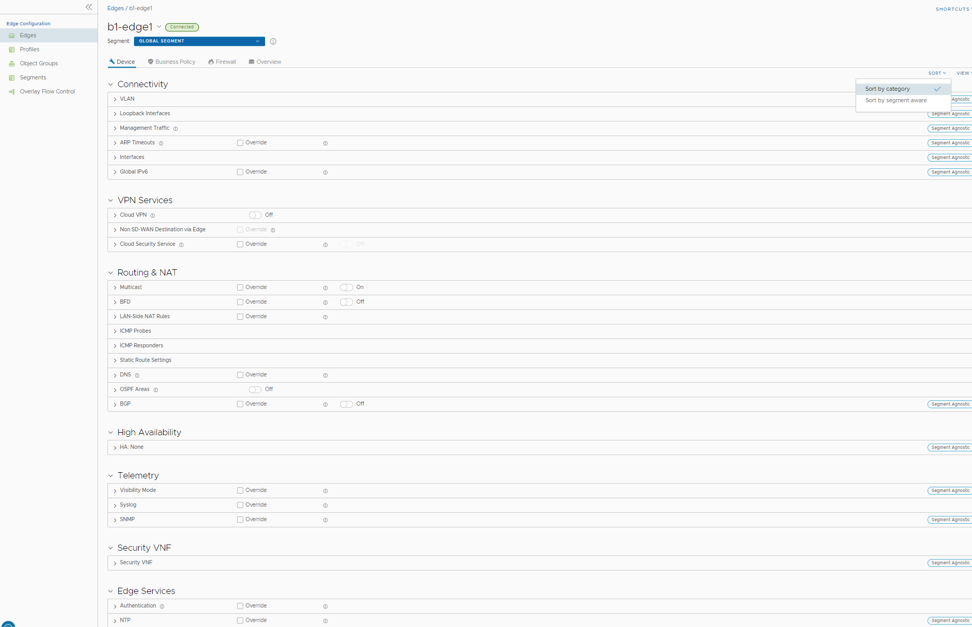
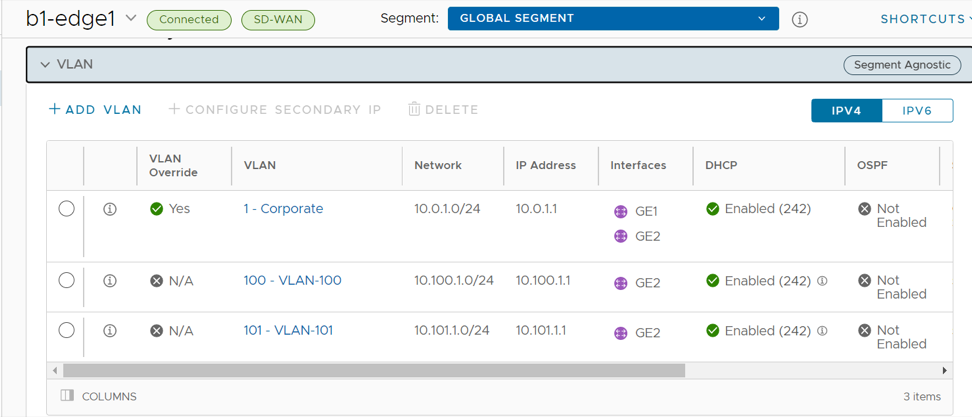
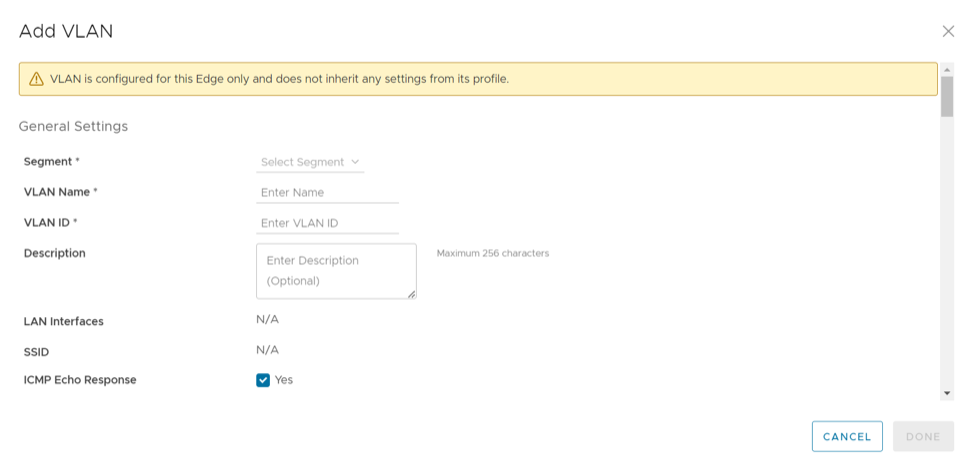
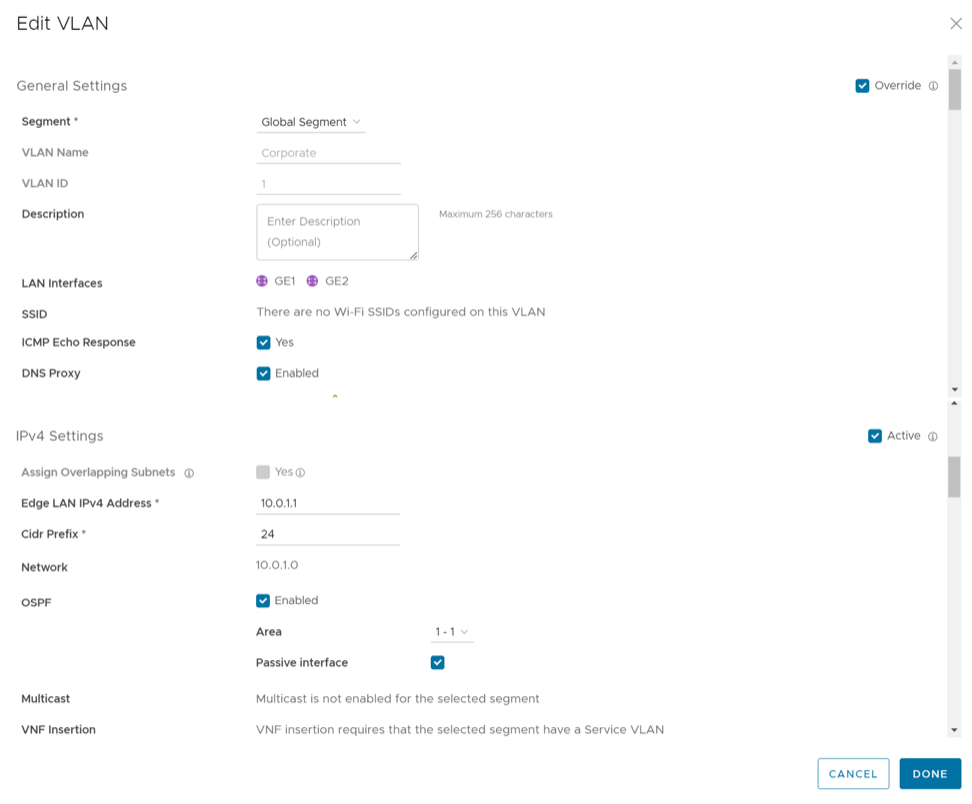 Note: You cannot override the Profile VLAN name and ID.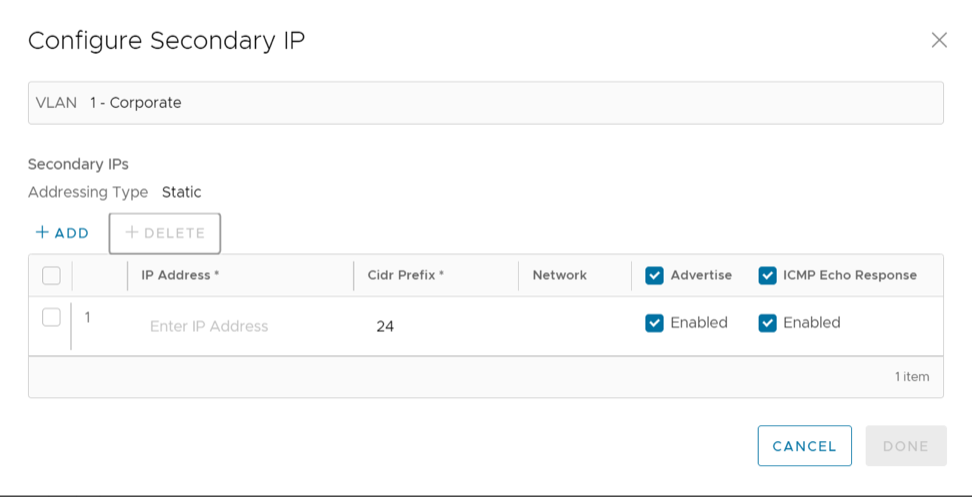
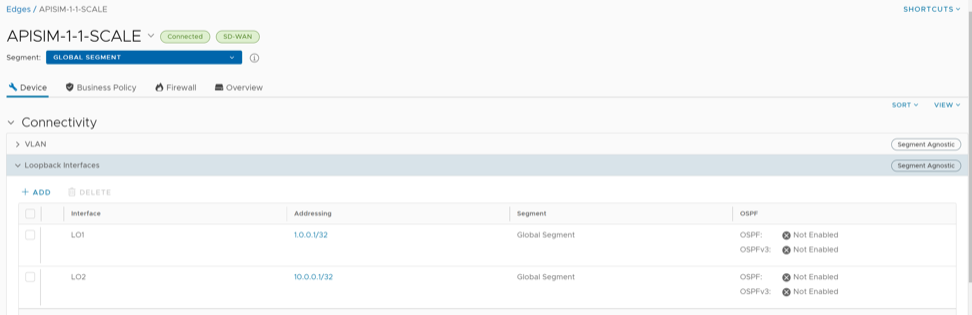
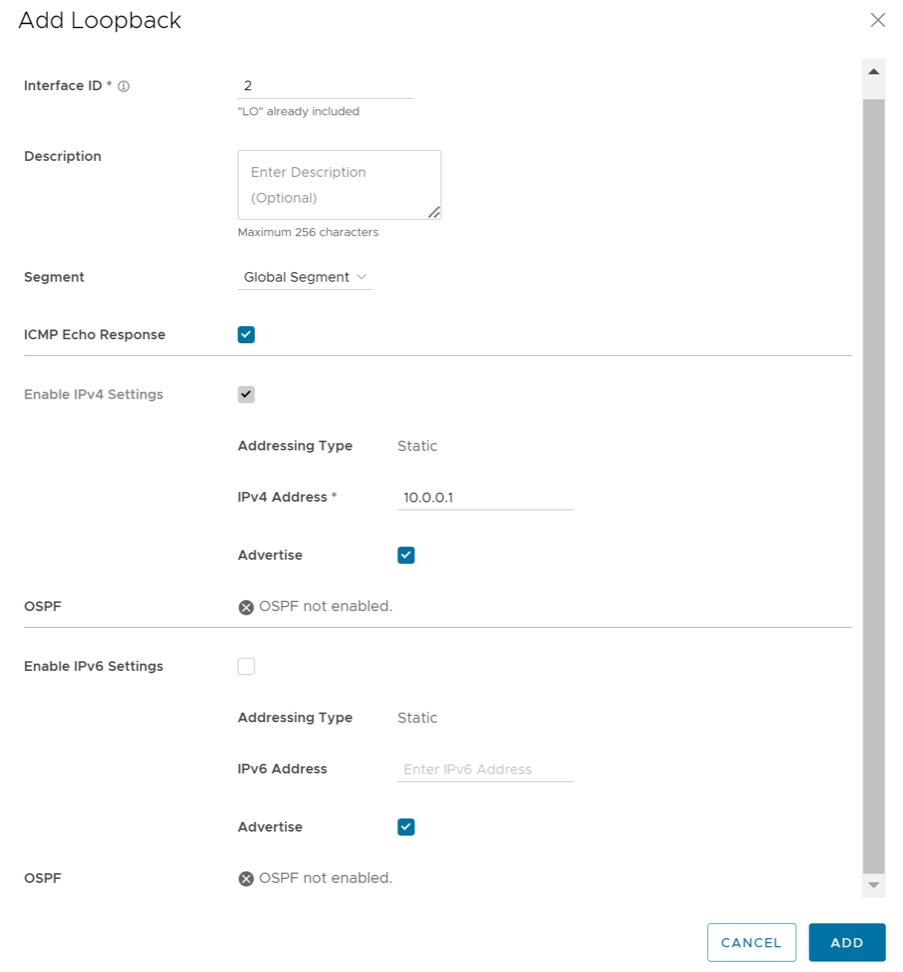
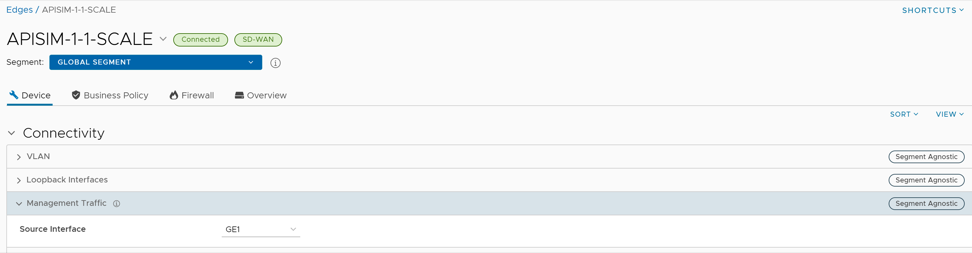
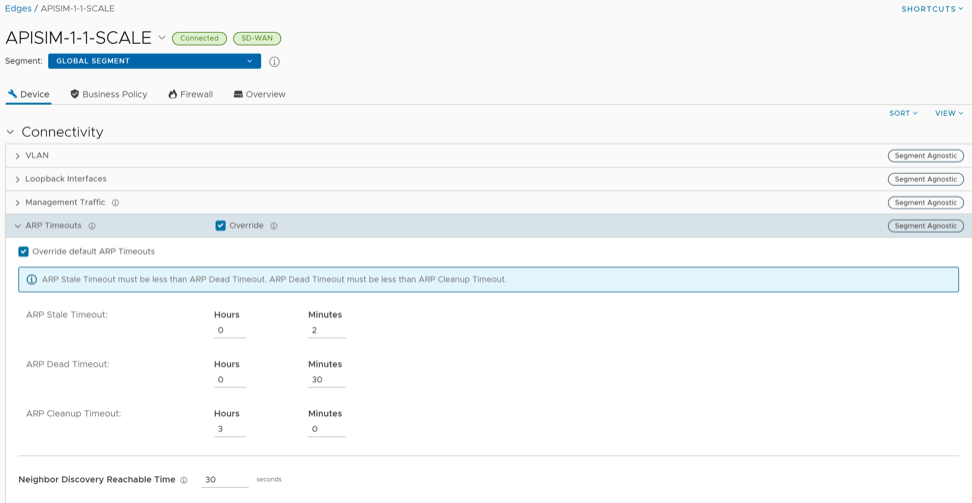
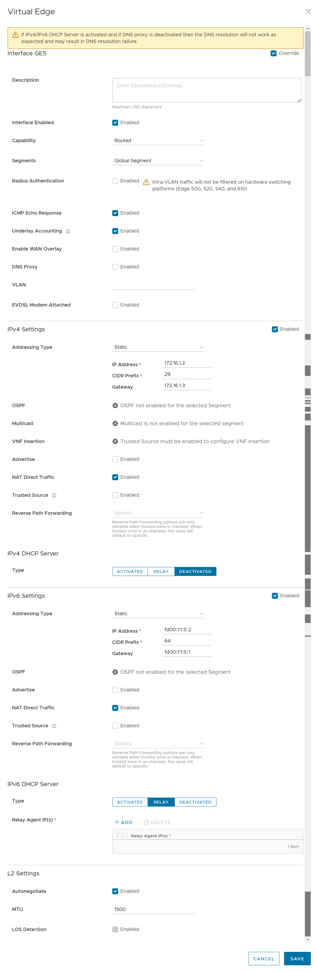 You can edit the settings for the following types of interfaces, based on the Edge model:
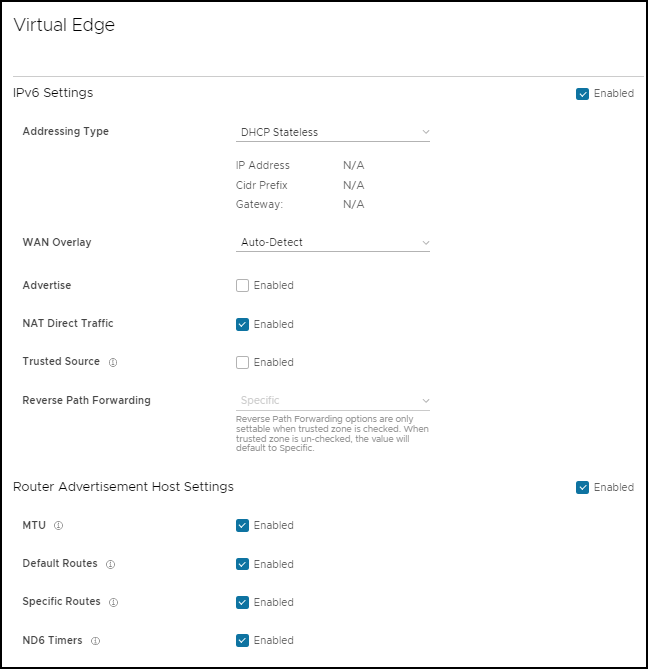 The following RA parameters are selected by default. If required, you can turn them off.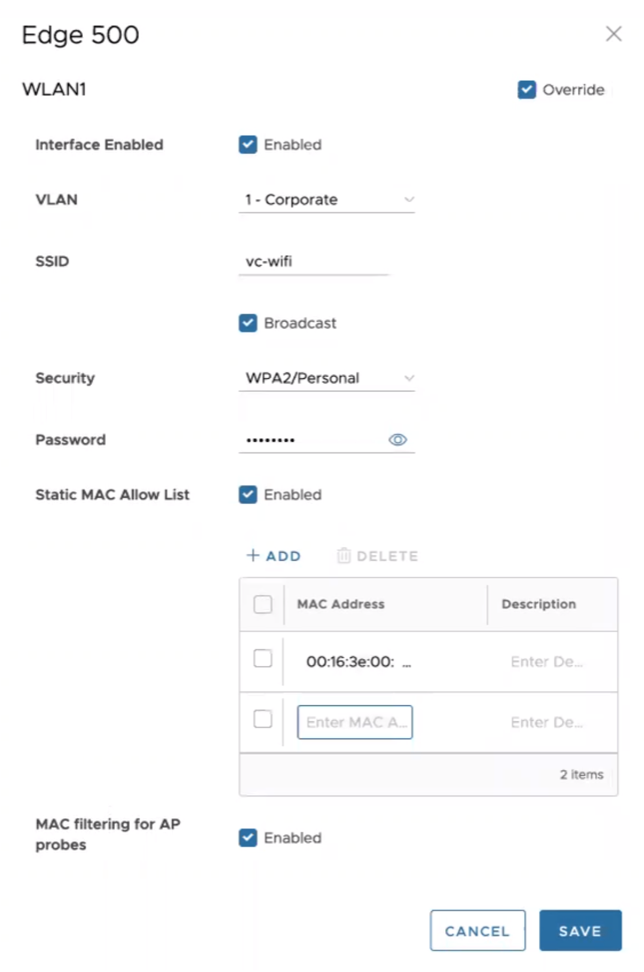
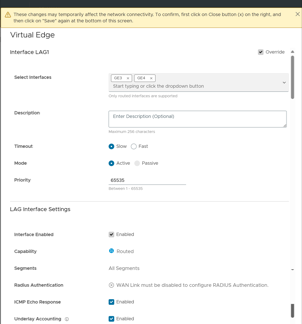


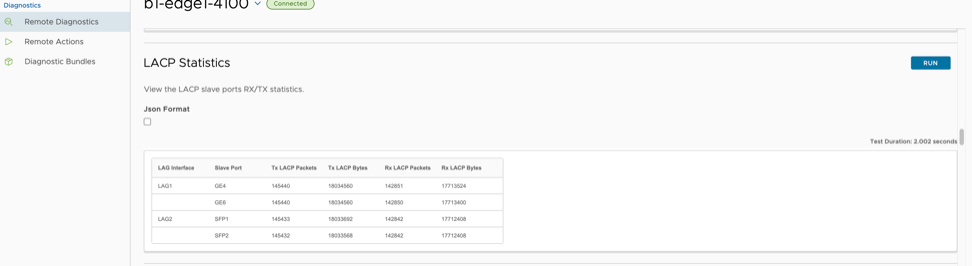
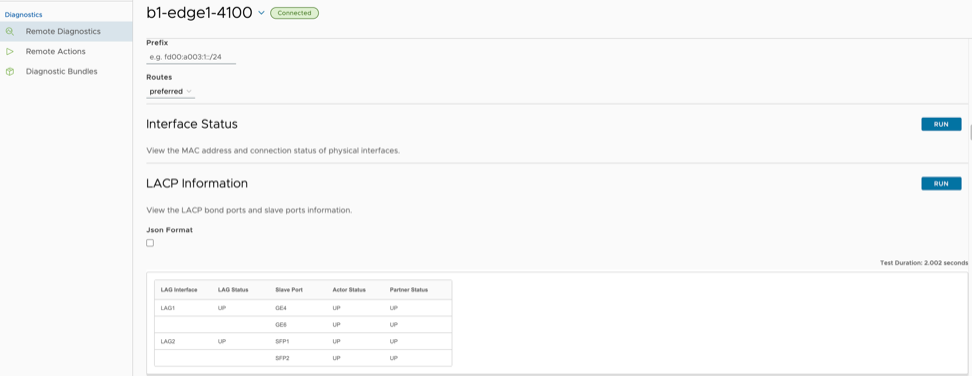 Note:
Note: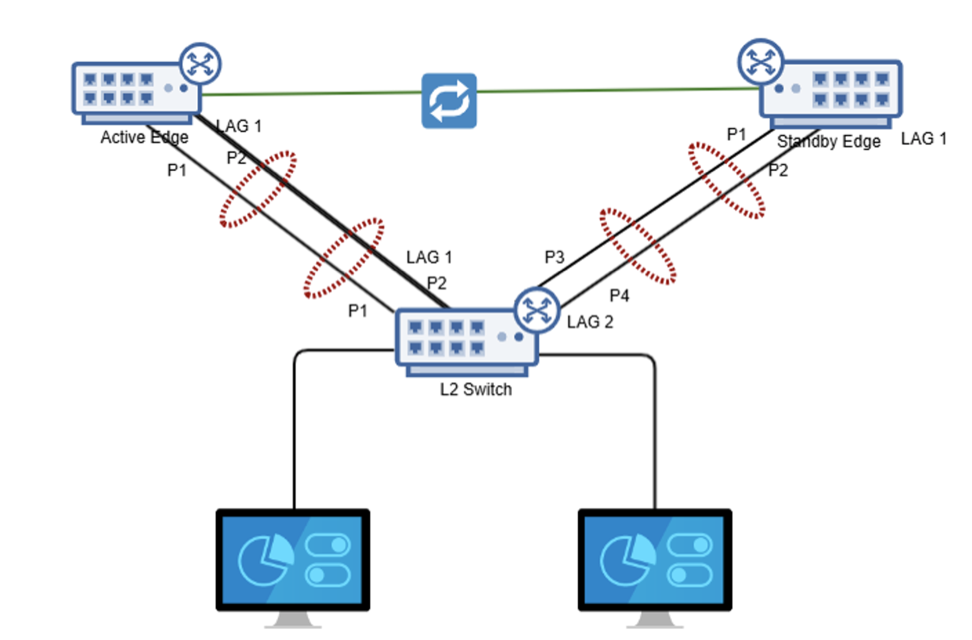
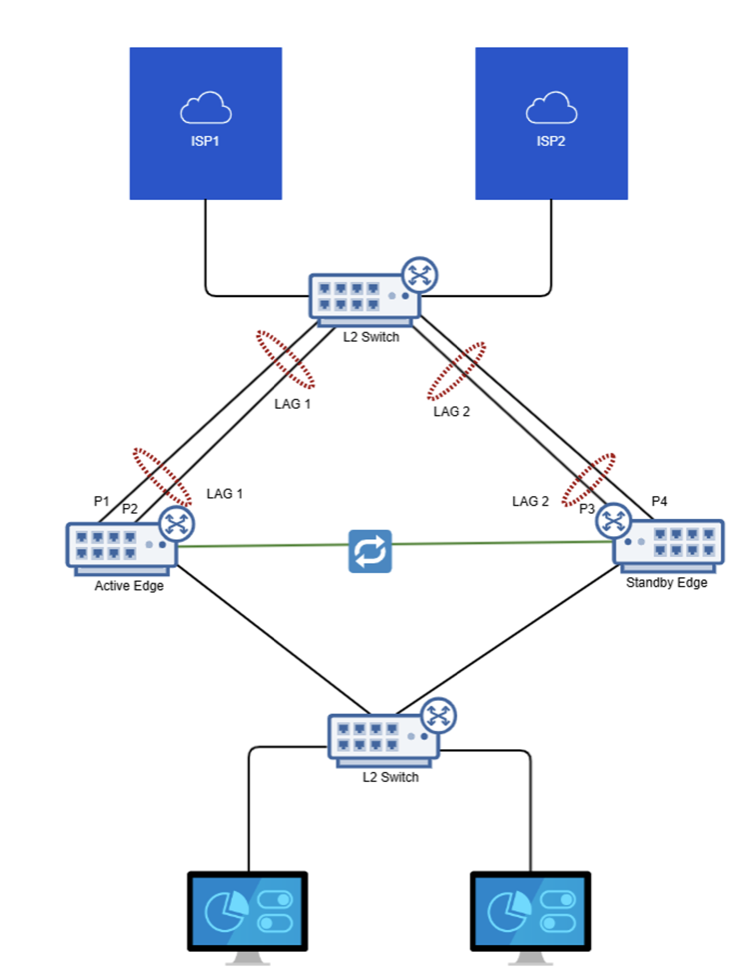 The above topology diagram illustrates enhanced HA, where a LAG is created on the WAN side of the network.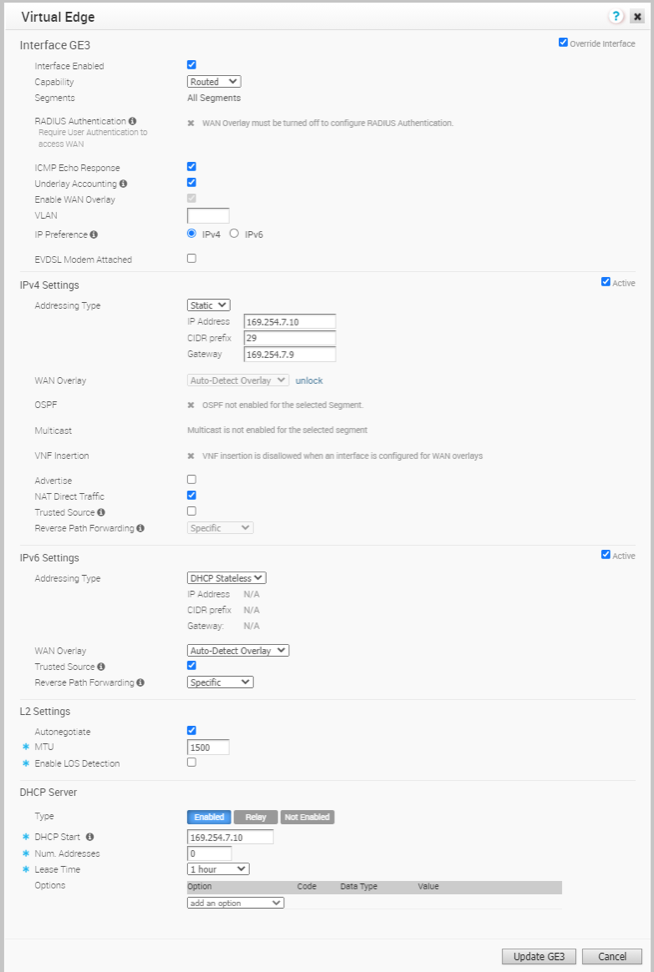
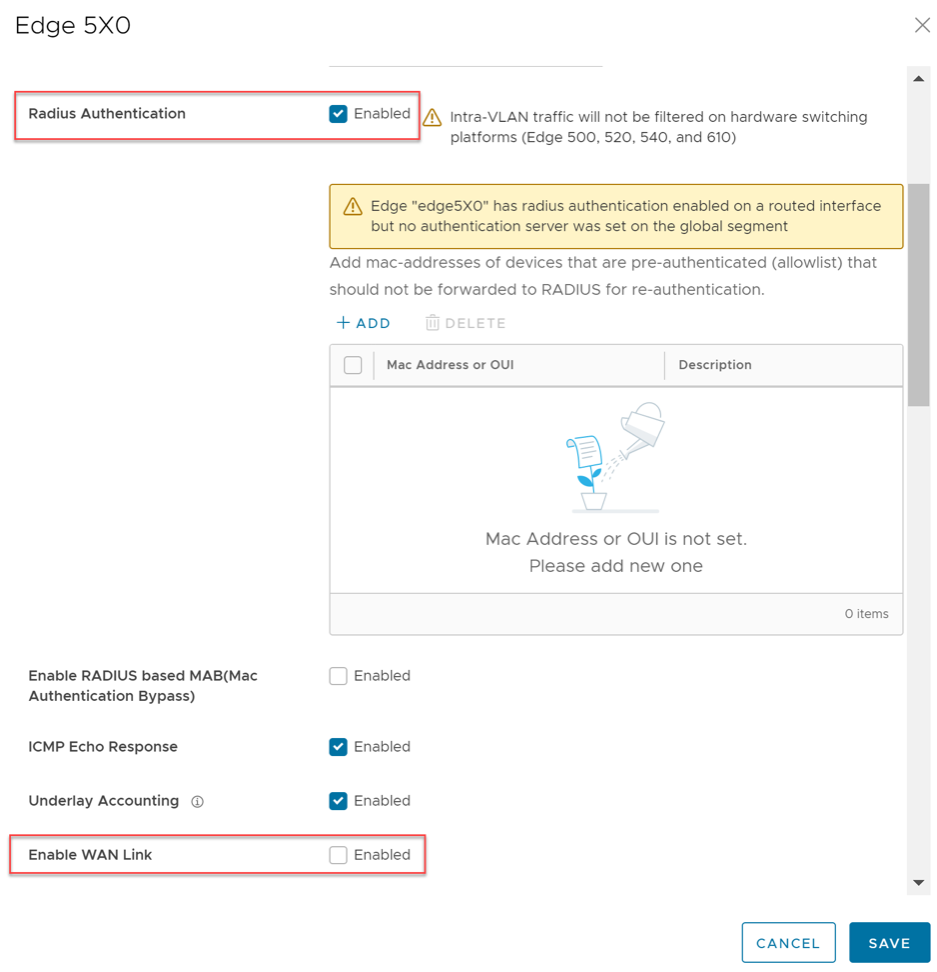
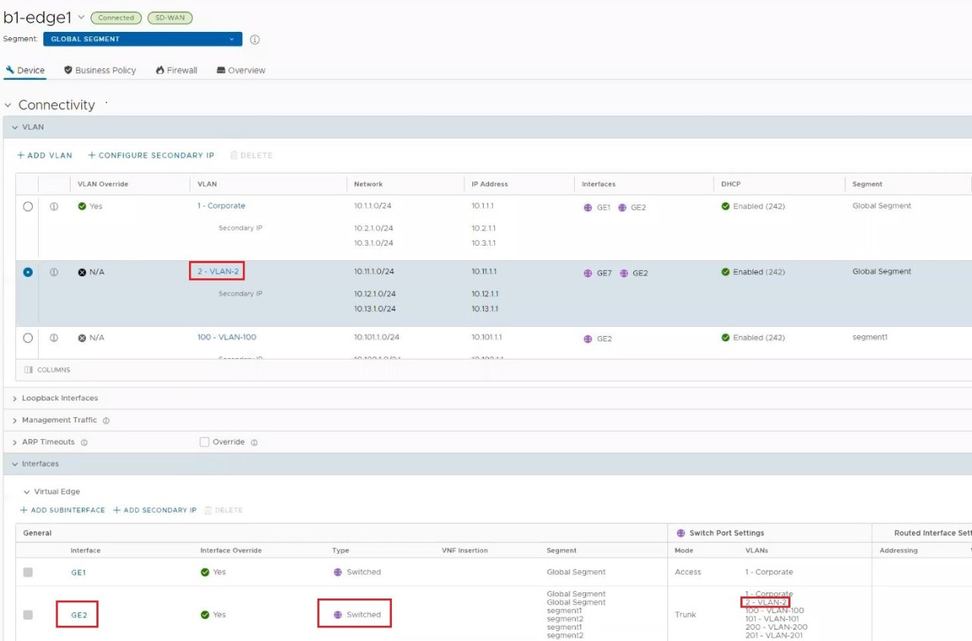
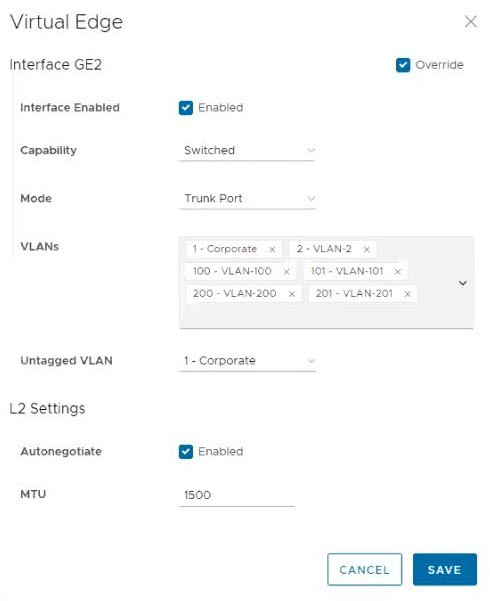
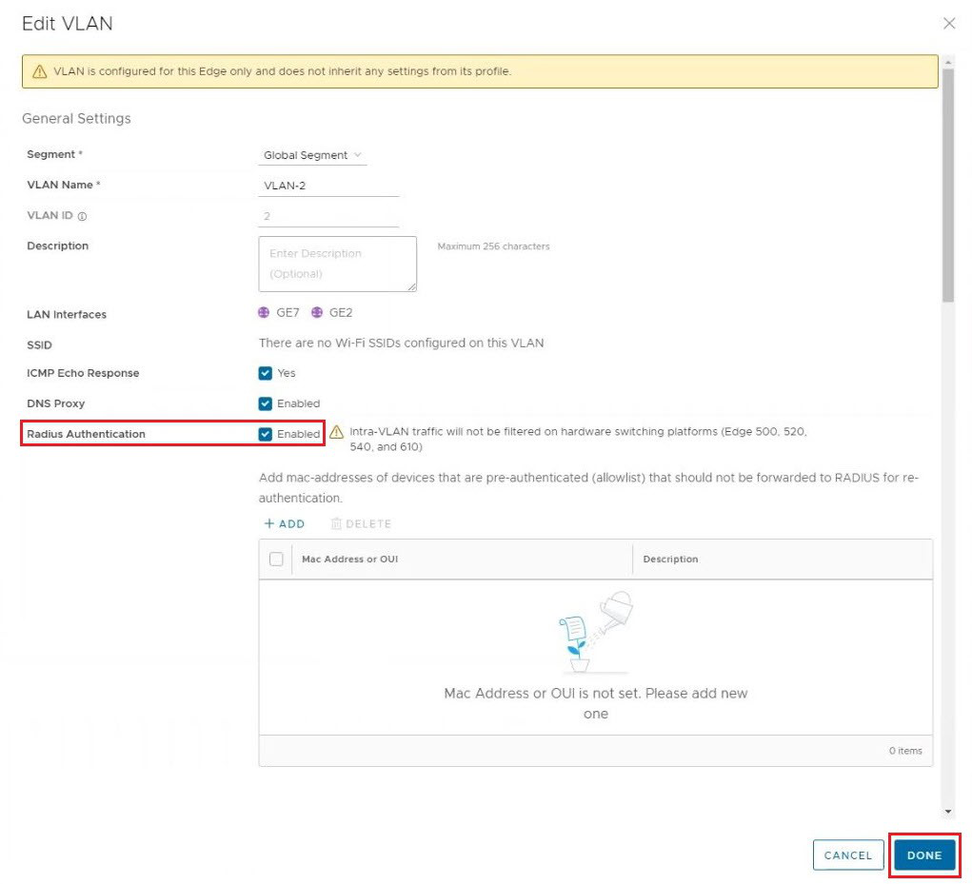
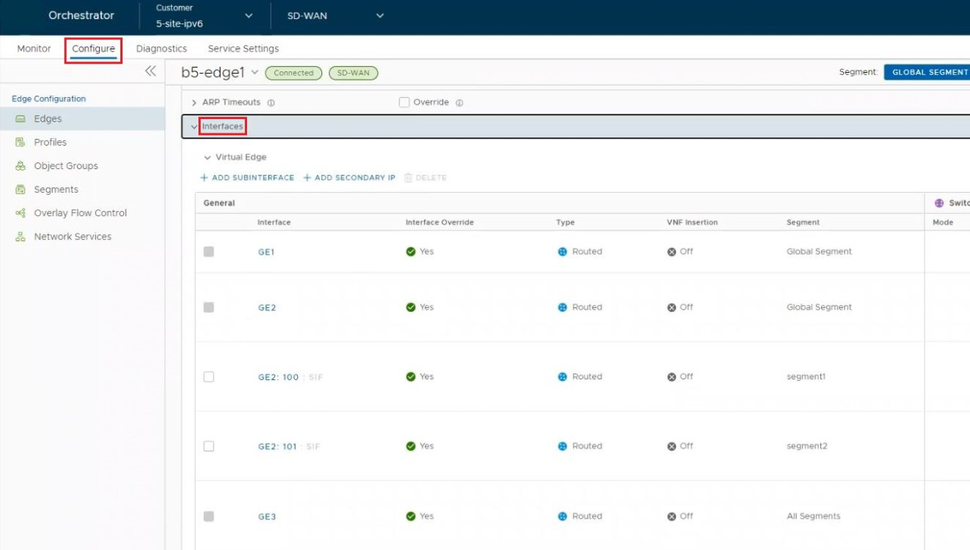
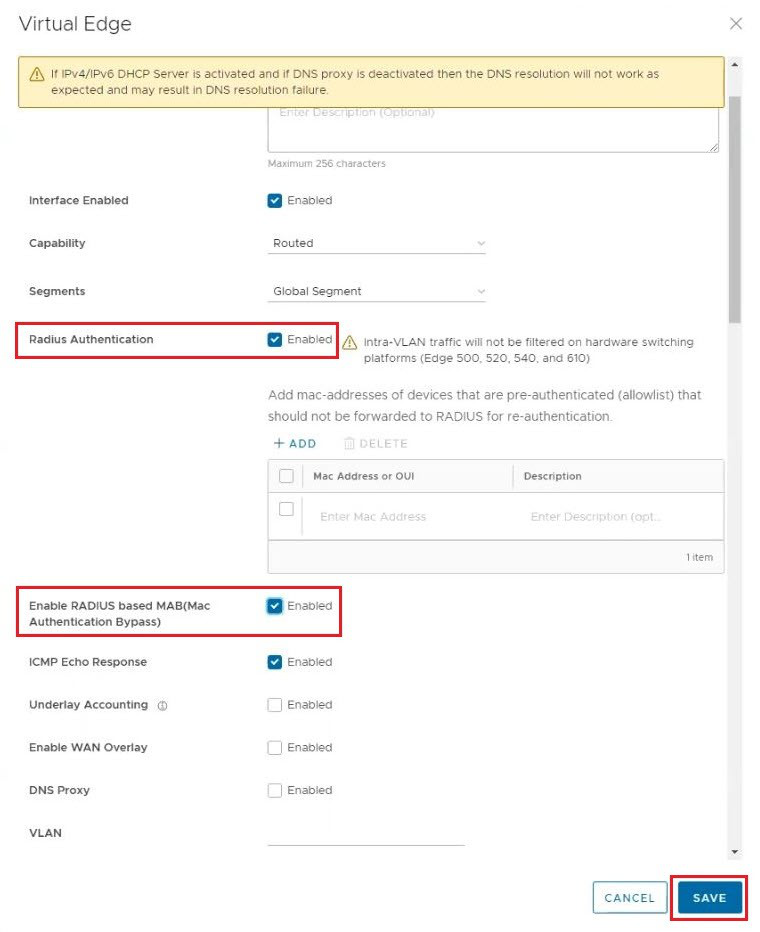
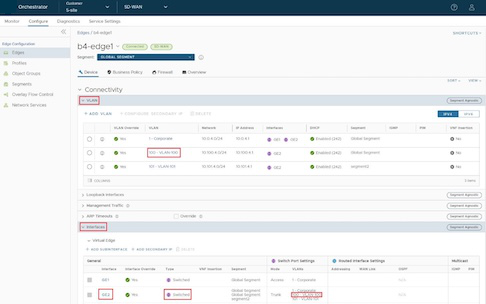
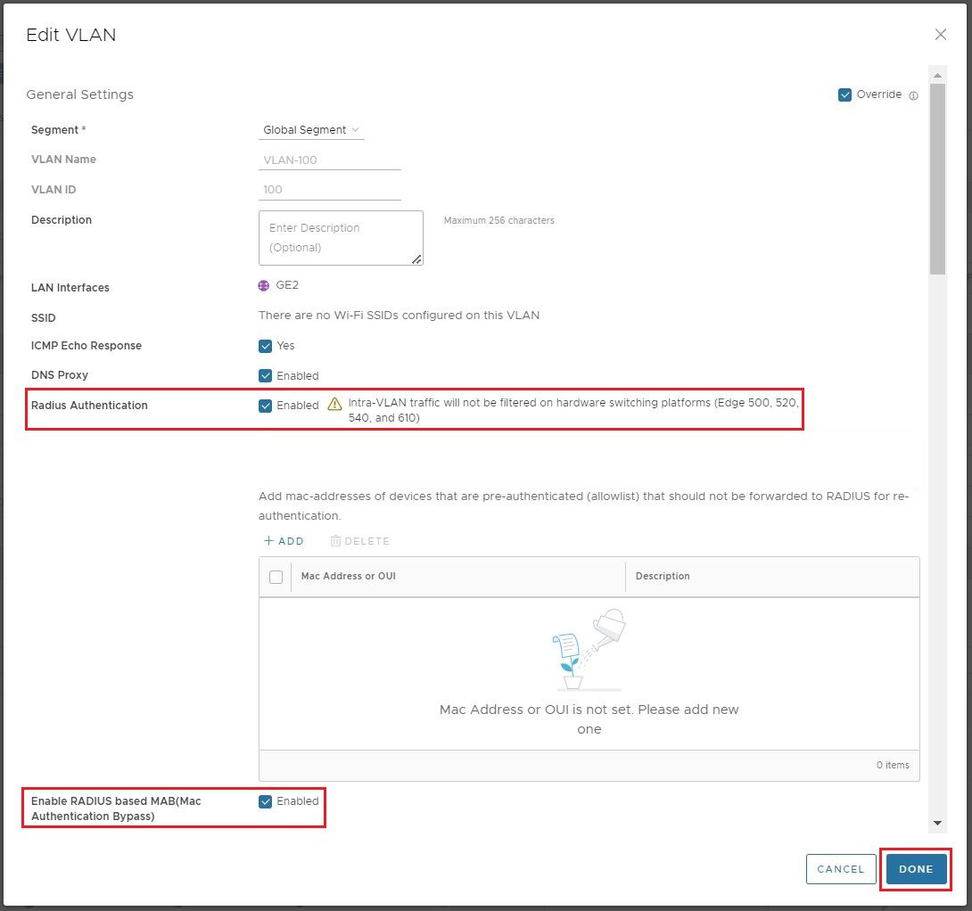
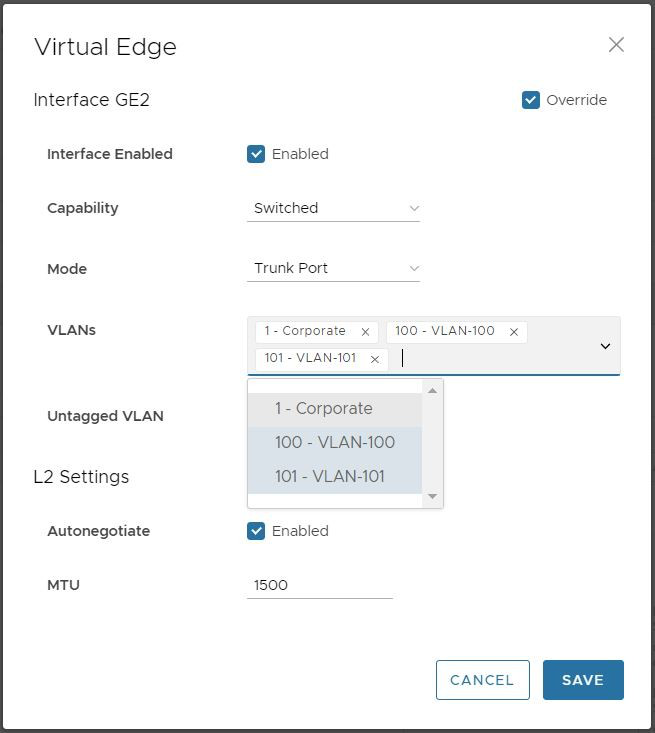
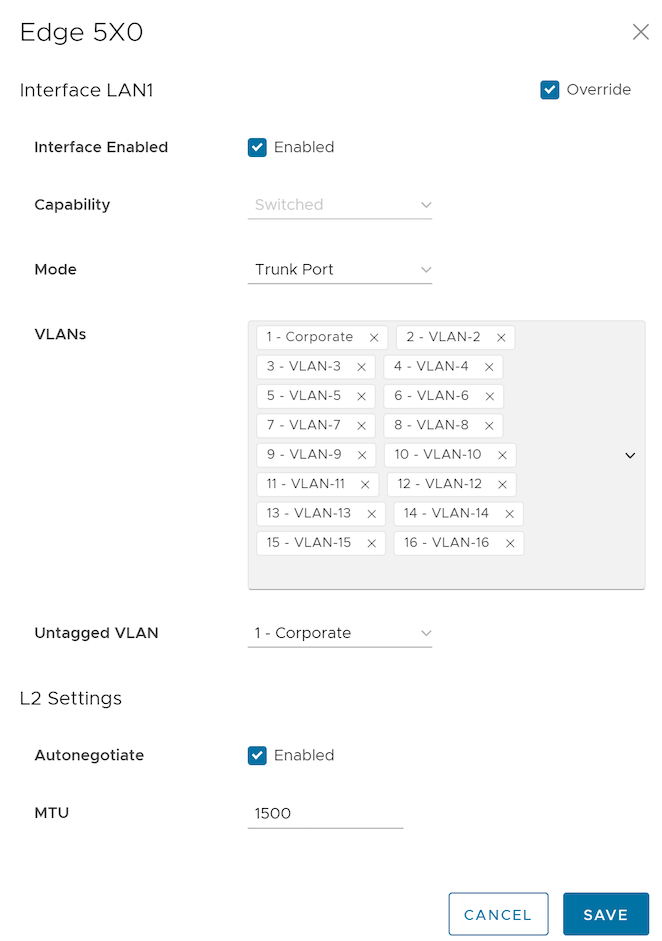
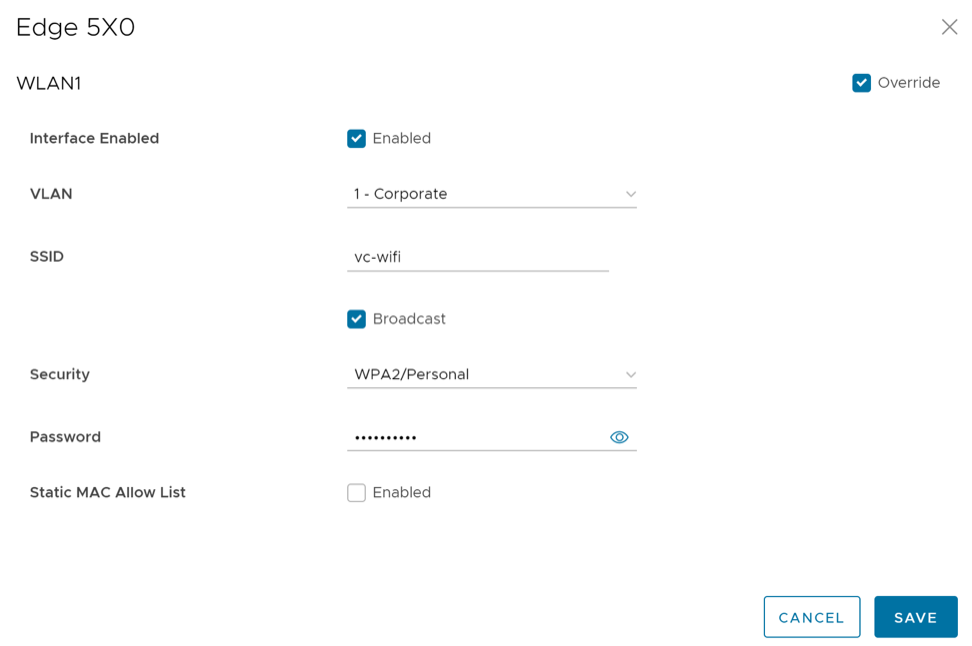
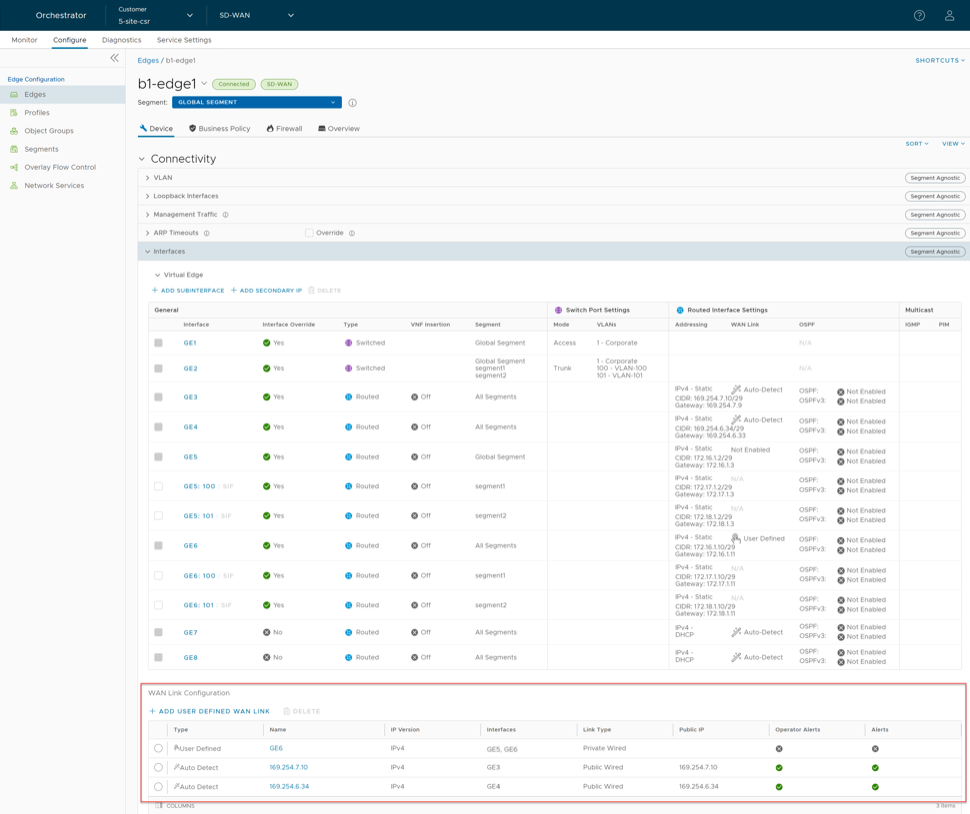
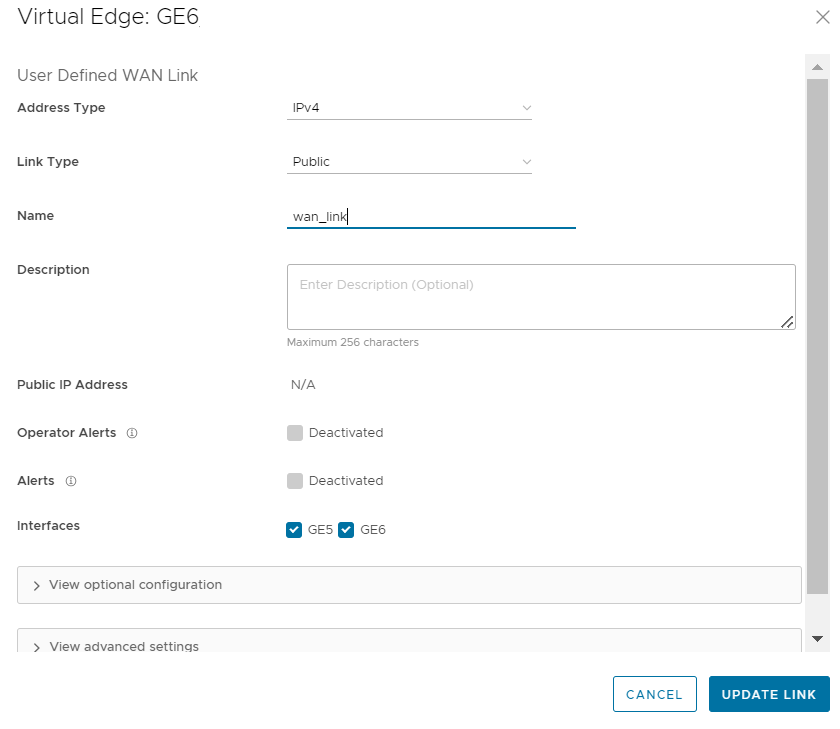
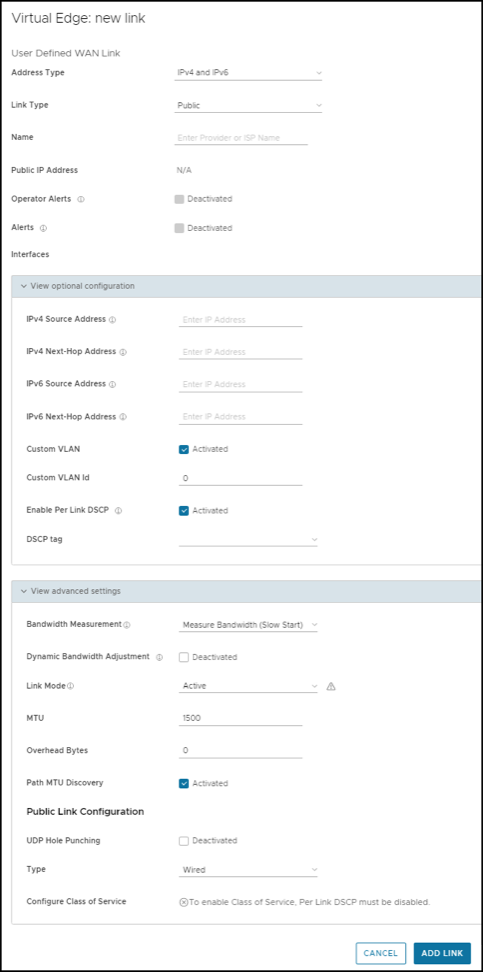
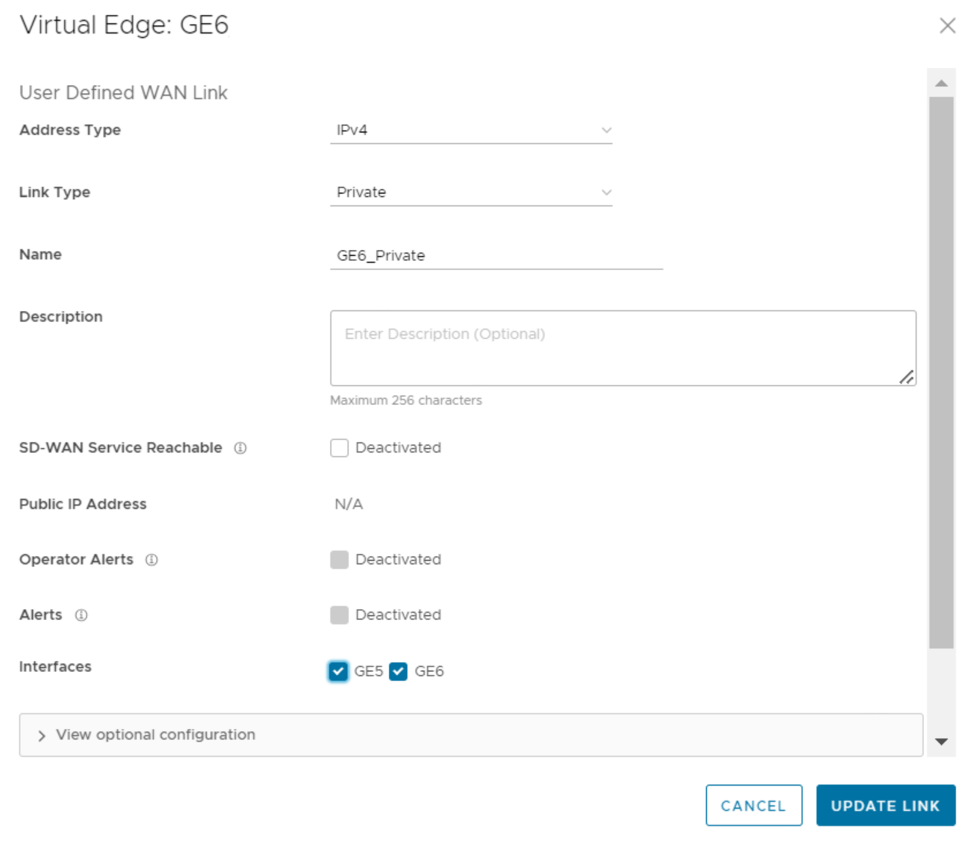
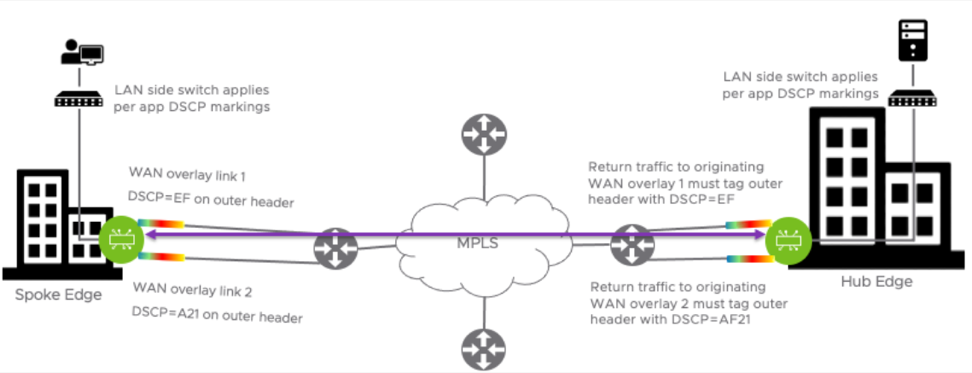


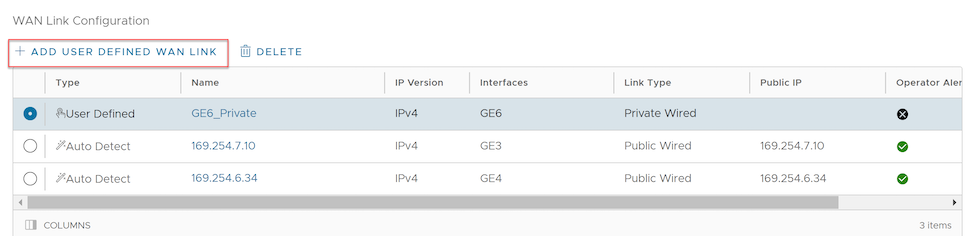


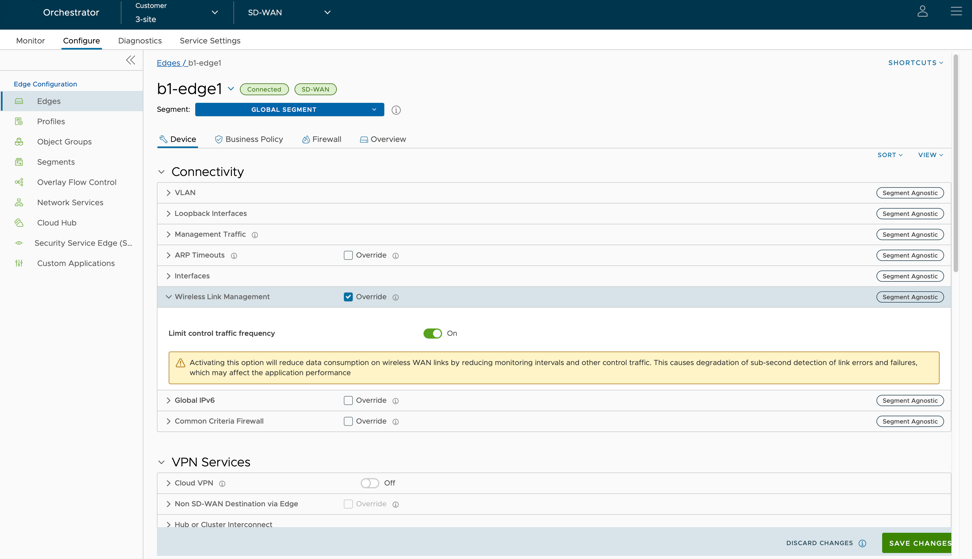
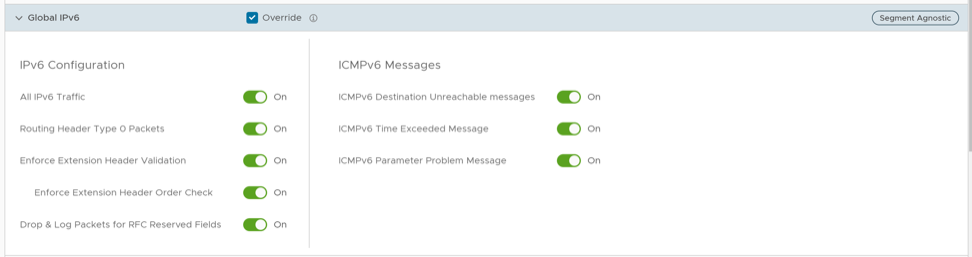

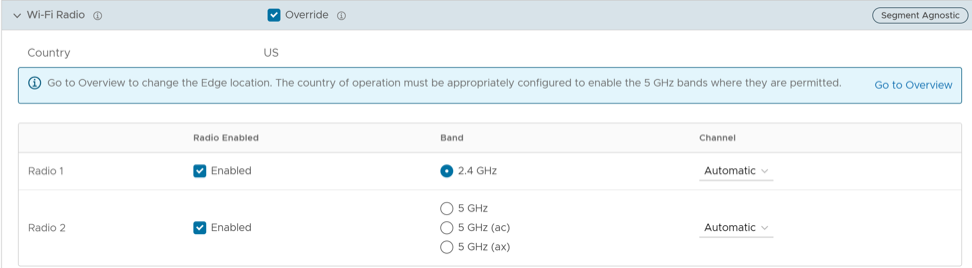 Note:
Note: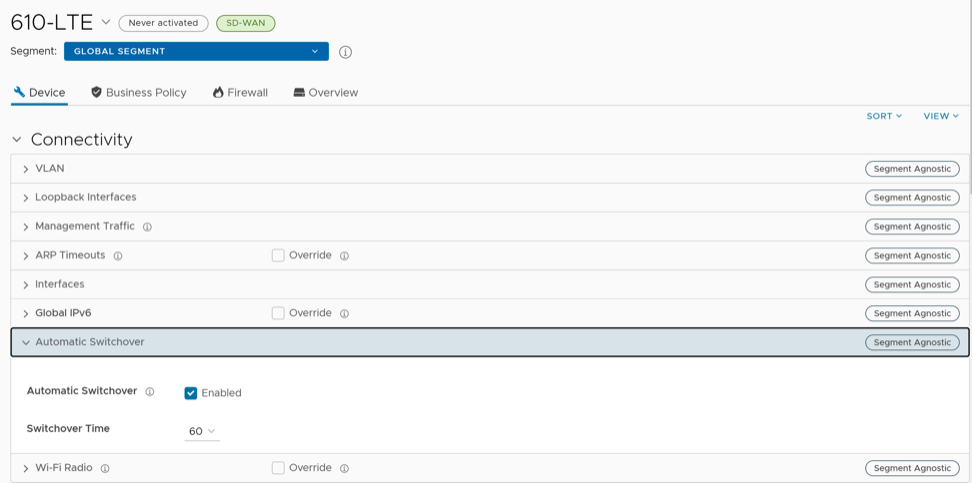
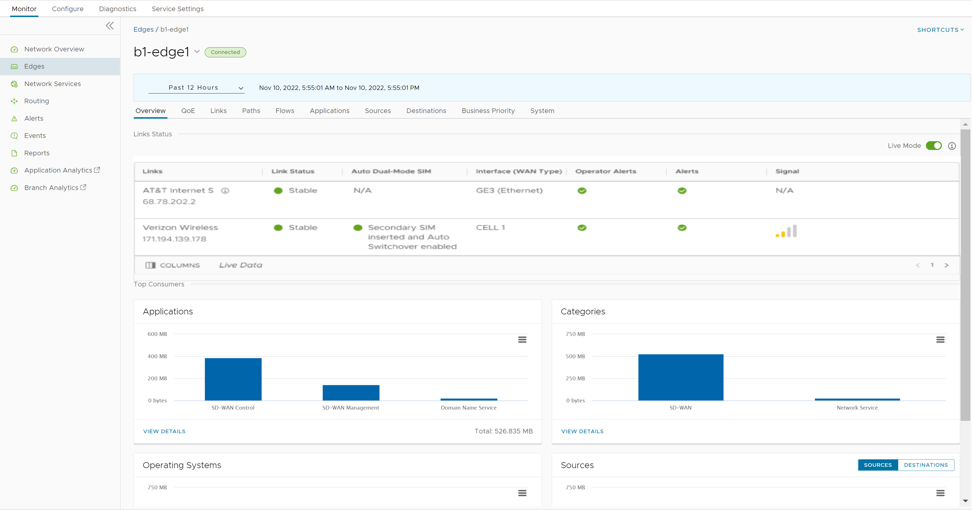
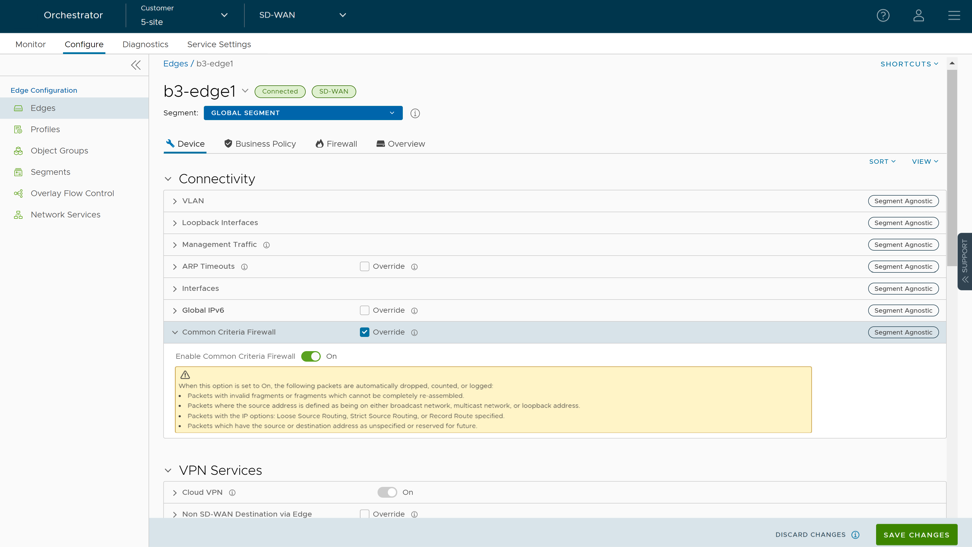
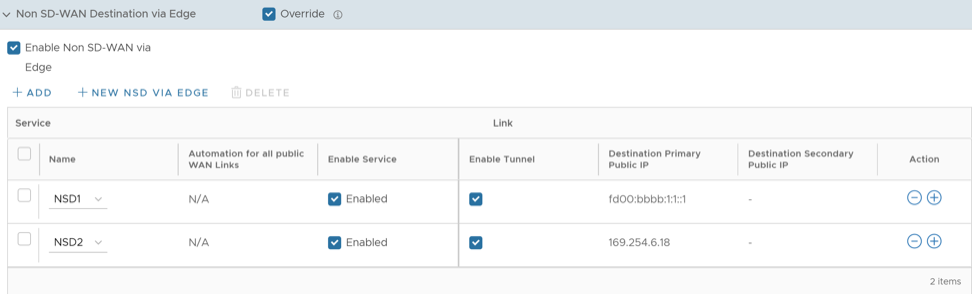
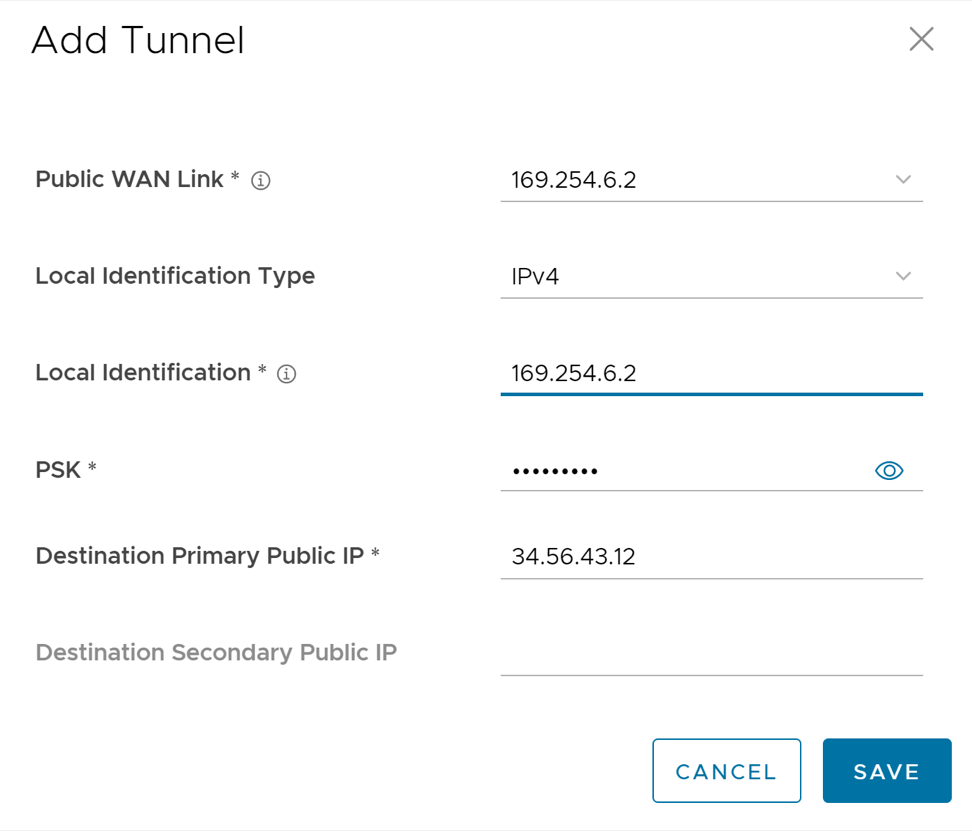
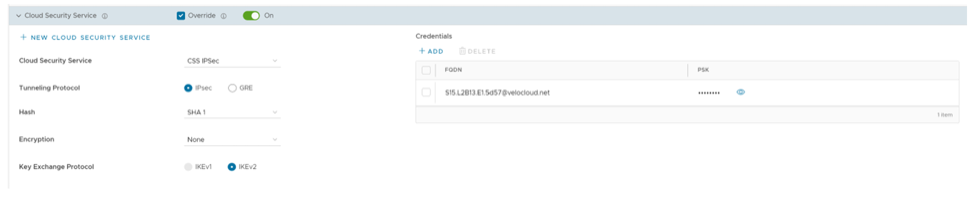

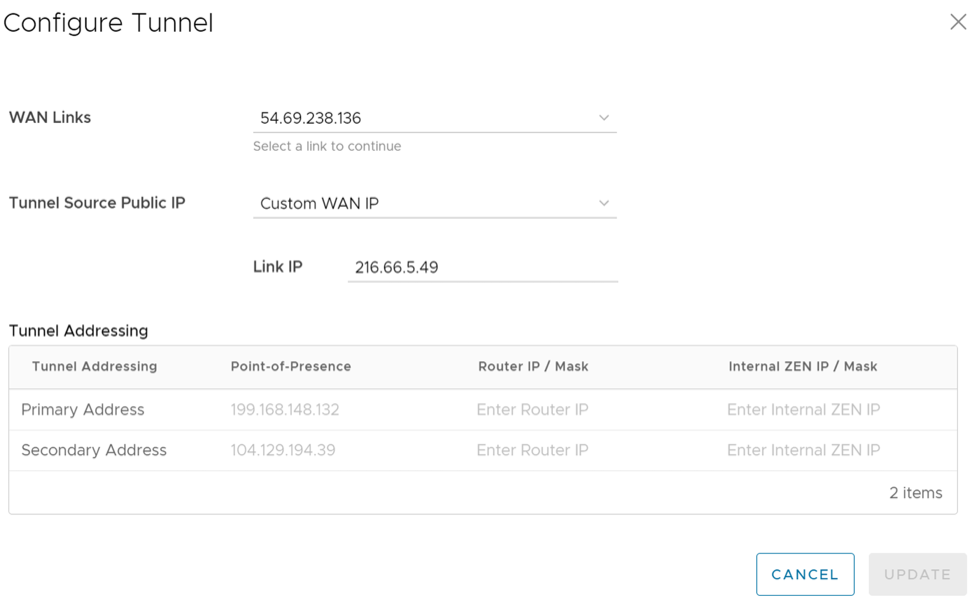

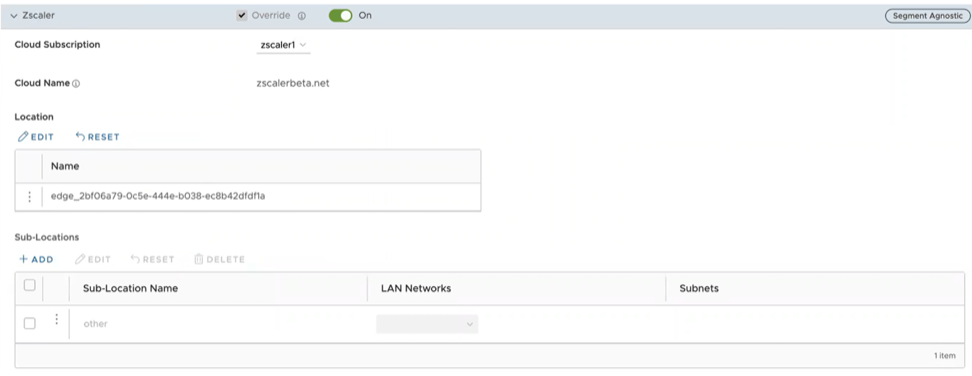
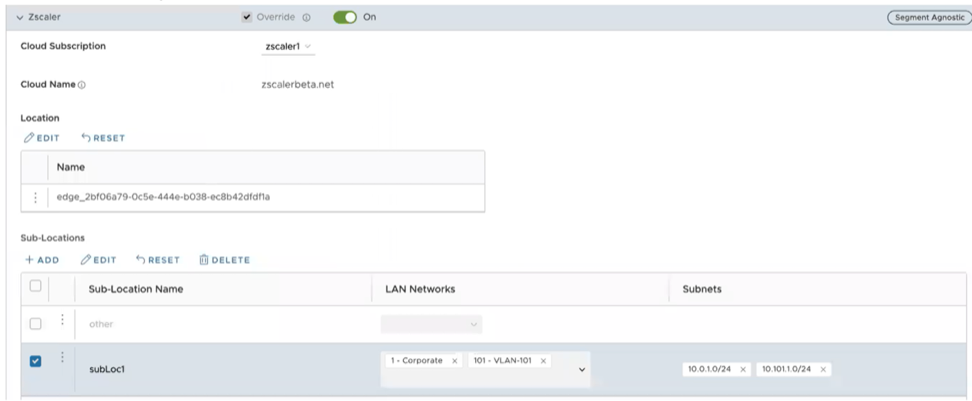 Note: After you create at least one Sub-location in the Orchestrator, an “Other” Sub location is automatically created in the Zscaler side, and it appears in the Orchestrator UI. You can also configure the “Other” Sub-location’s Gateway options by selecting the Edit button under Gateway Options in the Sub-Locations table. For more information, see the section Configure Zscaler Gateway Options and Bandwidth Control.