
Traffic Patterns
This section discusses monitoring and inspecting network traffic patterns to detect threats and troubleshoot performance issues.
The Branch Attack Surface
- Internet of Things (IoT) - These devices have become ubiquitous as there seems to be a race to turn everything “smart.” Everything wants access to the network, such as sensors, printers, security cameras, door locks, and so on. Unfortunately, security is usually an afterthought when creating these devices.
- Employees - Employees are prime targets for adversaries to leverage for initial access. Disgruntled employees can sell access to your network, and inattentive employees can be susceptible to phishing campaigns.
- Physical Security - Physical security vulnerabilities could provide opportunities for malicious actors to gain access to machines or open ports. This could allow them to steal data, launch attacks, or disrupt operations. It is important to implement strong physical security measures to protect against these risks.
- Network Devices - Network devices that are not patched offer adversaries the means to spread through the network. This is because unpatched devices may contain vulnerabilities that can be exploited by attackers. Once an attacker has gained access to an unpatched device, they can then use it to move laterally through the network and gain access to other devices. This can lead to a data breach, financial loss, or even physical damage. Therefore, it is important to keep all network devices up to date with the latest security patches.
Protecting internal traffic is as important as securing the network perimeter. Adversaries have multiple methods of bypassing a robust security stack that protects the boundary between the internal network and the outside world. Without a layered defense, a threat actor essentially has free rein over the internal network. A solid understanding of network segmentation will make it easier to create firewall policies that add the appropriate level of security without compromising performance.
Private Access
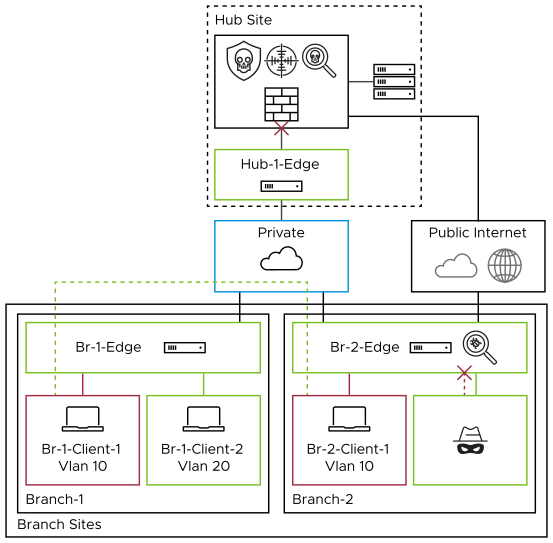
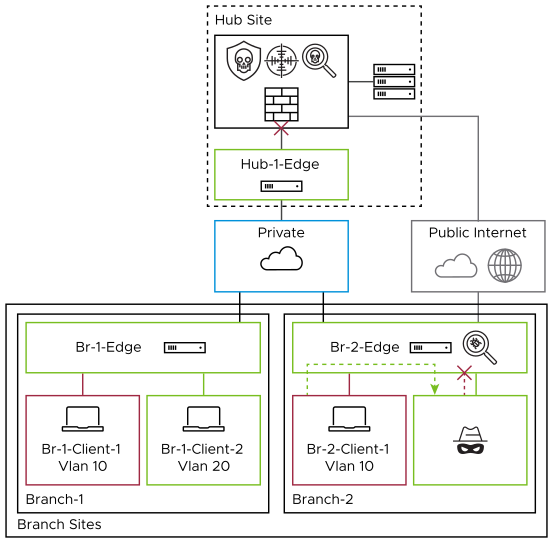
- Doctors' office downloading MRI images from Imaging Center
- IoT device communications
- Application traffic
As branch sites typically have less security in place than hubs, it would be more prudent to add additional security checks for this traffic flow. The goal of EFS is to easily add these checks to secure the branch and limit the blast radius of an attack, thus hindering a hacker's ability to use techniques such as lateral movement.
Lateral Movement- Once an attacker gains access to a machine on an internal network, they will typically need to find a way to move laterally through the network in order to find sensitive information. One common way that an attacker might move laterally is by exploiting vulnerabilities in software that is used internally by the company. EFS can detect and prevent malicious movement that uses known exploits.
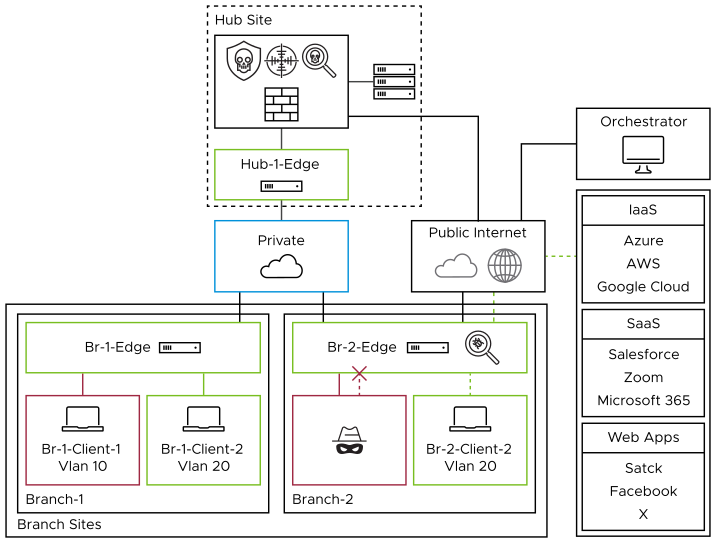
Internet Access without Secure Web Gateway (SWG)
Branch with Internet Access with Secure Web Gateway (SWG)
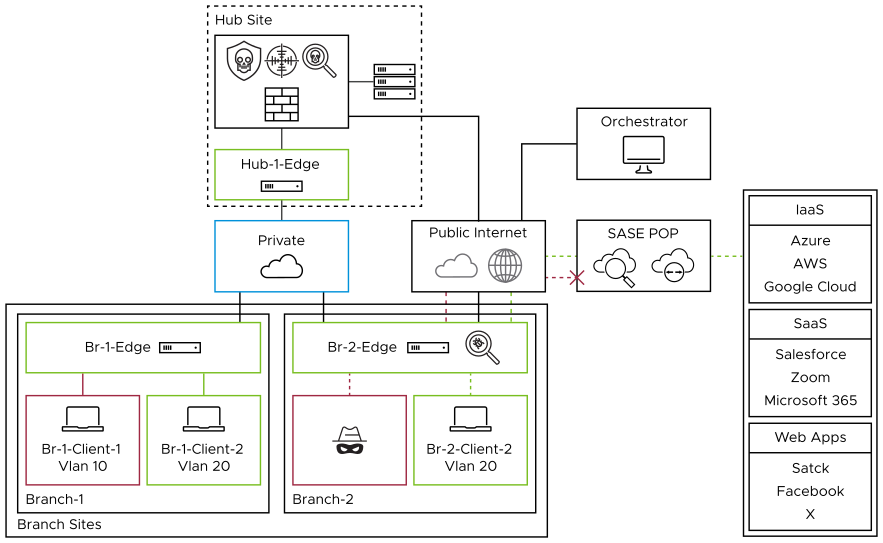
Combine EFS with any third-party SSE solution to provide a more well-rounded security approach. EFS protects your network from malicious activity by analyzing traffic patterns against signatures of known threats and anomalous behavior. In contrast, a third-party SSE primarily focuses on Internet-bound traffic, with features such as SSL Decryption, DLP, CASB, and URL and Content Filtering. Together, they provide a multi-tiered defense, protecting internal network operations and external web interactions from various cyber threats.